











Exploring the sloped-to-peaked S2/S1 seam of intersection of thymine with electronic structure and direct quantum dynamics calculations
Literature Information
Publication Date
2010-03-29
DOI
10.1039/C001556C
Impact Factor
3.676
Authors
David Asturiol, Graham A. Worth, Michael A. Robb, Lluís Blancafort
View Original
Abstract
The role of the seam of intersection between the lowest (π,π*) and (n,π*) excited states in the decay of electronically excited singlet thymine has been investigated with ab initio complete active space self-consistent field (CASSCF) calculations and direct dynamics variational multiconfiguration Gaussian (DD-vMCG) quantum dynamics on the full-dimensional CASSCF surface, with 39 degrees of freedom. The seam has a sloped-to-peaked topography, and the dynamics at the different segments of the seam have been studied by varying the initial conditions of the propagation. When the wave packet is directed to the peaked segments, part of it traverses the seam, stays on the (π,π*) state and heads towards decay to the ground state. In contrast to this, when the wave packet is driven to sloped seam segments it bounces back to the minimum of the (π,π*) state. Significant population transfer to the (n,π*) state is observed in both cases. The results suggest that a sloped-to-peaked topography can be used to control photochemical reactivity, by driving the wave packet to different regions of the seam where a different outcome of the propagation can be expected.
Related Literature
Correlation ion mobility spectrometry
Austen L. Davis, Wenjie Liu, William F. Siems, Brian H. Clowers
2016-12-08
Paper
DOI: 10.1039/C6AN02249A
A sub-picomolar assay for protein by using cubic Cu2O nanocages loaded with Au nanoparticles as robust redox probes and efficient non-enzymatic electrocatalysts
Jianmin Zhao, Ting Zheng, Jiaxi Gao, Shijing Guo, Xingxing Zhou, Wenju Xu
2017-01-16
Paper
DOI: 10.1039/C6AN02599D
Detection of evoked acetylcholine release in mouse brain slices
R. Asri, B. O'Neill, J. C. Patel, K. A. Siletti, M. E. Rice
2016-10-03
Paper
DOI: 10.1039/C6AN01758D
Broadband absorption spectroscopy for rapid pH measurement in small volumes using an integrated porous waveguide
Ruchi Gupta, Nick J. Goddard
2016-11-28
Paper
DOI: 10.1039/C6AN01896C
Polymer-mediated ternary supramolecular interactions for sensitive detection of peptides
Mahalia A. C. Serrano, Huan He, Bo Zhao, Rajasekhar R. Ramireddy, Richard W. Vachet, S. Thayumanavan
2016-11-02
Paper
DOI: 10.1039/C6AN01591C
Structural and elemental changes in glioblastoma cells in situ: complementary imaging with high resolution visible light- and X-ray microscopy
Tanja Dučić, Tatjana Paunesku, Si Chen, Milena Ninković, Swetlana Speling, Charlene Wilke, Barry Lai, Gayle Woloschak
2016-12-09
Paper
DOI: 10.1039/C6AN02532C
Lectin-based lateral flow assay: proof-of-concept
Pavel Damborský, Katarzyna M. Koczula, Andrea Gallotta, Jaroslav Katrlík
2016-10-07
Paper
DOI: 10.1039/C6AN01746K
Fast voltammetry of metals at carbon-fiber microelectrodes: towards an online speciation sensor
Pavithra Pathirathna, Thushani Siriwardhane, Shawn P. McElmurry, Stephen L. Morgan, Parastoo Hashemi
2016-10-26
Paper
DOI: 10.1039/C6AN01807F
Orientational binding modes of reporters in a viral-nanoparticle lateral flow assay
Jinsu Kim, Ryan Poling-Skutvik, João R. C. Trabuco, Katerina Kourentzi, Jacinta C. Conrad
2016-09-26
Paper
DOI: 10.1039/C6AN00567E
You might also like
Compound Q&A
What precautions should be taken when handling 4-Methyl-6-(trifluoromethyl)quinoline (CAS: 40716-16-3)?
When handling 4-Methyl-6-(trifluoromethyl)quinoline (CAS: 40716-16-3), safety go...
40716-16-34-Methyl-6-(trifluor...
Compound Q&A
What is 4-(3,5-Difluorophenyl)aniline (CAS: 405058-00-6)?
4-(3,5-Difluorophenyl)aniline is an aromatic organic compound with the CAS numbe...
405058-00-64-(3,5-Difluoropheny...
Compound Q&A
How is 5-{[4-(Trifluoromethyl)phenyl]sulfanyl}-1,2,3-thiadiazole-4-carboxylic acid (CAS: 338982-07-3) typically synthesized?
5-{[4-(Trifluoromethyl)phenyl]sulfanyl}-1,2,3-thiadiazole-4-carboxylic acid can ...
338982-07-35-{[4-(Trifluorometh...
Compound Q&A
What is the market or research trend for 4-Benzylaniline hydrochloride (CAS: 6317-57-3)?
The market for 4-Benzylaniline hydrochloride (CAS: 6317-57-3) is steadily growin...
6317-57-34-Benzylaniline hydr...
Compound Q&A
Is [3-(Diethylsulfamoyl)phenyl]boronic acid (CAS: 871329-58-7) safe?
[3-(Diethylsulfamoyl)phenyl]boronic acid is generally considered safe when handl...
871329-58-7[3-(Diethylsulfamoyl...
Compound Q&A
What are the main uses of 3-Bromo-2,5-dimethoxyaniline (CAS: 115929-62-9)?
3-Bromo-2,5-dimethoxyaniline is mainly used in the pharmaceutical and chemical i...
115929-62-93-Bromo-2,5-dimethox...
Compound Q&A
What regulatory guidelines apply to N-Methyl-1-(5-methyl-1H-indol-3-yl)methanamine (CAS: 915922-67-7)?
N-Methyl-1-(5-methyl-1H-indol-3-yl)methanamine (CAS: 915922-67-7) is subject to ...
915922-67-7N-Methyl-1-(5-methyl...
Compound Q&A
What industries use Carbamic acid, N-[(5S)-5,6-diamino-6-oxohexyl]-, 1,1-dimethylethyl ester (CAS: 24828-96-4)?
This compound is primarily used in the pharmaceutical industry for the synthesis...
24828-96-4Carbamic acid, N-[(5...
Compound Q&A
How should 2-Methyl-2-propanyl [(1S,3R)-3-aminocyclohexyl]carbamate (CAS: 1298101-47-9) be stored?
2-Methyl-2-propanyl [(1S,3R)-3-aminocyclohexyl]carbamate (CAS: 1298101-47-9) sho...
1298101-47-92-Methyl-2-propanyl ...
Compound Q&A
What industries use Ethyl 2-bromo-4,4,4-trifluorobutanoate (CAS: 367-33-9)?
Ethyl 2-bromo-4,4,4-trifluorobutanoate (CAS: 367-33-9) is utilized in the pharma...
367-33-9Ethyl 2-bromo-4,4,4-...
Source Journal
Physical Chemistry Chemical Physics

CiteScore:
5.5
Self-citation Rate:
10.3%
Articles per Year:
3036
Physical Chemistry Chemical Physics (PCCP) is an international journal co-owned by 19 physical chemistry and physics societies from around the world. This journal publishes original, cutting-edge research in physical chemistry, chemical physics and biophysical chemistry. To be suitable for publication in PCCP, articles must include significant innovation and/or insight into physical chemistry; this is the most important criterion that reviewers and Editors will judge against when evaluating submissions. The journal has a broad scope and welcomes contributions spanning experiment, theory, computation and data science. Topical coverage includes spectroscopy, dynamics, kinetics, statistical mechanics, thermodynamics, electrochemistry, catalysis, surface science, quantum mechanics, quantum computing and machine learning. Interdisciplinary research areas such as polymers and soft matter, materials, nanoscience, energy, surfaces/interfaces, and biophysical chemistry are welcomed if they demonstrate significant innovation and/or insight into physical chemistry. Joined experimental/theoretical studies are particularly appreciated when complementary and based on up-to-date approaches.
Recommended Compounds
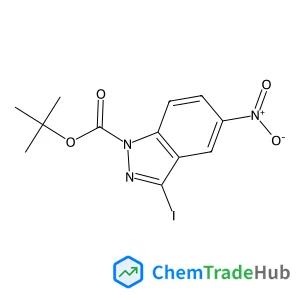
Tert-butyl 3-iodo-5-nitro-1H-indazole-1-carboxylate
CAS Number:
459133-69-8
Molecular Formula:
C12H12IN3O4
Recommended Suppliers





Disclaimer
This page provides academic journal information for reference and research purposes only. We are not affiliated with any journal publishers and do not handle publication submissions. For publication-related inquiries, please contact the respective journal publishers directly.
If you notice any inaccuracies in the information displayed, please contact us at support@chemtradehub.com. We will promptly review and address your concerns.