












Matrix isolation studies on the co-condensation reactions of molecular SiO and GeO: the characterisation of the novel cyclic species SiGeO2, Si2GeO3 and SiGe2O3
Literature Information
Publication Date
2010-04-22
DOI
10.1039/C001453B
Impact Factor
3.676
Authors
J. Steven Ogden, David C. Harrowven, Robert S. Wyatt, Francesco Ferrante, John P. Cannady
View Original
Abstract
Matrix isolation IR studies, together with DFT calculations, have established that the co-condensation of molecular SiO and GeO in low temperature (12 K) nitrogen matrices leads to the formation of the novel silicon germanium oxide species SiGeO2, Si2GeO3 and SiGe2O3 analogous to the known dimer and trimer species M2O2 and M3O3 (M = Si, Ge). Controlled diffusion studies in the temperature range 20–34 K result in a significant increase in trimer formation, which implies a very low activation energy for this oligomerisation step. Characteristic IR modes are assigned for all three novel mixed oxide molecules, and the DFT calculations establish that these species have cyclic C2v structures and provide estimates for their geometrical parameters. The significance of these results is noted in the light of current interest in the properties of mixed Si/Ge oxide systems.
Related Literature
Probing the solute-drag effect and its role in stabilizing the orthorhombic phase in bulk La-doped HfO2 by X-ray and gamma ray spectroscopy
2021-07-03
Paper
DOI: 10.1039/D1CP00096A
Excited states of modified oxygen-deficient centers and Si quantum dots in Gd-implanted silica glasses: emission dynamics and lifetime distributions
A. F. Zatsepin, Yu. A. Kuznetsova, E. S. Trofimova, V. A. Pustovarov
2021-09-24
Paper
DOI: 10.1039/D1CP03826E
Effects of substituent position on aminobenzoate relaxation pathways in solution
Jack M. Woolley, Konstantina M. Krokidi, Maria A. Tesa-Serrate, Nicholas D. M. Hine, Vasilios G. Stavros
2021-10-06
Paper
DOI: 10.1039/D1CP03759E
Zn–Fe–oxide nanostructures of different iron concentrations for multifunctional applications: properties and precursor influence
V. Mihalache, C. Negrila, I. Mercioniu, N. Iacob, V. Kuncser
2021-07-23
Paper
DOI: 10.1039/D1CP01002F
Adenine ultrafast photorelaxation via electron-driven proton transfer
Naeem Ullah, Shunwei Chen
2021-09-18
Paper
DOI: 10.1039/D1CP03162G
From water-rich to oil-rich gelled non-toxic microemulsions
Ke Peng, Natalie Preisig, Thomas Sottmann, Cosima Stubenrauch
2021-07-30
Paper
DOI: 10.1039/D1CP02522H
The effect of interface angle on the thermal conductivity of Si/Ge superlattices
Aleksandr Chernatynskiy, Xiao-Feng Zhao
2021-10-08
Paper
DOI: 10.1039/D1CP03544D
Enhanced photocatalytic activity, transport properties and electronic structure of Mn doped GdFeO3 synthesized using the sol–gel process
Ritwik Maity, Alo Dutta, Saswata Halder, Santiranjan Shannigrahi, Kalyan Mandal, T. P. Sinha
2021-07-22
Paper
DOI: 10.1039/D1CP00621E
Regression and clustering algorithms for AgCu nanoalloys: from mixing energy predictions to structure recognition
Cesare Roncaglia, Daniele Rapetti, Riccardo Ferrando
2021-10-11
Paper
DOI: 10.1039/D1CP02143E
You might also like
Compound Q&A
What precautions should be taken when handling 4-Methyl-6-(trifluoromethyl)quinoline (CAS: 40716-16-3)?
When handling 4-Methyl-6-(trifluoromethyl)quinoline (CAS: 40716-16-3), safety go...
40716-16-34-Methyl-6-(trifluor...
Compound Q&A
What is 4-(3,5-Difluorophenyl)aniline (CAS: 405058-00-6)?
4-(3,5-Difluorophenyl)aniline is an aromatic organic compound with the CAS numbe...
405058-00-64-(3,5-Difluoropheny...
Compound Q&A
How is 5-{[4-(Trifluoromethyl)phenyl]sulfanyl}-1,2,3-thiadiazole-4-carboxylic acid (CAS: 338982-07-3) typically synthesized?
5-{[4-(Trifluoromethyl)phenyl]sulfanyl}-1,2,3-thiadiazole-4-carboxylic acid can ...
338982-07-35-{[4-(Trifluorometh...
Compound Q&A
What is the market or research trend for 4-Benzylaniline hydrochloride (CAS: 6317-57-3)?
The market for 4-Benzylaniline hydrochloride (CAS: 6317-57-3) is steadily growin...
6317-57-34-Benzylaniline hydr...
Compound Q&A
Is [3-(Diethylsulfamoyl)phenyl]boronic acid (CAS: 871329-58-7) safe?
[3-(Diethylsulfamoyl)phenyl]boronic acid is generally considered safe when handl...
871329-58-7[3-(Diethylsulfamoyl...
Compound Q&A
What are the main uses of 3-Bromo-2,5-dimethoxyaniline (CAS: 115929-62-9)?
3-Bromo-2,5-dimethoxyaniline is mainly used in the pharmaceutical and chemical i...
115929-62-93-Bromo-2,5-dimethox...
Compound Q&A
What regulatory guidelines apply to N-Methyl-1-(5-methyl-1H-indol-3-yl)methanamine (CAS: 915922-67-7)?
N-Methyl-1-(5-methyl-1H-indol-3-yl)methanamine (CAS: 915922-67-7) is subject to ...
915922-67-7N-Methyl-1-(5-methyl...
Compound Q&A
What industries use Carbamic acid, N-[(5S)-5,6-diamino-6-oxohexyl]-, 1,1-dimethylethyl ester (CAS: 24828-96-4)?
This compound is primarily used in the pharmaceutical industry for the synthesis...
24828-96-4Carbamic acid, N-[(5...
Compound Q&A
How should 2-Methyl-2-propanyl [(1S,3R)-3-aminocyclohexyl]carbamate (CAS: 1298101-47-9) be stored?
2-Methyl-2-propanyl [(1S,3R)-3-aminocyclohexyl]carbamate (CAS: 1298101-47-9) sho...
1298101-47-92-Methyl-2-propanyl ...
Compound Q&A
What industries use Ethyl 2-bromo-4,4,4-trifluorobutanoate (CAS: 367-33-9)?
Ethyl 2-bromo-4,4,4-trifluorobutanoate (CAS: 367-33-9) is utilized in the pharma...
367-33-9Ethyl 2-bromo-4,4,4-...
Source Journal
Physical Chemistry Chemical Physics

CiteScore:
5.5
Self-citation Rate:
10.3%
Articles per Year:
3036
Physical Chemistry Chemical Physics (PCCP) is an international journal co-owned by 19 physical chemistry and physics societies from around the world. This journal publishes original, cutting-edge research in physical chemistry, chemical physics and biophysical chemistry. To be suitable for publication in PCCP, articles must include significant innovation and/or insight into physical chemistry; this is the most important criterion that reviewers and Editors will judge against when evaluating submissions. The journal has a broad scope and welcomes contributions spanning experiment, theory, computation and data science. Topical coverage includes spectroscopy, dynamics, kinetics, statistical mechanics, thermodynamics, electrochemistry, catalysis, surface science, quantum mechanics, quantum computing and machine learning. Interdisciplinary research areas such as polymers and soft matter, materials, nanoscience, energy, surfaces/interfaces, and biophysical chemistry are welcomed if they demonstrate significant innovation and/or insight into physical chemistry. Joined experimental/theoretical studies are particularly appreciated when complementary and based on up-to-date approaches.
Recommended Compounds
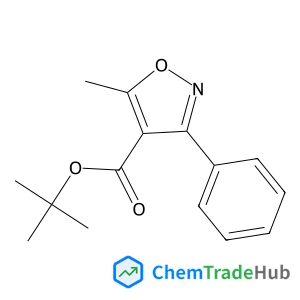
2-Methyl-2-propanyl 5-methyl-3-phenyl-1,2-oxazole-4-carboxylate
CAS Number:
211429-79-7
Molecular Formula:
C15H17NO3
![[3-(2,6-Dichlorophenyl)-5-isopropyl-1,2-oxazol-4-yl]methanol structure](https://static.chemtradehub.com/structs/278/278597-30-1-5c79.webp "[3-(2,6-Dichlorophenyl)-5-isopropyl-1,2-oxazol-4-yl]methanol structure")
[3-(2,6-Dichlorophenyl)-5-isopropyl-1,2-oxazol-4-yl]methanol
CAS Number:
278597-30-1
Molecular Formula:
C13H13Cl2NO2
Recommended Suppliers







Disclaimer
This page provides academic journal information for reference and research purposes only. We are not affiliated with any journal publishers and do not handle publication submissions. For publication-related inquiries, please contact the respective journal publishers directly.
If you notice any inaccuracies in the information displayed, please contact us at support@chemtradehub.com. We will promptly review and address your concerns.