











Stabilization of Au at edges of bimetallic PdAu nanocrystallites
Literature Information
Publication Date
2010-03-26
DOI
10.1039/B927048E
Impact Factor
3.676
Authors
Ilya V. Yudanov, Konstantin M. Neyman
View Original
Abstract
Density functional calculations were performed to study the distribution of Au atoms in bimetallic PdAu nanoparticles. A series of Pd79–nAun clusters of truncated octahedral shape with different content of Au ranging from n = 1 to 60 was used to model such bimetallic nanosystems. Segregation of Au to the particle surface is found to be thermodynamically favorable. The most stable sites for Au substitution are located at the edges of the PdAu nanoclusters. The stabilization at the edges is rationalized by their higher flexibility for surface relaxation which minimizes the strain induced by larger atomic radius of Au as compared to Pd. This stabilization of Au at the edges indicates the possibility to synthesize PdAu particles with Pd atoms located mainly on the facets, and edges “decorated” by Au atoms. Such nanocrystallites are expected to exhibit peculiar catalytic properties and, being thermodynamically stable, should be prone to retaining their initial shape under catalytic conditions.
Related Literature
Raman spectrum identification based on the correlation score using the weighted segmental hit quality index
Jun-Kyu Park, Aaron Park, Si Kyung Yang, Sung-June Baek, Joonki Hwang, Jaebum Choo
2016-12-20
Paper
DOI: 10.1039/C6AN02315K
Label-free monitoring of tissue biochemistry following traumatic brain injury using Raman spectroscopy
Francesca Pischiutta, Elisa R. Zanier, Ari Ercole
2016-11-28
Paper
DOI: 10.1039/C6AN02238C
A biotinylated piperazine-rhodol derivative: a ‘turn-on’ probe for nitroreductase triggered hypoxia imaging
Ying Zhou, Kondapa Naidu Bobba, Xue Wei Lv, Dan Yang, Nithya Velusamy, Jun Feng Zhang
2016-12-01
Paper
DOI: 10.1039/C6AN02107G
Acoustofluidic particle trapping, manipulation, and release using dynamic-mode cantilever sensors
Blake N. Johnson, Raj Mutharasan
2016-11-23
Paper
DOI: 10.1039/C6AN01743F
Ultrasensitive detection of nucleic acids based on dually enhanced fluorescence polarization
Bin Wang, Dahai Ren, Zheng You, Yaxiaer Yalikun, Yo Tanaka
2018-06-08
Paper
DOI: 10.1039/C8AN00952J
2D analysis of polydisperse core–shell nanoparticles using analytical ultracentrifugation
Gary Gorbet, Borries Demeler
2016-11-28
Paper
DOI: 10.1039/C6AN02236G
Analytical methods based on the light-scattering of plasmonic nanoparticles at the single particle level with dark-field microscopy imaging
Tian Li, Xi Wu, Feng Liu, Na Li
2016-11-21
Minireview
DOI: 10.1039/C6AN02384C
You might also like
Compound Q&A
What precautions should be taken when handling 4-Methyl-6-(trifluoromethyl)quinoline (CAS: 40716-16-3)?
When handling 4-Methyl-6-(trifluoromethyl)quinoline (CAS: 40716-16-3), safety go...
40716-16-34-Methyl-6-(trifluor...
Compound Q&A
What is 4-(3,5-Difluorophenyl)aniline (CAS: 405058-00-6)?
4-(3,5-Difluorophenyl)aniline is an aromatic organic compound with the CAS numbe...
405058-00-64-(3,5-Difluoropheny...
Compound Q&A
How is 5-{[4-(Trifluoromethyl)phenyl]sulfanyl}-1,2,3-thiadiazole-4-carboxylic acid (CAS: 338982-07-3) typically synthesized?
5-{[4-(Trifluoromethyl)phenyl]sulfanyl}-1,2,3-thiadiazole-4-carboxylic acid can ...
338982-07-35-{[4-(Trifluorometh...
Compound Q&A
What is the market or research trend for 4-Benzylaniline hydrochloride (CAS: 6317-57-3)?
The market for 4-Benzylaniline hydrochloride (CAS: 6317-57-3) is steadily growin...
6317-57-34-Benzylaniline hydr...
Compound Q&A
Is [3-(Diethylsulfamoyl)phenyl]boronic acid (CAS: 871329-58-7) safe?
[3-(Diethylsulfamoyl)phenyl]boronic acid is generally considered safe when handl...
871329-58-7[3-(Diethylsulfamoyl...
Compound Q&A
What are the main uses of 3-Bromo-2,5-dimethoxyaniline (CAS: 115929-62-9)?
3-Bromo-2,5-dimethoxyaniline is mainly used in the pharmaceutical and chemical i...
115929-62-93-Bromo-2,5-dimethox...
Compound Q&A
What regulatory guidelines apply to N-Methyl-1-(5-methyl-1H-indol-3-yl)methanamine (CAS: 915922-67-7)?
N-Methyl-1-(5-methyl-1H-indol-3-yl)methanamine (CAS: 915922-67-7) is subject to ...
915922-67-7N-Methyl-1-(5-methyl...
Compound Q&A
What industries use Carbamic acid, N-[(5S)-5,6-diamino-6-oxohexyl]-, 1,1-dimethylethyl ester (CAS: 24828-96-4)?
This compound is primarily used in the pharmaceutical industry for the synthesis...
24828-96-4Carbamic acid, N-[(5...
Compound Q&A
How should 2-Methyl-2-propanyl [(1S,3R)-3-aminocyclohexyl]carbamate (CAS: 1298101-47-9) be stored?
2-Methyl-2-propanyl [(1S,3R)-3-aminocyclohexyl]carbamate (CAS: 1298101-47-9) sho...
1298101-47-92-Methyl-2-propanyl ...
Compound Q&A
What industries use Ethyl 2-bromo-4,4,4-trifluorobutanoate (CAS: 367-33-9)?
Ethyl 2-bromo-4,4,4-trifluorobutanoate (CAS: 367-33-9) is utilized in the pharma...
367-33-9Ethyl 2-bromo-4,4,4-...
Source Journal
Physical Chemistry Chemical Physics

CiteScore:
5.5
Self-citation Rate:
10.3%
Articles per Year:
3036
Physical Chemistry Chemical Physics (PCCP) is an international journal co-owned by 19 physical chemistry and physics societies from around the world. This journal publishes original, cutting-edge research in physical chemistry, chemical physics and biophysical chemistry. To be suitable for publication in PCCP, articles must include significant innovation and/or insight into physical chemistry; this is the most important criterion that reviewers and Editors will judge against when evaluating submissions. The journal has a broad scope and welcomes contributions spanning experiment, theory, computation and data science. Topical coverage includes spectroscopy, dynamics, kinetics, statistical mechanics, thermodynamics, electrochemistry, catalysis, surface science, quantum mechanics, quantum computing and machine learning. Interdisciplinary research areas such as polymers and soft matter, materials, nanoscience, energy, surfaces/interfaces, and biophysical chemistry are welcomed if they demonstrate significant innovation and/or insight into physical chemistry. Joined experimental/theoretical studies are particularly appreciated when complementary and based on up-to-date approaches.
Recommended Compounds
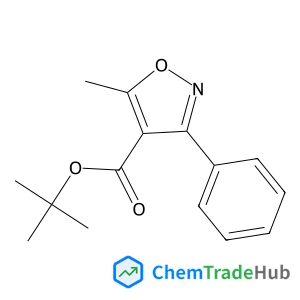
2-Methyl-2-propanyl 5-methyl-3-phenyl-1,2-oxazole-4-carboxylate
CAS Number:
211429-79-7
Molecular Formula:
C15H17NO3
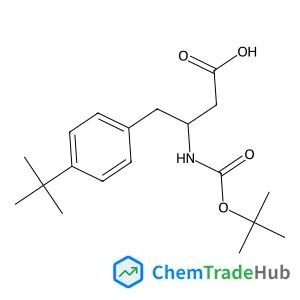
(S)-3-((tert-Butoxycarbonyl)amino)-4-(4-(tert-butyl)phenyl)butanoic acid
CAS Number:
403661-85-8
Molecular Formula:
C19H29NO4
Recommended Suppliers





Disclaimer
This page provides academic journal information for reference and research purposes only. We are not affiliated with any journal publishers and do not handle publication submissions. For publication-related inquiries, please contact the respective journal publishers directly.
If you notice any inaccuracies in the information displayed, please contact us at support@chemtradehub.com. We will promptly review and address your concerns.