


Ab initio investigation of the methylation and hydration effects on the electronic spectra of uracil and thymine
Literature Information
Publication Date
2010-03-27
DOI
10.1039/B925677F
Impact Factor
3.676
Authors
Mihajlo Etinski, Christel M. Marian
View Original
Abstract
In this work we investigated the lowest-lying electronic excitations for a series of methyl-substituted uracil derivatives, i.e., uracil, 1-methyluracil, 3-methyluracil, thymine, 1-methylthymine, 1,3-dimethyluracil, 3-methylthymine, 1,3-dimethylthymine, and their microhydrated complexes by means of coupled cluster singles and approximate doubles (CC2) and density functional theory (DFT) methods. The bulk water environment was mimicked by a combination of microhydration and the conductor-like screening model (COSMO). We find that the shift of the electronic excitation energies due to methylation and hydration depend on the character of the wave function and on the position of the methyl substituent. The lowest-lying singlet and triplet n → π* states are insensitive to methylation but are strongly blue-shifted by microhydration and bulk water solvation. The largest red-shift of the first 1(π → π*) excitation occurs upon methylation at N1 followed by substitution at C5 whereas no effect is obtained for a methylation at N3. For this state, the effects of methylation and hydrogen bonding partially cancel. Upon microhydration with six water molecules, the order of the 1(n → π*) and 1(π → π*) states is reversed in the vertical spectrum. Electrostatic solute–solvent interaction in bulk water leads to a further increase of their energy separation. The n → π* states are important intermediates for the triplet formation. Shifting them energetically above the primarily excited 1(π → π*) state will considerably decrease the triplet quantum yield and thus increase the photostability of the compounds, in agreement with experimental observations.
Recommended Journals

Advanced Engineering Materials

Coloration Technology

CrystEngComm

Physical Chemistry Chemical Physics

Angewandte Chemie International Edition

European Journal of Organic Chemistry

Journal of Enzyme inhibition and Medicinal Chemistry

Nature Reviews Drug Discovery

Journal of Medical Biochemistry

Foundations of Chemistry
Related Literature
Real-time femtomolar detection of cancer biomarkers from photoconjugated antibody–phage constructs
M. Brasino
2016-10-04
Paper
DOI: 10.1039/C6AN01904H
Structural and elemental changes in glioblastoma cells in situ: complementary imaging with high resolution visible light- and X-ray microscopy
Tanja Dučić, Tatjana Paunesku, Si Chen, Milena Ninković, Swetlana Speling, Charlene Wilke, Barry Lai, Gayle Woloschak
2016-12-09
Paper
DOI: 10.1039/C6AN02532C
Electron spin resonance and fluorescence imaging assisted electrochemical approach for accurate and comprehensive monitoring of cellular hydrogen peroxide dynamics
Qi Xin, Jian Ru Gong
2016-11-28
Paper
DOI: 10.1039/C6AN02006B
Detection of the tuberculosis antigenic marker mannose-capped lipoarabinomannan in pretreated serum by surface-enhanced Raman scattering
Lars B. Laurentius, Timothy S. Mulvihill, Jennifer H. Granger, John S. Spencer, Delphi Chatterjee, Kimberly E. Hanson
2016-11-28
Paper
DOI: 10.1039/C6AN02110G
A competitive immunoassay system for microfluidic paper-based analytical detection of small size molecules
Saeed Mohammadi, Masatoshi Maeki, Akihiko Ishida, Hirofumi Tani
2016-11-04
Paper
DOI: 10.1039/C6AN01475E
FTIR imaging of the molecular burden around Aβ deposits in an early-stage 3-Tg-APP-PSP1-TAU mouse model of Alzheimer's disease
Artur Dawid Surowka, Herve Boutin, Lidan Christie, Magdalena Szczerbowska-Boruchowska
2016-11-28
Paper
DOI: 10.1039/C6AN01797E
Correlation ion mobility spectrometry
Austen L. Davis, Wenjie Liu, William F. Siems, Brian H. Clowers
2016-12-08
Paper
DOI: 10.1039/C6AN02249A
DNA biosensing with 3D printing technology
Adeline Huiling Loo, Chun Kiang Chua, Martin Pumera
2016-12-21
Paper
DOI: 10.1039/C6AN02038K
You might also like
Compound Q&A
What precautions should be taken when handling 4-Methyl-6-(trifluoromethyl)quinoline (CAS: 40716-16-3)?
When handling 4-Methyl-6-(trifluoromethyl)quinoline (CAS: 40716-16-3), safety go...
40716-16-34-Methyl-6-(trifluor...
Compound Q&A
What is 4-(3,5-Difluorophenyl)aniline (CAS: 405058-00-6)?
4-(3,5-Difluorophenyl)aniline is an aromatic organic compound with the CAS numbe...
405058-00-64-(3,5-Difluoropheny...
Compound Q&A
How is 5-{[4-(Trifluoromethyl)phenyl]sulfanyl}-1,2,3-thiadiazole-4-carboxylic acid (CAS: 338982-07-3) typically synthesized?
5-{[4-(Trifluoromethyl)phenyl]sulfanyl}-1,2,3-thiadiazole-4-carboxylic acid can ...
338982-07-35-{[4-(Trifluorometh...
Compound Q&A
What is the market or research trend for 4-Benzylaniline hydrochloride (CAS: 6317-57-3)?
The market for 4-Benzylaniline hydrochloride (CAS: 6317-57-3) is steadily growin...
6317-57-34-Benzylaniline hydr...
Compound Q&A
Is [3-(Diethylsulfamoyl)phenyl]boronic acid (CAS: 871329-58-7) safe?
[3-(Diethylsulfamoyl)phenyl]boronic acid is generally considered safe when handl...
871329-58-7[3-(Diethylsulfamoyl...
Compound Q&A
What are the main uses of 3-Bromo-2,5-dimethoxyaniline (CAS: 115929-62-9)?
3-Bromo-2,5-dimethoxyaniline is mainly used in the pharmaceutical and chemical i...
115929-62-93-Bromo-2,5-dimethox...
Compound Q&A
What regulatory guidelines apply to N-Methyl-1-(5-methyl-1H-indol-3-yl)methanamine (CAS: 915922-67-7)?
N-Methyl-1-(5-methyl-1H-indol-3-yl)methanamine (CAS: 915922-67-7) is subject to ...
915922-67-7N-Methyl-1-(5-methyl...
Compound Q&A
What industries use Carbamic acid, N-[(5S)-5,6-diamino-6-oxohexyl]-, 1,1-dimethylethyl ester (CAS: 24828-96-4)?
This compound is primarily used in the pharmaceutical industry for the synthesis...
24828-96-4Carbamic acid, N-[(5...
Compound Q&A
How should 2-Methyl-2-propanyl [(1S,3R)-3-aminocyclohexyl]carbamate (CAS: 1298101-47-9) be stored?
2-Methyl-2-propanyl [(1S,3R)-3-aminocyclohexyl]carbamate (CAS: 1298101-47-9) sho...
1298101-47-92-Methyl-2-propanyl ...
Compound Q&A
What industries use Ethyl 2-bromo-4,4,4-trifluorobutanoate (CAS: 367-33-9)?
Ethyl 2-bromo-4,4,4-trifluorobutanoate (CAS: 367-33-9) is utilized in the pharma...
367-33-9Ethyl 2-bromo-4,4,4-...
Source Journal
Physical Chemistry Chemical Physics
CiteScore:
5.5
Self-citation Rate:
10.3%
Articles per Year:
3036
Physical Chemistry Chemical Physics (PCCP) is an international journal co-owned by 19 physical chemistry and physics societies from around the world. This journal publishes original, cutting-edge research in physical chemistry, chemical physics and biophysical chemistry. To be suitable for publication in PCCP, articles must include significant innovation and/or insight into physical chemistry; this is the most important criterion that reviewers and Editors will judge against when evaluating submissions. The journal has a broad scope and welcomes contributions spanning experiment, theory, computation and data science. Topical coverage includes spectroscopy, dynamics, kinetics, statistical mechanics, thermodynamics, electrochemistry, catalysis, surface science, quantum mechanics, quantum computing and machine learning. Interdisciplinary research areas such as polymers and soft matter, materials, nanoscience, energy, surfaces/interfaces, and biophysical chemistry are welcomed if they demonstrate significant innovation and/or insight into physical chemistry. Joined experimental/theoretical studies are particularly appreciated when complementary and based on up-to-date approaches.
Recommended Compounds
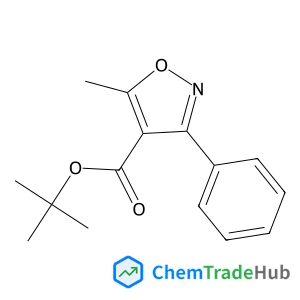
2-Methyl-2-propanyl 5-methyl-3-phenyl-1,2-oxazole-4-carboxylate
CAS Number:
211429-79-7
Molecular Formula:
C15H17NO3
![Imidazo[1,2-c]pyrimidine structure](https://static.chemtradehub.com/structs/274/274-78-2-8b4c.webp "Imidazo[1,2-c]pyrimidine structure")
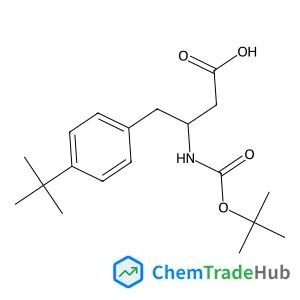
(S)-3-((tert-Butoxycarbonyl)amino)-4-(4-(tert-butyl)phenyl)butanoic acid
CAS Number:
403661-85-8
Molecular Formula:
C19H29NO4
Recommended Suppliers




Disclaimer
This page provides academic journal information for reference and research purposes only. We are not affiliated with any journal publishers and do not handle publication submissions. For publication-related inquiries, please contact the respective journal publishers directly.
If you notice any inaccuracies in the information displayed, please contact us at support@chemtradehub.com. We will promptly review and address your concerns.