












Photostability and solvation: photodynamics of microsolvated zwitterionic glycine
Literature Information
Publication Date
2010-02-11
DOI
10.1039/B925246K
Impact Factor
3.676
Authors
View Original
Abstract
Photoinduced processes of the zwitterionic glycine solvated with one and two water molecules were investigated using both static (CASSCF, MRCI and EOM-CCSD methods) and excited state non-adiabatic molecular dynamics (full multiple spawning method) approaches. Reaction pathways were identified and the respective yields and timescales determined. Excitation to the two lowest states, corresponding to the onset of the glycine absorption spectrum, was considered and the conformational dependence of the photochemical behavior was explored. The main processes on the femtosecond timescale are C–N dissociation producing the ammonia molecule, dissociation of hydrogen atom from the amino group and regeneration of the non-ionized glycine molecule via hydrogen transfer. It is found that the photochemical reaction yields strongly depend on the cluster conformation. A significant fraction of the electronic population is trapped in the nπ* minimum and the system deactivates only on longer timescales. Photostability of aminoacids can be rationalized in terms of the mechanisms described above. However, to actually reproduce glycine photostability, it is necessary to proceed beyond the cluster models. It is shown that the QM/MM approach within a simple electrostatic embedding scheme represents a reliable approach reproducing the main features of glycine photochemistry.
Related Literature
An ultrasensitive electrochemical immunosensor based on the synergistic effect of quaternary Cu2SnZnS4 NCs and cyclodextrin-functionalized graphene
Lei Liu, Yihe Zhang, Ruifeng Du, Jinhong Li, Xuelian Yu
2017-01-17
Paper
DOI: 10.1039/C6AN02538B
Development of a functional point-of-need diagnostic for myeloperoxidase detection to identify neutrophilic bronchitis
Michael G. Wolfe, Qiang Zhang, Christy Hui, Katherine Radford, Parameswaran Nair, John D. Brennan
2016-10-21
Paper
DOI: 10.1039/C6AN01563H
UiO-66@SiO2 core–shell microparticles as stationary phases for the separation of small organic molecules
A. Peristyy, P. N. Nesterenko, A. Das, D. M. D'Alessandro
2017-01-05
Paper
DOI: 10.1039/C6AN02344D
Specific and sensitive detection of Plasmodium falciparum lactate dehydrogenase by DNA-scaffolded silver nanoclusters combined with an aptamer
Wei-Xian Wang, Yee-Wai Cheung, Roderick M. Dirkzwager, Wai-Chung Wong, Julian A. Tanner, Hong-Wei Li, Yuqing Wu
2017-01-16
Paper
DOI: 10.1039/C6AN02417C
Thin layered drawing media probed by THz time-domain spectroscopy
A. Taschin, P. Bartolini, J. Striova, R. Fontana
2016-11-21
Communication
DOI: 10.1039/C6AN02113A
Detection of glycosylation and iron-binding protein modifications using Raman spectroscopy
Victoria L. Brewster, Royston Goodacre
2017-02-01
Paper
DOI: 10.1039/C6AN02516A
Feature driven classification of Raman spectra for real-time spectral brain tumour diagnosis using sound
Ryan Stables, Holly J. Butler, Katherine M. Ashton, Andrew Brodbelt, Timothy P. Dawson, Leanne M. Fullwood, Michael D. Jenkinson, Matthew J. Baker
2016-10-12
Paper
DOI: 10.1039/C6AN01583B
Creating BHb-imprinted magnetic nanoparticles with multiple binding sites
Yanxia Li, Yiting Chen, Lu Huang, BenYong Lou, Guonan Chen
2016-11-28
Paper
DOI: 10.1039/C6AN02121B
You might also like
Compound Q&A
What precautions should be taken when handling 4-Methyl-6-(trifluoromethyl)quinoline (CAS: 40716-16-3)?
When handling 4-Methyl-6-(trifluoromethyl)quinoline (CAS: 40716-16-3), safety go...
40716-16-34-Methyl-6-(trifluor...
Compound Q&A
What is 4-(3,5-Difluorophenyl)aniline (CAS: 405058-00-6)?
4-(3,5-Difluorophenyl)aniline is an aromatic organic compound with the CAS numbe...
405058-00-64-(3,5-Difluoropheny...
Compound Q&A
How is 5-{[4-(Trifluoromethyl)phenyl]sulfanyl}-1,2,3-thiadiazole-4-carboxylic acid (CAS: 338982-07-3) typically synthesized?
5-{[4-(Trifluoromethyl)phenyl]sulfanyl}-1,2,3-thiadiazole-4-carboxylic acid can ...
338982-07-35-{[4-(Trifluorometh...
Compound Q&A
What is the market or research trend for 4-Benzylaniline hydrochloride (CAS: 6317-57-3)?
The market for 4-Benzylaniline hydrochloride (CAS: 6317-57-3) is steadily growin...
6317-57-34-Benzylaniline hydr...
Compound Q&A
Is [3-(Diethylsulfamoyl)phenyl]boronic acid (CAS: 871329-58-7) safe?
[3-(Diethylsulfamoyl)phenyl]boronic acid is generally considered safe when handl...
871329-58-7[3-(Diethylsulfamoyl...
Compound Q&A
What are the main uses of 3-Bromo-2,5-dimethoxyaniline (CAS: 115929-62-9)?
3-Bromo-2,5-dimethoxyaniline is mainly used in the pharmaceutical and chemical i...
115929-62-93-Bromo-2,5-dimethox...
Compound Q&A
What regulatory guidelines apply to N-Methyl-1-(5-methyl-1H-indol-3-yl)methanamine (CAS: 915922-67-7)?
N-Methyl-1-(5-methyl-1H-indol-3-yl)methanamine (CAS: 915922-67-7) is subject to ...
915922-67-7N-Methyl-1-(5-methyl...
Compound Q&A
What industries use Carbamic acid, N-[(5S)-5,6-diamino-6-oxohexyl]-, 1,1-dimethylethyl ester (CAS: 24828-96-4)?
This compound is primarily used in the pharmaceutical industry for the synthesis...
24828-96-4Carbamic acid, N-[(5...
Compound Q&A
How should 2-Methyl-2-propanyl [(1S,3R)-3-aminocyclohexyl]carbamate (CAS: 1298101-47-9) be stored?
2-Methyl-2-propanyl [(1S,3R)-3-aminocyclohexyl]carbamate (CAS: 1298101-47-9) sho...
1298101-47-92-Methyl-2-propanyl ...
Compound Q&A
What industries use Ethyl 2-bromo-4,4,4-trifluorobutanoate (CAS: 367-33-9)?
Ethyl 2-bromo-4,4,4-trifluorobutanoate (CAS: 367-33-9) is utilized in the pharma...
367-33-9Ethyl 2-bromo-4,4,4-...
Source Journal
Physical Chemistry Chemical Physics

CiteScore:
5.5
Self-citation Rate:
10.3%
Articles per Year:
3036
Physical Chemistry Chemical Physics (PCCP) is an international journal co-owned by 19 physical chemistry and physics societies from around the world. This journal publishes original, cutting-edge research in physical chemistry, chemical physics and biophysical chemistry. To be suitable for publication in PCCP, articles must include significant innovation and/or insight into physical chemistry; this is the most important criterion that reviewers and Editors will judge against when evaluating submissions. The journal has a broad scope and welcomes contributions spanning experiment, theory, computation and data science. Topical coverage includes spectroscopy, dynamics, kinetics, statistical mechanics, thermodynamics, electrochemistry, catalysis, surface science, quantum mechanics, quantum computing and machine learning. Interdisciplinary research areas such as polymers and soft matter, materials, nanoscience, energy, surfaces/interfaces, and biophysical chemistry are welcomed if they demonstrate significant innovation and/or insight into physical chemistry. Joined experimental/theoretical studies are particularly appreciated when complementary and based on up-to-date approaches.
Recommended Compounds
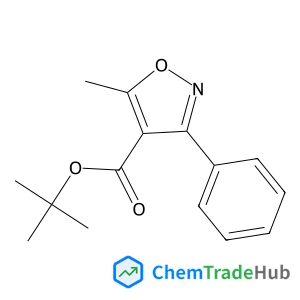
2-Methyl-2-propanyl 5-methyl-3-phenyl-1,2-oxazole-4-carboxylate
CAS Number:
211429-79-7
Molecular Formula:
C15H17NO3
![(4aR,5S,6R,8aS)-5-[2-(3-Furyl)ethyl]-8a-(hydroxymethyl)-5,6-dimethyl-3,4,4a,5,6,7,8,8a-octahydro-1-naphthalenecarboxylic acid structure](https://static.chemtradehub.com/structs/184/18411-75-1-d4cd.webp "(4aR,5S,6R,8aS)-5-[2-(3-Furyl)ethyl]-8a-(hydroxymethyl)-5,6-dimethyl-3,4,4a,5,6,7,8,8a-octahydro-1-naphthalenecarboxylic acid structure")
(4aR,5S,6R,8aS)-5-[2-(3-Furyl)ethyl]-8a-(hydroxymethyl)-5,6-dimethyl-3,4,4a,5,6,7,8,8a-octahydro-1-naphthalenecarboxylic acid
CAS Number:
18411-75-1
Molecular Formula:
C20H28O4
Recommended Suppliers





Disclaimer
This page provides academic journal information for reference and research purposes only. We are not affiliated with any journal publishers and do not handle publication submissions. For publication-related inquiries, please contact the respective journal publishers directly.
If you notice any inaccuracies in the information displayed, please contact us at support@chemtradehub.com. We will promptly review and address your concerns.