












Rules and trends of metal cation driven hydride-transfer mechanisms in metal amidoboranes
Literature Information
Publication Date
2010-04-06
DOI
10.1039/B925235E
Impact Factor
3.676
Authors
Dong Young Kim, Han Myoung Lee, Jongcheol Seo, Seung Koo Shin, Kwang S. Kim
View Original
Abstract
Group I and II metal amidoboranes have been identified as one of the promising families of materials for efficient H2 storage. However, the underlying mechanism of the dehydrogenation of these materials is not well understood. Thus, the mechanisms and kinetics of H2 release in metal amidoboranes are investigated using high level ab initio calculations and kinetic simulations. The metal plays the role of catalyst for the hydride transfer with formation of a metal hydride intermediate towards the dehydrogenation. In this process, with increasing ionic character of the metal hydride bond in the intermediate, the stability of the intermediate decreases, while the dehydrogenation process involving ionic recombination of the hydridic H with the protic H proceeds with a reduced barrier. Such correlations lead directly to a U-shaped relationship between the activation energy barrier for H2 elimination and the ionicity of metal hydride bond. Oligomerized intermediates are formed by the chain reaction of the size-driven catalytic effects of metals, competing with the non-oligomerization pathway. The kinetic rates at low temperatures are determined by the maximum barrier height in the pathway (a Λ-shaped relation), while those at moderately high temperatures are determined by most of multiple-barriers. This requires kinetic simulations. At the operating temperatures of proton exchange membrane fuel cells, the metal amidoboranes with lithium and sodium release H2 along both oligomerization and non-oligomerization paths. The sodium amidoboranes show the most accelerated rates, while others release H2 at similar rates. In addition, we predict that the novel metal amidoborane-based adducts and mixtures would release H2 with accelerated rates as well as with enhanced reversibility. This comprehensive study is useful for further developments of active metal-based better hydrogen storage materials.
Related Literature
The Fermi level as an energy reference in liquid jet X-ray photoelectron spectroscopy studies of aqueous solutions
Lucía Pérez Ramírez, Anthony Boucly, Florent Saudrais, Emmanuel Maisonhaute, Aleksandar R. Milosavljević, Christophe Nicolas, François Rochet
2021-07-05
Paper
DOI: 10.1039/D1CP01511G
Reactive force fields for aqueous and interfacial magnesium carbonate formation
Siavash Zare, Mohammad Javad Abdolhosseini Qomi
2021-10-01
Paper
DOI: 10.1039/D1CP02627E
Local structure and NO adsorption/desorption property of Pd2+ cations at different paired Al sites in CHA zeolite
Shunsaku Yasumura, Taihei Ueda, Hajime Ide, Katsumasa Otsubo, Chong Liu, Nao Tsunoji, Zen Maeno
2021-08-12
Paper
DOI: 10.1039/D1CP02668B
Effect of water nanoconfinement on the dynamic properties of paramagnetic colloidal complexes
Luca Bergamasco, Matteo Morciano, Matteo Fasano
2021-08-02
Paper
DOI: 10.1039/D1CP00708D
Theoretical characterization of zeolite encapsulated platinum clusters in the presence of water molecules
2021-10-07
Paper
DOI: 10.1039/D1CP03766H
Deformation mechanism of a metal–organic framework glass under indentation
Theany To, Malwina Stepniewska, Haizheng Tao, Laurent Calvez, Xianghua Zhang, Morten M. Smedskjaer, Yuanzheng Yue
2021-07-26
Paper
DOI: 10.1039/D1CP02213J
Unravelling the nature of a toluene–fumaronitrile complex
Andrzej J. Kałka, Mateusz Z. Brela, Andrzej M. Turek
2021-07-03
Paper
DOI: 10.1039/D1CP01895G
Tunable band gaps and high carrier mobilities in stanene by small organic molecule adsorption under external electric fields
Mei-Xia Xiao, Xiao Shao, Hai-Yang Song, Zhao Li, Min-Rong An, Cheng He
2021-07-01
Paper
DOI: 10.1039/D1CP01582F
Adenine ultrafast photorelaxation via electron-driven proton transfer
Naeem Ullah, Shunwei Chen
2021-09-18
Paper
DOI: 10.1039/D1CP03162G
You might also like
Compound Q&A
What precautions should be taken when handling 4-Methyl-6-(trifluoromethyl)quinoline (CAS: 40716-16-3)?
When handling 4-Methyl-6-(trifluoromethyl)quinoline (CAS: 40716-16-3), safety go...
40716-16-34-Methyl-6-(trifluor...
Compound Q&A
What is 4-(3,5-Difluorophenyl)aniline (CAS: 405058-00-6)?
4-(3,5-Difluorophenyl)aniline is an aromatic organic compound with the CAS numbe...
405058-00-64-(3,5-Difluoropheny...
Compound Q&A
How is 5-{[4-(Trifluoromethyl)phenyl]sulfanyl}-1,2,3-thiadiazole-4-carboxylic acid (CAS: 338982-07-3) typically synthesized?
5-{[4-(Trifluoromethyl)phenyl]sulfanyl}-1,2,3-thiadiazole-4-carboxylic acid can ...
338982-07-35-{[4-(Trifluorometh...
Compound Q&A
What is the market or research trend for 4-Benzylaniline hydrochloride (CAS: 6317-57-3)?
The market for 4-Benzylaniline hydrochloride (CAS: 6317-57-3) is steadily growin...
6317-57-34-Benzylaniline hydr...
Compound Q&A
Is [3-(Diethylsulfamoyl)phenyl]boronic acid (CAS: 871329-58-7) safe?
[3-(Diethylsulfamoyl)phenyl]boronic acid is generally considered safe when handl...
871329-58-7[3-(Diethylsulfamoyl...
Compound Q&A
What are the main uses of 3-Bromo-2,5-dimethoxyaniline (CAS: 115929-62-9)?
3-Bromo-2,5-dimethoxyaniline is mainly used in the pharmaceutical and chemical i...
115929-62-93-Bromo-2,5-dimethox...
Compound Q&A
What regulatory guidelines apply to N-Methyl-1-(5-methyl-1H-indol-3-yl)methanamine (CAS: 915922-67-7)?
N-Methyl-1-(5-methyl-1H-indol-3-yl)methanamine (CAS: 915922-67-7) is subject to ...
915922-67-7N-Methyl-1-(5-methyl...
Compound Q&A
What industries use Carbamic acid, N-[(5S)-5,6-diamino-6-oxohexyl]-, 1,1-dimethylethyl ester (CAS: 24828-96-4)?
This compound is primarily used in the pharmaceutical industry for the synthesis...
24828-96-4Carbamic acid, N-[(5...
Compound Q&A
How should 2-Methyl-2-propanyl [(1S,3R)-3-aminocyclohexyl]carbamate (CAS: 1298101-47-9) be stored?
2-Methyl-2-propanyl [(1S,3R)-3-aminocyclohexyl]carbamate (CAS: 1298101-47-9) sho...
1298101-47-92-Methyl-2-propanyl ...
Compound Q&A
What industries use Ethyl 2-bromo-4,4,4-trifluorobutanoate (CAS: 367-33-9)?
Ethyl 2-bromo-4,4,4-trifluorobutanoate (CAS: 367-33-9) is utilized in the pharma...
367-33-9Ethyl 2-bromo-4,4,4-...
Source Journal
Physical Chemistry Chemical Physics

CiteScore:
5.5
Self-citation Rate:
10.3%
Articles per Year:
3036
Physical Chemistry Chemical Physics (PCCP) is an international journal co-owned by 19 physical chemistry and physics societies from around the world. This journal publishes original, cutting-edge research in physical chemistry, chemical physics and biophysical chemistry. To be suitable for publication in PCCP, articles must include significant innovation and/or insight into physical chemistry; this is the most important criterion that reviewers and Editors will judge against when evaluating submissions. The journal has a broad scope and welcomes contributions spanning experiment, theory, computation and data science. Topical coverage includes spectroscopy, dynamics, kinetics, statistical mechanics, thermodynamics, electrochemistry, catalysis, surface science, quantum mechanics, quantum computing and machine learning. Interdisciplinary research areas such as polymers and soft matter, materials, nanoscience, energy, surfaces/interfaces, and biophysical chemistry are welcomed if they demonstrate significant innovation and/or insight into physical chemistry. Joined experimental/theoretical studies are particularly appreciated when complementary and based on up-to-date approaches.
Recommended Compounds
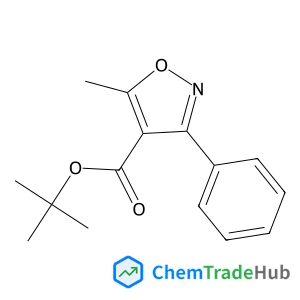
2-Methyl-2-propanyl 5-methyl-3-phenyl-1,2-oxazole-4-carboxylate
CAS Number:
211429-79-7
Molecular Formula:
C15H17NO3
Recommended Suppliers




Disclaimer
This page provides academic journal information for reference and research purposes only. We are not affiliated with any journal publishers and do not handle publication submissions. For publication-related inquiries, please contact the respective journal publishers directly.
If you notice any inaccuracies in the information displayed, please contact us at support@chemtradehub.com. We will promptly review and address your concerns.