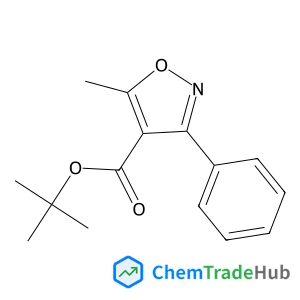
2-Methyl-2-propanyl 5-methyl-3-phenyl-1,2-oxazole-4-carboxylate
CAS Number:
211429-79-7
Molecular Formula:
C15H17NO3
Fabrizio Santoro, Vincenzo Barone, Alessandro Lami, Roberto Improta
The excited-state behavior in the Franck–Condon (FC) region of the d(ApG) and d(GpA) dinucleoside monophosphate (A = adenine, G = guanine) is investigated in aqueous solution by means of time-dependent Density Functional Calculations, including solvent effects by the Polarizable Continuum Model and using three different functionals, i.e. PBE0, M052X, and CAM-B3LYP. Our analysis, focussed mainly on the two stacked dimers formed by 9-methyl-adenine and 9-methyl-guanine in the same arrangement as in the B structure of DNA (AG and GA), provides absorption and ECD spectra in very good agreement with their experimental counterparts. The sequence dependence of the dinucleoside excited-state properties is fully reproduced and it is explained on the grounds of the different interactions among the nucleobases’ frontier orbitals existing in AG and GA. Our calculations predict that the 9Me-G → 9Me-A charge transfer (CT) excited state is, at least, as stable as the lowest energy bright state of the dimers and that it is more stable than the intra-strand CT state in the (9Me-A)2 stacked dimer. On the other hand, in AG and GA the 9Me-G → 9Me-A CT state is significantly coupled to the dimer bright excited states and deviations from the decay rate predicted on the ground of the Marcus Theory are possible.
Mei-Xia Xiao, Xiao Shao, Hai-Yang Song, Zhao Li, Min-Rong An, Cheng He
DOI: 10.1039/D1CP01582F
Debasis Saha, Biman Jana
DOI: 10.1039/D1CP01866C
Jocasta Avila, Luiz Fernando Lepre, Kateryna Goloviznina, Lorenzo Guazzelli, Christian Silvio Pomelli, Cinzia Chiappe, Agilio Pádua, Margarida Costa Gomes
DOI: 10.1039/D1CP02080C
Qi Qiao, Jian Shi, Qing Shao
DOI: 10.1039/D1CP03282H
A. Bafekry, S. Karbasizadeh, M. Faraji, A. Bagheri Khatibani, I. Abdolhosseini Sarsari, D. Gogova, M. Ghergherehchi
DOI: 10.1039/D1CP90197D
Ephrem G. Demissie, Wing Ka Lam, Wai Kit Tang, Chi-Kit Siu
DOI: 10.1039/D1CP01820E
DOI: 10.1039/D1CP01831K
O. A. Otmakhova, G. N. Bondarenko, G. A. Shandryuk, A. S. Merekalov, R. V. Talroze
DOI: 10.1039/D1CP00660F
Catherine Michaux, Eric A. Perpète, David Zanuy
DOI: 10.1039/D1CP01840J
Chenxu Zhao, Menghui Xi, Jinrong Huo, Chaozheng He
DOI: 10.1039/D1CP03943A
When handling 4-Methyl-6-(trifluoromethyl)quinoline (CAS: 40716-16-3), safety go...
4-(3,5-Difluorophenyl)aniline is an aromatic organic compound with the CAS numbe...
5-{[4-(Trifluoromethyl)phenyl]sulfanyl}-1,2,3-thiadiazole-4-carboxylic acid can ...
The market for 4-Benzylaniline hydrochloride (CAS: 6317-57-3) is steadily growin...
[3-(Diethylsulfamoyl)phenyl]boronic acid is generally considered safe when handl...
3-Bromo-2,5-dimethoxyaniline is mainly used in the pharmaceutical and chemical i...
N-Methyl-1-(5-methyl-1H-indol-3-yl)methanamine (CAS: 915922-67-7) is subject to ...
This compound is primarily used in the pharmaceutical industry for the synthesis...
2-Methyl-2-propanyl [(1S,3R)-3-aminocyclohexyl]carbamate (CAS: 1298101-47-9) sho...
Ethyl 2-bromo-4,4,4-trifluorobutanoate (CAS: 367-33-9) is utilized in the pharma...

Physical Chemistry Chemical Physics (PCCP) is an international journal co-owned by 19 physical chemistry and physics societies from around the world. This journal publishes original, cutting-edge research in physical chemistry, chemical physics and biophysical chemistry. To be suitable for publication in PCCP, articles must include significant innovation and/or insight into physical chemistry; this is the most important criterion that reviewers and Editors will judge against when evaluating submissions. The journal has a broad scope and welcomes contributions spanning experiment, theory, computation and data science. Topical coverage includes spectroscopy, dynamics, kinetics, statistical mechanics, thermodynamics, electrochemistry, catalysis, surface science, quantum mechanics, quantum computing and machine learning. Interdisciplinary research areas such as polymers and soft matter, materials, nanoscience, energy, surfaces/interfaces, and biophysical chemistry are welcomed if they demonstrate significant innovation and/or insight into physical chemistry. Joined experimental/theoretical studies are particularly appreciated when complementary and based on up-to-date approaches.
![N-{3-[Benzyl(methyl)amino]propyl}-9-chloro-5,6,7,8-tetrahydro-2-acridinecarboxamide structure](https://static.chemtradehub.com/structs/142/1426944-49-1-1e4c.webp "N-{3-[Benzyl(methyl)amino]propyl}-9-chloro-5,6,7,8-tetrahydro-2-acridinecarboxamide structure")