


Clusters of atmospheric relevance: H2O/HCl/HNO3. Prediction of IR & MW spectra
Literature Information
Publication Date
2010-03-18
DOI
10.1039/B924890K
Impact Factor
3.676
Authors
Pedro C. Gómez, Oscar Gálvez, Rafael G. Mosteo, Cristina Puzzarini, R. Escribano
View Original
Abstract
Theoretical calculations at the B3LYP/aug-cc-pVQZ level are performed on ternary clusters of water, hydrogen chloride and nitric acid to predict their IR and MW spectra. The main IR spectral features and their changes in a set of 15 selected clusters are analyzed in terms of the different hydrogen bonding characteristics of the aggregates. The formation of these clusters in laboratory experiments and their possible identification based on their infrared and microwave spectral properties are discussed. Based on a calculation of the Gibbs free-energy of formation of the clusters from their monomers, the population distribution of the molecules at atmospherically relevant temperatures is evaluated, and the IR spectra of the composed mixture are predicted. The variations of specific spectral features with temperature are assessed, and the possible observation of these features is proposed as a means to detect the existence of these clusters, as well as an indication of the temperature of the corresponding atmospheric sample.
Recommended Journals

Cement and Concrete Composites

Diamond and Related Materials

Journal of Computer-Aided Molecular Design

Computational Materials Science

Advanced Powder Technology

Catalysis Today

Current Medicinal Chemistry

Bio-Medical Materials and Engineering

Journal of Physical Organic Chemistry

Advanced Composite Materials
Related Literature
A theoretical approach to evaluate and understand the electrical properties of the electrode materials of batteries
Hatef Yousefi-Mashhour, Mohammad Mahdi Kalantarian
2021-07-06
Paper
DOI: 10.1039/D1CP01796A
The disparate effect of strain on thermal conductivity of 2-D materials
K. V. S. Dheeraj, Sarith P. Sathian
2021-09-14
Paper
DOI: 10.1039/D1CP02771A
Extinction, absorption, and scattering of light by plasmonic spheres embedded in an absorbing host medium
2021-09-15
Paper
DOI: 10.1039/D1CP03057D
Phase transitions in 1-bromoadamantane compared to 1-chloroadamantane: similarities and unique features
Igor V. Danilov, Elena L. Gromnitskaya, Vadim V. Brazhkin
2021-10-04
Paper
DOI: 10.1039/D1CP03080A
Active Brownian particle in homogeneous media of different viscosities: numerical simulations
E. A. Lisin, O. S. Vaulina, I. I. Lisina, O. F. Petrov
2021-07-26
Paper
DOI: 10.1039/D1CP02511B
Proton transport mechanism and pathways in the superprotonic phase of M3H(AO4)2 solid acids from ab initio molecular dynamics simulations
Boris V. Merinov, Sergey I. Morozov
2021-07-28
Paper
DOI: 10.1039/D1CP00757B
Aggregation-induced negative differential resistance in graphene oxide quantum dots
Sonia Sharma, Chieh-An Cheng, Svette Reina Merden Santiago, Denice N. Feria, Chi-Tsu Yuan, Sheng-Hsiung Chang, Tai-Yuan Lin, Ji-Lin Shen
2021-08-01
Paper
DOI: 10.1039/D1CP01529J
Theoretical investigation of the SN2 mechanism of X− [X = SH, PH2] + CH3Y [Y = F, Cl, Br, I] reactions in water
Chen Li, Xin Xin, Dunyou Wang
2021-09-29
Paper
DOI: 10.1039/D1CP03048E
B-Doped 2D-InSe as a bifunctional catalyst for CO2/CH4 separation under the regulation of an external electric field
Chenxu Zhao, Menghui Xi, Jinrong Huo, Chaozheng He
2021-09-30
Paper
DOI: 10.1039/D1CP03943A
You might also like
Compound Q&A
What precautions should be taken when handling 4-Methyl-6-(trifluoromethyl)quinoline (CAS: 40716-16-3)?
When handling 4-Methyl-6-(trifluoromethyl)quinoline (CAS: 40716-16-3), safety go...
40716-16-34-Methyl-6-(trifluor...
Compound Q&A
What is 4-(3,5-Difluorophenyl)aniline (CAS: 405058-00-6)?
4-(3,5-Difluorophenyl)aniline is an aromatic organic compound with the CAS numbe...
405058-00-64-(3,5-Difluoropheny...
Compound Q&A
How is 5-{[4-(Trifluoromethyl)phenyl]sulfanyl}-1,2,3-thiadiazole-4-carboxylic acid (CAS: 338982-07-3) typically synthesized?
5-{[4-(Trifluoromethyl)phenyl]sulfanyl}-1,2,3-thiadiazole-4-carboxylic acid can ...
338982-07-35-{[4-(Trifluorometh...
Compound Q&A
What is the market or research trend for 4-Benzylaniline hydrochloride (CAS: 6317-57-3)?
The market for 4-Benzylaniline hydrochloride (CAS: 6317-57-3) is steadily growin...
6317-57-34-Benzylaniline hydr...
Compound Q&A
Is [3-(Diethylsulfamoyl)phenyl]boronic acid (CAS: 871329-58-7) safe?
[3-(Diethylsulfamoyl)phenyl]boronic acid is generally considered safe when handl...
871329-58-7[3-(Diethylsulfamoyl...
Compound Q&A
What are the main uses of 3-Bromo-2,5-dimethoxyaniline (CAS: 115929-62-9)?
3-Bromo-2,5-dimethoxyaniline is mainly used in the pharmaceutical and chemical i...
115929-62-93-Bromo-2,5-dimethox...
Compound Q&A
What regulatory guidelines apply to N-Methyl-1-(5-methyl-1H-indol-3-yl)methanamine (CAS: 915922-67-7)?
N-Methyl-1-(5-methyl-1H-indol-3-yl)methanamine (CAS: 915922-67-7) is subject to ...
915922-67-7N-Methyl-1-(5-methyl...
Compound Q&A
What industries use Carbamic acid, N-[(5S)-5,6-diamino-6-oxohexyl]-, 1,1-dimethylethyl ester (CAS: 24828-96-4)?
This compound is primarily used in the pharmaceutical industry for the synthesis...
24828-96-4Carbamic acid, N-[(5...
Compound Q&A
How should 2-Methyl-2-propanyl [(1S,3R)-3-aminocyclohexyl]carbamate (CAS: 1298101-47-9) be stored?
2-Methyl-2-propanyl [(1S,3R)-3-aminocyclohexyl]carbamate (CAS: 1298101-47-9) sho...
1298101-47-92-Methyl-2-propanyl ...
Compound Q&A
What industries use Ethyl 2-bromo-4,4,4-trifluorobutanoate (CAS: 367-33-9)?
Ethyl 2-bromo-4,4,4-trifluorobutanoate (CAS: 367-33-9) is utilized in the pharma...
367-33-9Ethyl 2-bromo-4,4,4-...
Source Journal
Physical Chemistry Chemical Physics

CiteScore:
5.5
Self-citation Rate:
10.3%
Articles per Year:
3036
Physical Chemistry Chemical Physics (PCCP) is an international journal co-owned by 19 physical chemistry and physics societies from around the world. This journal publishes original, cutting-edge research in physical chemistry, chemical physics and biophysical chemistry. To be suitable for publication in PCCP, articles must include significant innovation and/or insight into physical chemistry; this is the most important criterion that reviewers and Editors will judge against when evaluating submissions. The journal has a broad scope and welcomes contributions spanning experiment, theory, computation and data science. Topical coverage includes spectroscopy, dynamics, kinetics, statistical mechanics, thermodynamics, electrochemistry, catalysis, surface science, quantum mechanics, quantum computing and machine learning. Interdisciplinary research areas such as polymers and soft matter, materials, nanoscience, energy, surfaces/interfaces, and biophysical chemistry are welcomed if they demonstrate significant innovation and/or insight into physical chemistry. Joined experimental/theoretical studies are particularly appreciated when complementary and based on up-to-date approaches.
Recommended Compounds
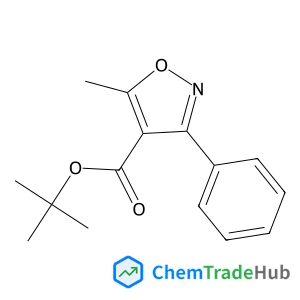
2-Methyl-2-propanyl 5-methyl-3-phenyl-1,2-oxazole-4-carboxylate
CAS Number:
211429-79-7
Molecular Formula:
C15H17NO3
Recommended Suppliers







Disclaimer
This page provides academic journal information for reference and research purposes only. We are not affiliated with any journal publishers and do not handle publication submissions. For publication-related inquiries, please contact the respective journal publishers directly.
If you notice any inaccuracies in the information displayed, please contact us at support@chemtradehub.com. We will promptly review and address your concerns.