












Dimerization of ion radicals in ionic liquids. An example of favourable “Coulombic” solvation
Literature Information
Publication Date
2010-06-02
DOI
10.1039/B920552G
Impact Factor
3.676
Authors
View Original
Abstract
The irreversible dimerization of the acetophenone radical anion, chosen as an example of a carbon–carbon coupling reaction between two charged species, was investigated in a series of 1,3-dialkylimidazolium and 1,2,3-trialkylimidazolium ionic liquids. Indeed, such ion dimerizations which display slow kinetics despite small activation energies, are controlled by a subtle competition between bond formation, Coulombic repulsion and solvation. The effects of viscosity, “polarity” and ionic solvation on the reactivity of the radical anions were examined. The dimerization rate constants were demonstrated to be only weakly affected by the high viscosity of the medium or its apparent polarity. When the acetophenone radical anion is “solvated” in imidazolium-based ionic liquids, a strong interaction between the negatively-charged intermediates and the imidazolium cation occurs. The ensuing charge stabilization allows a fast dimerization step in all the ionic liquids used. The kinetic effect is even enhanced in the 1,3-dialkylimidazolium salts as compared to the 1,2,3-trialkylimidazolium ones because the interaction between the radical anions and the 1,3-dialkylimidazolium cations are stronger, probably due to the formation of H-bond. The reactivity of the ion radical is demonstrated not only to be mainly dominated by electrostatic interactions, but also that the nature of the ionic liquid cations with respect to that of the ion radical is a major factor that affects the reaction kinetics.
Recommended Journals
Related Literature
Core-softened water–alcohol mixtures: the solute-size effects
Murilo S. Marques, Vinicius F. Hernandes, José Rafael Bordin
2021-07-05
Paper
DOI: 10.1039/D1CP00751C
Intercalation/deintercalation of solvated Mg2+ into/from graphite interlayers
Masahiro Shimizu, Atsuhito Nakahigashi, Susumu Arai
2021-07-27
Paper
DOI: 10.1039/D1CP02895B
Polymer network formation mechanism of multifunctional poly(ethylene glycol)s in ionic liquid electrolyte with a lithium salt
Asumi Ishikawa, Namie Ikeda, Shuichi Maeda, Kenta Fujii
2021-07-27
Paper
DOI: 10.1039/D1CP02710G
Characterizing hydrogen and tetrel bonds in clusters of CO2 with carboxylic acids
Weixing Li, Sonia Melandri, Luca Evangelisti, Camilla Calabrese, Annalisa Vigorito, Assimo Maris
2021-07-24
Paper
DOI: 10.1039/D1CP02568F
Low-frequency vibrational spectroscopy: a new tool for revealing crystalline magnetic structures in iron phosphate crystals
Zihui Song, Xudong Liu, Anish Ochani, Suling Shen, Qiqi Li, Yiwen Sun, Michael T. Ruggiero
2021-09-27
Communication
DOI: 10.1039/D1CP03424C
Cation enrichment in the ion atmosphere is promoted by local hydration of DNA
Chun Yu Ma, Simone Pezzotti, Gerhard Schwaab, Magdalena Gebala, Daniel Herschlag, Martina Havenith
2021-09-15
Paper
DOI: 10.1039/D1CP01963E
The disparate effect of strain on thermal conductivity of 2-D materials
K. V. S. Dheeraj, Sarith P. Sathian
2021-09-14
Paper
DOI: 10.1039/D1CP02771A
New ethionamide boosters and EthR2: structural and energetic analysis
J. F. Vianna, K. S. Bezerra, A. H. Lima Costa, E. D. Barbosa, J. X. Lima Neto, J. I. N. Oliveira, V. N. Freire, U. L. Fulco
2021-09-27
Paper
DOI: 10.1039/D1CP02853G
Regression and clustering algorithms for AgCu nanoalloys: from mixing energy predictions to structure recognition
Cesare Roncaglia, Daniele Rapetti, Riccardo Ferrando
2021-10-11
Paper
DOI: 10.1039/D1CP02143E
You might also like
Compound Q&A
What precautions should be taken when handling 4-Methyl-6-(trifluoromethyl)quinoline (CAS: 40716-16-3)?
When handling 4-Methyl-6-(trifluoromethyl)quinoline (CAS: 40716-16-3), safety go...
40716-16-34-Methyl-6-(trifluor...
Compound Q&A
What is 4-(3,5-Difluorophenyl)aniline (CAS: 405058-00-6)?
4-(3,5-Difluorophenyl)aniline is an aromatic organic compound with the CAS numbe...
405058-00-64-(3,5-Difluoropheny...
Compound Q&A
How is 5-{[4-(Trifluoromethyl)phenyl]sulfanyl}-1,2,3-thiadiazole-4-carboxylic acid (CAS: 338982-07-3) typically synthesized?
5-{[4-(Trifluoromethyl)phenyl]sulfanyl}-1,2,3-thiadiazole-4-carboxylic acid can ...
338982-07-35-{[4-(Trifluorometh...
Compound Q&A
What is the market or research trend for 4-Benzylaniline hydrochloride (CAS: 6317-57-3)?
The market for 4-Benzylaniline hydrochloride (CAS: 6317-57-3) is steadily growin...
6317-57-34-Benzylaniline hydr...
Compound Q&A
Is [3-(Diethylsulfamoyl)phenyl]boronic acid (CAS: 871329-58-7) safe?
[3-(Diethylsulfamoyl)phenyl]boronic acid is generally considered safe when handl...
871329-58-7[3-(Diethylsulfamoyl...
Compound Q&A
What are the main uses of 3-Bromo-2,5-dimethoxyaniline (CAS: 115929-62-9)?
3-Bromo-2,5-dimethoxyaniline is mainly used in the pharmaceutical and chemical i...
115929-62-93-Bromo-2,5-dimethox...
Compound Q&A
What regulatory guidelines apply to N-Methyl-1-(5-methyl-1H-indol-3-yl)methanamine (CAS: 915922-67-7)?
N-Methyl-1-(5-methyl-1H-indol-3-yl)methanamine (CAS: 915922-67-7) is subject to ...
915922-67-7N-Methyl-1-(5-methyl...
Compound Q&A
What industries use Carbamic acid, N-[(5S)-5,6-diamino-6-oxohexyl]-, 1,1-dimethylethyl ester (CAS: 24828-96-4)?
This compound is primarily used in the pharmaceutical industry for the synthesis...
24828-96-4Carbamic acid, N-[(5...
Compound Q&A
How should 2-Methyl-2-propanyl [(1S,3R)-3-aminocyclohexyl]carbamate (CAS: 1298101-47-9) be stored?
2-Methyl-2-propanyl [(1S,3R)-3-aminocyclohexyl]carbamate (CAS: 1298101-47-9) sho...
1298101-47-92-Methyl-2-propanyl ...
Compound Q&A
What industries use Ethyl 2-bromo-4,4,4-trifluorobutanoate (CAS: 367-33-9)?
Ethyl 2-bromo-4,4,4-trifluorobutanoate (CAS: 367-33-9) is utilized in the pharma...
367-33-9Ethyl 2-bromo-4,4,4-...
Source Journal
Physical Chemistry Chemical Physics

CiteScore:
5.5
Self-citation Rate:
10.3%
Articles per Year:
3036
Physical Chemistry Chemical Physics (PCCP) is an international journal co-owned by 19 physical chemistry and physics societies from around the world. This journal publishes original, cutting-edge research in physical chemistry, chemical physics and biophysical chemistry. To be suitable for publication in PCCP, articles must include significant innovation and/or insight into physical chemistry; this is the most important criterion that reviewers and Editors will judge against when evaluating submissions. The journal has a broad scope and welcomes contributions spanning experiment, theory, computation and data science. Topical coverage includes spectroscopy, dynamics, kinetics, statistical mechanics, thermodynamics, electrochemistry, catalysis, surface science, quantum mechanics, quantum computing and machine learning. Interdisciplinary research areas such as polymers and soft matter, materials, nanoscience, energy, surfaces/interfaces, and biophysical chemistry are welcomed if they demonstrate significant innovation and/or insight into physical chemistry. Joined experimental/theoretical studies are particularly appreciated when complementary and based on up-to-date approaches.
Recommended Compounds
![Methyl 3-({2'-[(E)-(hydroxyhydrazono)methyl]-4-biphenylyl}methyl)-2-oxo-2,3-dihydro-1H-benzimidazole-4-carboxylate structure](https://static.chemtradehub.com/structs/149/1499167-72-4-034a.webp "Methyl 3-({2'-[(E)-(hydroxyhydrazono)methyl]-4-biphenylyl}methyl)-2-oxo-2,3-dihydro-1H-benzimidazole-4-carboxylate structure")
Methyl 3-({2'-[(E)-(hydroxyhydrazono)methyl]-4-biphenylyl}methyl)-2-oxo-2,3-dihydro-1H-benzimidazole-4-carboxylate
CAS Number:
1499167-72-4
Molecular Formula:
C23H20N4O4
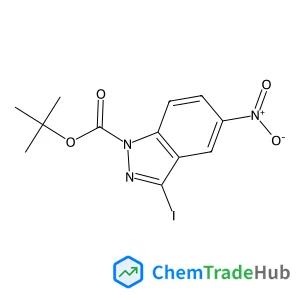
Tert-butyl 3-iodo-5-nitro-1H-indazole-1-carboxylate
CAS Number:
459133-69-8
Molecular Formula:
C12H12IN3O4
![2-[(5Z,8Z,11Z,14Z)-5,8,11,14-Icosatetraen-1-yloxy]-1,3-propanediol structure](https://static.chemtradehub.com/structs/222/222723-55-9-0348.webp "2-[(5Z,8Z,11Z,14Z)-5,8,11,14-Icosatetraen-1-yloxy]-1,3-propanediol structure")
2-[(5Z,8Z,11Z,14Z)-5,8,11,14-Icosatetraen-1-yloxy]-1,3-propanediol
CAS Number:
222723-55-9
Molecular Formula:
C23H40O3
Recommended Suppliers




Disclaimer
This page provides academic journal information for reference and research purposes only. We are not affiliated with any journal publishers and do not handle publication submissions. For publication-related inquiries, please contact the respective journal publishers directly.
If you notice any inaccuracies in the information displayed, please contact us at support@chemtradehub.com. We will promptly review and address your concerns.