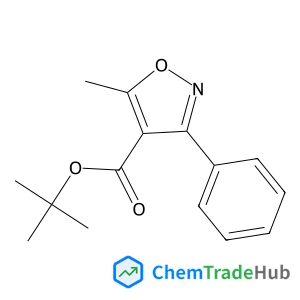
2-Methyl-2-propanyl 5-methyl-3-phenyl-1,2-oxazole-4-carboxylate
CAS Number:
211429-79-7
Molecular Formula:
C15H17NO3
Iain D. Mackie, Gino A. DiLabio
B971, PBE and PBE1 density functionals with 6-31G(d) basis sets are shown to accurately describe the binding in dispersion bound dimers. This is achieved through the use of dispersion-correcting potentials (DCPs) in conjunction with counterpoise corrections. DCPs resemble and are applied like conventional effective core potentials that can be used with most computational chemistry programs without code modification. Rather, DCPs are implemented by simple appendage to the input files for these types of programs. Binding energies are predicted to within ca. 11% and monomer separations to within ca. 0.06 Å of high-level wavefunction data using B971/6-31G(d)-DCP. Similar results are obtained for PBE and PBE1 with the 6-31G(d) basis sets and DCPs. Although results found using the 3-21G(d) are not as impressive, they never-the-less show promise as a means of initial study for a wide variety of dimers, including those dominated by dispersion, hydrogen-bonding and a mixture of interactions. Notable improvement is found in comparison to M06-2X/6-31G(d) data, e.g., mean absolute deviations for the S22-set of dimers of ca. 13.6 and 16.5% for B971/6-31G(d)-DCP and M06-2X, respectively. However, it should be pointed out that the latter data were obtained using a larger integration grid size since a smaller grid results in different binding energies and geometries for simple dispersion-bound dimers such as methane and ethene.
Francesca Pischiutta, Elisa R. Zanier, Ari Ercole
DOI: 10.1039/C6AN02238C
Jinsu Kim, Ryan Poling-Skutvik, João R. C. Trabuco, Katerina Kourentzi, Jacinta C. Conrad
DOI: 10.1039/C6AN00567E
Andrew Schmudlach, Jeremy Felton, Robert T. Kennedy, Norman J. Dovichi
DOI: 10.1039/C6AN02268E
Suping Li, Pan Hui, Zhongyuan Liu, Guobao Xu
DOI: 10.1039/C6AN02584F
Pavel Damborský, Katarzyna M. Koczula, Andrea Gallotta, Jaroslav Katrlík
DOI: 10.1039/C6AN01746K
F. J. Timmermans, A. T. M. Lenferink, H. A. G. M. van Wolferen, C. Otto
DOI: 10.1039/C6AN01648K
Zhe Gao, Nathan D. Burrows, Nicholas A. Valley, Sam Egger, George C. Schatz, Catherine J. Murphy, Christy L. Haynes
DOI: 10.1039/C6AN90098D
Erin A. Henslee, Ruth M. Torcal Serrano, Fatima H. Labeed, Rita I. Jabr, Christopher H. Fry, Michael P. Hughes, Kai F. Hoettges
DOI: 10.1039/C6AN01596D
Mahalia A. C. Serrano, Huan He, Bo Zhao, Rajasekhar R. Ramireddy, Richard W. Vachet, S. Thayumanavan
DOI: 10.1039/C6AN01591C
When handling 4-Methyl-6-(trifluoromethyl)quinoline (CAS: 40716-16-3), safety go...
4-(3,5-Difluorophenyl)aniline is an aromatic organic compound with the CAS numbe...
5-{[4-(Trifluoromethyl)phenyl]sulfanyl}-1,2,3-thiadiazole-4-carboxylic acid can ...
The market for 4-Benzylaniline hydrochloride (CAS: 6317-57-3) is steadily growin...
[3-(Diethylsulfamoyl)phenyl]boronic acid is generally considered safe when handl...
3-Bromo-2,5-dimethoxyaniline is mainly used in the pharmaceutical and chemical i...
N-Methyl-1-(5-methyl-1H-indol-3-yl)methanamine (CAS: 915922-67-7) is subject to ...
This compound is primarily used in the pharmaceutical industry for the synthesis...
2-Methyl-2-propanyl [(1S,3R)-3-aminocyclohexyl]carbamate (CAS: 1298101-47-9) sho...
Ethyl 2-bromo-4,4,4-trifluorobutanoate (CAS: 367-33-9) is utilized in the pharma...

Physical Chemistry Chemical Physics (PCCP) is an international journal co-owned by 19 physical chemistry and physics societies from around the world. This journal publishes original, cutting-edge research in physical chemistry, chemical physics and biophysical chemistry. To be suitable for publication in PCCP, articles must include significant innovation and/or insight into physical chemistry; this is the most important criterion that reviewers and Editors will judge against when evaluating submissions. The journal has a broad scope and welcomes contributions spanning experiment, theory, computation and data science. Topical coverage includes spectroscopy, dynamics, kinetics, statistical mechanics, thermodynamics, electrochemistry, catalysis, surface science, quantum mechanics, quantum computing and machine learning. Interdisciplinary research areas such as polymers and soft matter, materials, nanoscience, energy, surfaces/interfaces, and biophysical chemistry are welcomed if they demonstrate significant innovation and/or insight into physical chemistry. Joined experimental/theoretical studies are particularly appreciated when complementary and based on up-to-date approaches.
![Methyl 3-({2'-[(E)-(hydroxyhydrazono)methyl]-4-biphenylyl}methyl)-2-oxo-2,3-dihydro-1H-benzimidazole-4-carboxylate structure](https://static.chemtradehub.com/structs/149/1499167-72-4-034a.webp "Methyl 3-({2'-[(E)-(hydroxyhydrazono)methyl]-4-biphenylyl}methyl)-2-oxo-2,3-dihydro-1H-benzimidazole-4-carboxylate structure")