












Stereoselective self-assembly of atropoisomeric Pd(ii) metallocycles induced by an aromatic guest
Literature Information
Publication Date
2008-04-18
DOI
10.1039/B802213E
Impact Factor
6.222
Authors
Dolores Abella, Víctor Blanco, Elena Pía, Marcos Chas, Carlos Platas-Iglesias, Carlos Peinador, José M. Quintela
View Original
Abstract
A new dinuclear Pd(II) metallocycle consisting of a 4,4′-bipyridin-1-ium ligand with a quinoline moiety was self-assembled in aqueous solution with the aid of template molecules; the situation found in solution in which both syn and anti or only the anti atropoisomers are observed strongly relies on the intermolecular host–guest interactions.
Related Literature
Thermo-responsive gold/poly(vinyl alcohol)-b-poly(N-vinylcaprolactam) core–corona nanoparticles as a drug delivery system
Christophe Detrembleur, Marie Hurtgen, Antoine Debuigne, Marie-Claire De Pauw-Gillet, Stéphane Mornet, Etienne Duguet, Christine Jérôme
2014-05-09
Paper
DOI: 10.1039/C4PY00352G
Synthesis of poly(ethylene glycol)-b-poly(N-(2-hydroxypropyl) methacrylamide) block copolymers with well-defined structures and their influence on in vivo circulation and biodistribution
Chengyan Dong, Jiajing Zhang, Jiyun Shi, Bing Jia, Fan Wang
2014-05-30
Paper
DOI: 10.1039/C4PY00681J
Synthesis of highly branched polymers by reversible complexation-mediated copolymerization of vinyl and divinyl monomers
Hongjun Yang, Zhongrui Wang, Yulei Zheng, Wenyan Huang, Xiaoqiang Xue, Bibiao Jiang
2017-02-21
Paper
DOI: 10.1039/C7PY00174F
Dynamic supramolecular self-assembly: hydrogen bonding-induced contraction and extension of functional polymers
Chih-Chia Cheng, Jui-Hsu Wang, Wei-Tsung Chuang, Zhi-Sheng Liao, Jyun-Jie Huang, Shan-You Huang, Wen-Lu Fan
2017-04-26
Paper
DOI: 10.1039/C7PY00684E
One pot synthesis of higher order quasi-block copolymer libraries via sequential RAFT polymerization in an automated synthesizer
Graeme Moad, San H. Thang
2014-05-16
Paper
DOI: 10.1039/C4PY00496E
Microporous polyimide networks constructed through a two-step polymerization approach, and their carbon dioxide adsorption performance
Hongyan Yao, Na Zhang, Ningning Song, Kunzhi Shen, Pengfei Huo, Shiyang Zhu, Yunhe Zhang, Shaowei Guan
2017-01-04
Paper
DOI: 10.1039/C6PY01814A
Synthesis of amphiphilic diblock copolymers derived from renewable dextran by nitroxide mediated polymerization: towards hierarchically structured honeycomb porous films
Senbin Chen, Marie-Hélène Alves, Maud Save, Laurent Billon
2014-05-12
Paper
DOI: 10.1039/C4PY00390J
Free-standing thermo-responsive nanoporous membranes from high molecular weight PS-PNIPAM block copolymers synthesized via RAFT polymerization
Merve Mocan, Joris de Grooth, Anton H. Hofman, Hanne M. van der Kooij, Katja Loos, Wiebe M. de Vos, Marleen Kamperman
2017-03-17
Paper
DOI: 10.1039/C7PY00023E
Diels–Alder cycloaddition and RAFT chain end functionality: an elegant route to fullerene end-capped polymers with control over molecular mass and architecture
Anna Isakova, Christian Burton, Daniel J. Nowakowski, Paul D. Topham
2017-04-11
Paper
DOI: 10.1039/C7PY00394C
Oxygen and carbon dioxide dual gas-responsive homopolymers and diblock copolymers synthesized via RAFT polymerization
Xue Jiang, Guolin Lu, Huang Xiaoyu
2016-12-26
Paper
DOI: 10.1039/C6PY02004F
You might also like
Compound Q&A
What are the main uses of 4-Nitrophenyl phosphate disodium salt hexahydrate (CAS: 333338-18-4)?
4-Nitrophenyl phosphate disodium salt hexahydrate is primarily used as a substra...
333338-18-44-Nitrophenyl phosph...
Compound Q&A
What are the main uses of 2-(Trifluoromethyl)-1,3-oxazole-4-carboxylic Acid (CAS: 1060816-01-4)?
2-(Trifluoromethyl)-1,3-oxazole-4-carboxylic Acid (CAS: 1060816-01-4) is widely ...
1060816-01-42-(Trifluoromethyl)-...
Compound Q&A
How should 2-Fluoro-4-biphenylcarboxylic acid (CAS: 137045-30-8) be stored?
2-Fluoro-4-biphenylcarboxylic acid should be stored in a cool, dry place at room...
137045-30-82-Fluoro-4-biphenylc...
Compound Q&A
What industries use Prednisolone-21-Carboxylic Acid (CAS: 61549-70-0)?
Prednisolone-21-Carboxylic Acid is primarily used in the pharmaceutical industry...
61549-70-0Prednisolone-21-Carb...
Compound Q&A
How should 4-(Hydrazinomethyl)-1,2,3-benzenetriol (CAS: 3614-72-0) be stored?
4-(Hydrazinomethyl)-1,2,3-benzenetriol (CAS: 3614-72-0) should be stored in a co...
3614-72-04-(Hydrazinomethyl)-...
Compound Q&A
What industries use 4-Amino-1-methyl-1H-pyrazole-5-carboxylic acid hydrochloride (CAS: 92534-70-8)?
4-Amino-1-methyl-1H-pyrazole-5-carboxylic acid hydrochloride (CAS: 92534-70-8) i...
92534-70-84-Amino-1-methyl-1H-...
Compound Q&A
What regulatory guidelines apply to dehydropachymic acid (CAS: 77012-31-8)?
Dehydropachymic acid (CAS: 77012-31-8) is regulated by various agencies. It fall...
77012-31-8Dehydropachymic acid
Compound Q&A
What is the market or research trend for 6-[(2,2-Dimethylpropanoyl)amino]nicotinic acid (CAS: 898561-66-5)?
The market and research trends for 6-[(2,2-Dimethylpropanoyl)amino]nicotinic aci...
898561-66-56-[(2,2-Dimethylprop...
Compound Q&A
How should 1,10-Phenanthroline-2,9-dicarbaldehyde (CAS: 57709-62-3) be stored?
1,10-Phenanthroline-2,9-dicarbaldehyde should be stored in a cool, dry place awa...
57709-62-31,10-Phenanthroline-...
Compound Q&A
How is 5-Carbamoyl-11-oxo-10,11-dihydro-5H-dibenzo[b,f]azepin-10-yl acetate (CAS: 113952-21-9) typically synthesized?
5-Carbamoyl-11-oxo-10,11-dihydro-5H-dibenzo[b,f]azepin-10-yl acetate can be synt...
113952-21-95-Carbamoyl-11-oxo-1...
Source Journal
Chemical Communications

CiteScore:
8.6
Self-citation Rate:
4.7%
Articles per Year:
2458
ChemComm publishes urgent research which is of outstanding significance and interest to experts in the field, while also appealing to the journal’s broad chemistry readership. Our communication format is ideally suited to short, urgent studies that are of such importance that they require accelerated publication. Our scope covers all topics in chemistry, and research at the interface of chemistry and other disciplines (such as materials science, nanoscience, physics, engineering and biology) where there is a significant novelty in the chemistry aspects. Major topic areas covered include: Analytical Chemistry Catalysis Chemical Biology and medicinal chemistry Computational Chemistry and Machine Learning Energy and sustainable chemistry Environmental Chemistry Green Chemistry Inorganic Chemistry Materials Chemistry Nanoscience Organic Chemistry Physical Chemistry Polymer Chemistry Supramolecular Chemistry
Recommended Compounds
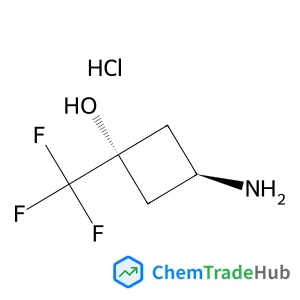
cis-3-Amino-1-(trifluoromethyl)cyclobutanol hydrochloride (1:1)
CAS Number:
1408075-16-0
Molecular Formula:
C5H9ClF3NO
Recommended Suppliers






Disclaimer
This page provides academic journal information for reference and research purposes only. We are not affiliated with any journal publishers and do not handle publication submissions. For publication-related inquiries, please contact the respective journal publishers directly.
If you notice any inaccuracies in the information displayed, please contact us at support@chemtradehub.com. We will promptly review and address your concerns.