


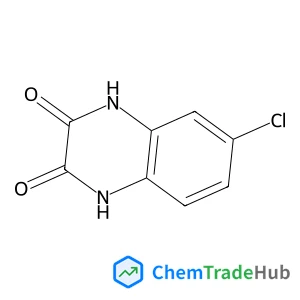
6-CHLORO-2,3-DIOXO-1,2,3,4-TETRAHYDROQUINOXALINE, 97
CAS Number:
169-14-2
Molecular Formula:
C8H5ClN2O2
Fabienne Burlina, David D. Dixson, Robert P. Doyle, Gérard Chassaing, Christopher N. Boddy, Philip Dawson, John Offer
A PNA–peptide–PNA conjugate was assembled from three fragments using a combination of native chemical ligation and an orthogonal, auxiliary-mediated ligation.

Acta Materialia

Drug Discovery Today

Chemical Communications

Current Opinion in Solid State & Materials Science

Chemistry Education Research and Practice

Russian Journal of Organic Chemistry

Russian Journal of Bioorganic Chemistry

Nature Medicine

Current Opinion in Colloid & Interface Science

Crystallography Reports
Ferda Hacıvelioğlu
DOI: 10.1039/C7PY00189D
Siddharth Chanpuriya, Marc A. Hillmyer, Frank S. Bates
DOI: 10.1039/C4PY00614C
Jérémy Brassinne, Charles-André Fustin, Jean-François Gohy
DOI: 10.1039/C6PY02143C
Danyu Xia, Min Xue
DOI: 10.1039/C4PY00590B
Shinji Yamada, Akinori Takasu, Sadatsugu Takayama, Kazuhiko Kawamura
DOI: 10.1039/C4PY00639A
Yu Liu, Xiaochuan Shui, Meng Wang, Chenguang Zhang, Yuechuan Wang
DOI: 10.1039/C6PY02104B
Marcos Fernandez-Villamarin, Ana Sousa-Herves, Silvia Porto, Noelia Guldris, José Martínez-Costas, Ricardo Riguera, Eduardo Fernandez-Megia
DOI: 10.1039/C7PY00304H
Graeme Moad, San H. Thang
DOI: 10.1039/C4PY00496E
Liang Gao, Qingjie Zhang, Hao Li, Siruo Yu, Weihong Zhong, Gang Sui, Xiaoping Yang
DOI: 10.1039/C7PY00063D
DOI: 10.1039/C4PY00829D
4-Nitrophenyl phosphate disodium salt hexahydrate is primarily used as a substra...
2-(Trifluoromethyl)-1,3-oxazole-4-carboxylic Acid (CAS: 1060816-01-4) is widely ...
2-Fluoro-4-biphenylcarboxylic acid should be stored in a cool, dry place at room...
Prednisolone-21-Carboxylic Acid is primarily used in the pharmaceutical industry...
4-(Hydrazinomethyl)-1,2,3-benzenetriol (CAS: 3614-72-0) should be stored in a co...
4-Amino-1-methyl-1H-pyrazole-5-carboxylic acid hydrochloride (CAS: 92534-70-8) i...
Dehydropachymic acid (CAS: 77012-31-8) is regulated by various agencies. It fall...
The market and research trends for 6-[(2,2-Dimethylpropanoyl)amino]nicotinic aci...
1,10-Phenanthroline-2,9-dicarbaldehyde should be stored in a cool, dry place awa...
5-Carbamoyl-11-oxo-10,11-dihydro-5H-dibenzo[b,f]azepin-10-yl acetate can be synt...
ChemComm publishes urgent research which is of outstanding significance and interest to experts in the field, while also appealing to the journal’s broad chemistry readership. Our communication format is ideally suited to short, urgent studies that are of such importance that they require accelerated publication. Our scope covers all topics in chemistry, and research at the interface of chemistry and other disciplines (such as materials science, nanoscience, physics, engineering and biology) where there is a significant novelty in the chemistry aspects. Major topic areas covered include: Analytical Chemistry Catalysis Chemical Biology and medicinal chemistry Computational Chemistry and Machine Learning Energy and sustainable chemistry Environmental Chemistry Green Chemistry Inorganic Chemistry Materials Chemistry Nanoscience Organic Chemistry Physical Chemistry Polymer Chemistry Supramolecular Chemistry
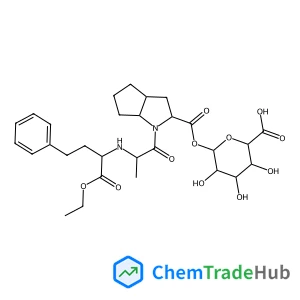
![(2E)-3-(3-Chlorophenyl)-N-{2-[4-(methylsulfonyl)-1-piperazinyl]-2-oxoethyl}acrylamide structure](https://static.chemtradehub.com/structs/250/2505001-54-5-c1e9.webp "(2E)-3-(3-Chlorophenyl)-N-{2-[4-(methylsulfonyl)-1-piperazinyl]-2-oxoethyl}acrylamide structure")
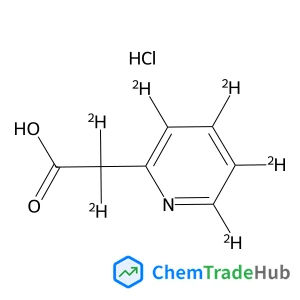
phosphoryl}methyl 4-methylbenzenesulfonate structure](https://static.chemtradehub.com/structs/864/864068-45-1-ba7c.webp "{[3-(Hexadecyloxy)propoxy](hydroxy)phosphoryl}methyl 4-methylbenzenesulfonate structure")




