












Novel fluorene-based functional ‘click polymers’ for quasi-solid-state dye-sensitized solar cells
Literature Information
Publication Date
2008-03-06
DOI
10.1039/B800032H
Impact Factor
6.222
Authors
Md. Anwarul Karim, Yong-Rae Cho, Jin Su Park, Sung Chul Kim, Hee Joo Kim, Jae Wook Lee, Yeong-Soon Gal, Sung-Ho Jin
View Original
Abstract
Quasi-solid-state DSSCs in SnO2:F/quasi-solid-state electrolyte/Pt devices have been fabricated with click polymers for the first time; they show a maximum power conversion efficiency (PCE) of 2.80%.
Related Literature
Turning into poly(ionic liquid)s as a tool for polyimide modification: synthesis, characterization and CO2 separation properties
Alexander S. Shaplov, Sofia M. Morozova, Elena I. Lozinskaya, Petr S. Vlasov, Andreia S. L. Gouveia, Liliana C. Tomé, Isabel M. Marrucho, Yakov S. Vygodskii
2015-11-09
Paper
DOI: 10.1039/C5PY01553G
Regio- and stereoselective construction of stimuli-responsive macromolecules by a sequential coupling-hydroamination polymerization route
2015-10-06
Paper
DOI: 10.1039/C5PY01424G
The Ugi reaction in polymer chemistry: syntheses, applications and perspectives
Bin Yang, Yuan Zhao, Yen Wei, Changkui Fu, Lei Tao
2015-09-28
Minireview
DOI: 10.1039/C5PY01398D
One-step grafting of polymers to graphene oxide
Helen R. Thomas, Daniel J. Phillips, Neil R. Wilson, Matthew I. Gibson, Jonathan P. Rourke
2015-10-06
Paper
DOI: 10.1039/C5PY01358E
UV-Vis/FT-NIR in situ monitoring of visible-light induced polymerization of PEGDA hydrogels initiated by eosin/triethanolamine/O2
Kaja Kaastrup, Chen Wang, Christopher N. Bowman
2015-11-13
Paper
DOI: 10.1039/C5PY01528F
Study of thiol–ene chemistry on polymer brushes and application to surface patterning and protein adsorption
Khooi Y. Tan, Madeleine Ramstedt, Wilhelm T. S. Huck
2015-12-16
Paper
DOI: 10.1039/C5PY01687H
Triazine-mediated controlled radical polymerization: new unimolecular initiators
J. Areephong, J. W. Kramer, H. A. Sprafke
2015-11-03
Paper
DOI: 10.1039/C5PY01563D
An aromatic/aliphatic polyester prepared via ring-opening polymerisation and its remarkably selective and cyclable depolymerisation to monomer
Jarret P. MacDonald, Michael P. Shaver
2015-11-12
Paper
DOI: 10.1039/C5PY01606A
You might also like
Compound Q&A
What are the main uses of 4-Nitrophenyl phosphate disodium salt hexahydrate (CAS: 333338-18-4)?
4-Nitrophenyl phosphate disodium salt hexahydrate is primarily used as a substra...
333338-18-44-Nitrophenyl phosph...
Compound Q&A
What are the main uses of 2-(Trifluoromethyl)-1,3-oxazole-4-carboxylic Acid (CAS: 1060816-01-4)?
2-(Trifluoromethyl)-1,3-oxazole-4-carboxylic Acid (CAS: 1060816-01-4) is widely ...
1060816-01-42-(Trifluoromethyl)-...
Compound Q&A
How should 2-Fluoro-4-biphenylcarboxylic acid (CAS: 137045-30-8) be stored?
2-Fluoro-4-biphenylcarboxylic acid should be stored in a cool, dry place at room...
137045-30-82-Fluoro-4-biphenylc...
Compound Q&A
What industries use Prednisolone-21-Carboxylic Acid (CAS: 61549-70-0)?
Prednisolone-21-Carboxylic Acid is primarily used in the pharmaceutical industry...
61549-70-0Prednisolone-21-Carb...
Compound Q&A
How should 4-(Hydrazinomethyl)-1,2,3-benzenetriol (CAS: 3614-72-0) be stored?
4-(Hydrazinomethyl)-1,2,3-benzenetriol (CAS: 3614-72-0) should be stored in a co...
3614-72-04-(Hydrazinomethyl)-...
Compound Q&A
What industries use 4-Amino-1-methyl-1H-pyrazole-5-carboxylic acid hydrochloride (CAS: 92534-70-8)?
4-Amino-1-methyl-1H-pyrazole-5-carboxylic acid hydrochloride (CAS: 92534-70-8) i...
92534-70-84-Amino-1-methyl-1H-...
Compound Q&A
What regulatory guidelines apply to dehydropachymic acid (CAS: 77012-31-8)?
Dehydropachymic acid (CAS: 77012-31-8) is regulated by various agencies. It fall...
77012-31-8Dehydropachymic acid
Compound Q&A
What is the market or research trend for 6-[(2,2-Dimethylpropanoyl)amino]nicotinic acid (CAS: 898561-66-5)?
The market and research trends for 6-[(2,2-Dimethylpropanoyl)amino]nicotinic aci...
898561-66-56-[(2,2-Dimethylprop...
Compound Q&A
How should 1,10-Phenanthroline-2,9-dicarbaldehyde (CAS: 57709-62-3) be stored?
1,10-Phenanthroline-2,9-dicarbaldehyde should be stored in a cool, dry place awa...
57709-62-31,10-Phenanthroline-...
Compound Q&A
How is 5-Carbamoyl-11-oxo-10,11-dihydro-5H-dibenzo[b,f]azepin-10-yl acetate (CAS: 113952-21-9) typically synthesized?
5-Carbamoyl-11-oxo-10,11-dihydro-5H-dibenzo[b,f]azepin-10-yl acetate can be synt...
113952-21-95-Carbamoyl-11-oxo-1...
Source Journal
Chemical Communications

CiteScore:
8.6
Self-citation Rate:
4.7%
Articles per Year:
2458
ChemComm publishes urgent research which is of outstanding significance and interest to experts in the field, while also appealing to the journal’s broad chemistry readership. Our communication format is ideally suited to short, urgent studies that are of such importance that they require accelerated publication. Our scope covers all topics in chemistry, and research at the interface of chemistry and other disciplines (such as materials science, nanoscience, physics, engineering and biology) where there is a significant novelty in the chemistry aspects. Major topic areas covered include: Analytical Chemistry Catalysis Chemical Biology and medicinal chemistry Computational Chemistry and Machine Learning Energy and sustainable chemistry Environmental Chemistry Green Chemistry Inorganic Chemistry Materials Chemistry Nanoscience Organic Chemistry Physical Chemistry Polymer Chemistry Supramolecular Chemistry
Recommended Compounds
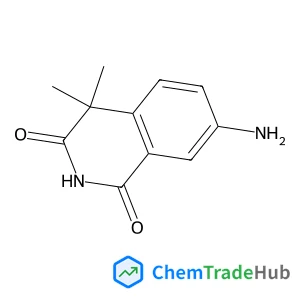
1,3(2H,4H)-Isoquinolinedione, 7-amino-4,4-dimethyl-
CAS Number:
14576-22-8
Molecular Formula:
C11H12N2O2
Recommended Suppliers







Disclaimer
This page provides academic journal information for reference and research purposes only. We are not affiliated with any journal publishers and do not handle publication submissions. For publication-related inquiries, please contact the respective journal publishers directly.
If you notice any inaccuracies in the information displayed, please contact us at support@chemtradehub.com. We will promptly review and address your concerns.