


Ruthenium–indenylidene complexes: powerful tools for metathesis transformations
Literature Information
Publication Date
2008-05-20
DOI
10.1039/B718287B
Impact Factor
6.222
Authors
Fabien Boeda, Hervé Clavier, Steven P. Nolan
View Original
Abstract
Ruthenium–indenylidene complexes represent a class of robust and efficient pre-catalysts for olefin metathesis reactions. In this feature article, we provide an overview of the various complexes belonging to this family and summarise their use in various applications. The relation between the nature of ancillary ligands around the metal coordination sphere of these complexes and their catalytic activity is also discussed.
Recommended Journals

Current Opinion in Solid State & Materials Science

Russian Journal of Coordination Chemistry

Journal of Natural Medicines

Journal of Peptide Science

Crystallography Reports

Current Opinion in Colloid & Interface Science

Organic Process Research & Development

Russian Journal of Applied Chemistry

New Journal of Chemistry

Saudi Pharmaceutical Journal
Related Literature
A photo-responsive polymeric azopyridine ligand with metal-complexation sensitivity: application to coordination equilibrium studies on the polymer complexes of a cobalt(ii) Schiff base
T. Suzuki, T. Moriya, R. Endo, N. Iwasaki
2016-12-16
Paper
DOI: 10.1039/C6PY02036D
Reduction- and thermo-sensitive core-cross-linked polypeptide hybrid micelles for triggered and intracellular drug release
Yuanfeng Gao
2017-01-06
Paper
DOI: 10.1039/C6PY01929C
Blood compatibility of heparin-inspired, lactose containing, polyureas depends on the chemistry of the polymer backbone
Y. Huang, M. A. Shaw, M. R. Warmin, E. S. Mullins, N. Ayres
2016-05-13
Paper
DOI: 10.1039/C6PY00616G
Factors affecting bottlebrush polymer synthesis by the transfer-to method using reversible addition–fragmentation chain transfer (RAFT) polymerization
Scott C. Radzinski, Jeffrey C. Foster, Sally E. Lewis, Eric V. French, John B. Matson
2017-02-06
Paper
DOI: 10.1039/C6PY01982J
Heterogeneous organocatalysts composed of microporous polymer networks assembled by Tröger's base formation
Mariolino Carta, Matthew Croad, Keith Bugler, Kadhum J. Msayib, Neil B. McKeown
2014-06-20
Paper
DOI: 10.1039/C4PY00608A
Dual-stimuli responsive liposomes using pH- and temperature-sensitive polymers for controlled transdermal delivery
Takumi Sugimoto, Mitsuhiro Fukushima, Ryoma Teranishi, Aki Kotaka, Chiharu Shinde, Takayuki Kumei, Yasushi Sumida, Yuki Munekata, Kei-ichi Maruyama, Eiji Yuba, Atsushi Harada, Kenji Kono
2017-02-03
Paper
DOI: 10.1039/C6PY01754A
The para-fluoro-thiol ligation in water
Parvesh Wadhwani, Rouven Müller
2017-01-16
Communication
DOI: 10.1039/C6PY02108E
Vesicles of double hydrophilic pullulan and poly(acrylamide) block copolymers: a combination of synthetic- and bio-derived blocks
Jochen Willersinn, Anna Bogomolova, Marc Brunet Cabré, Bernhard V. K. J. Schmidt
2017-01-09
Paper
DOI: 10.1039/C6PY02212J
Non-conventional fluorescent biogenic and synthetic polymers without aromatic rings
Yilin Zhang, Liguo Xu, Rongrong Hu, Kam Sing Wong, William A. Goddard, III
2017-02-08
Paper
DOI: 10.1039/C7PY00154A
You might also like
Compound Q&A
What are the main uses of 4-Nitrophenyl phosphate disodium salt hexahydrate (CAS: 333338-18-4)?
4-Nitrophenyl phosphate disodium salt hexahydrate is primarily used as a substra...
333338-18-44-Nitrophenyl phosph...
Compound Q&A
What are the main uses of 2-(Trifluoromethyl)-1,3-oxazole-4-carboxylic Acid (CAS: 1060816-01-4)?
2-(Trifluoromethyl)-1,3-oxazole-4-carboxylic Acid (CAS: 1060816-01-4) is widely ...
1060816-01-42-(Trifluoromethyl)-...
Compound Q&A
How should 2-Fluoro-4-biphenylcarboxylic acid (CAS: 137045-30-8) be stored?
2-Fluoro-4-biphenylcarboxylic acid should be stored in a cool, dry place at room...
137045-30-82-Fluoro-4-biphenylc...
Compound Q&A
What industries use Prednisolone-21-Carboxylic Acid (CAS: 61549-70-0)?
Prednisolone-21-Carboxylic Acid is primarily used in the pharmaceutical industry...
61549-70-0Prednisolone-21-Carb...
Compound Q&A
How should 4-(Hydrazinomethyl)-1,2,3-benzenetriol (CAS: 3614-72-0) be stored?
4-(Hydrazinomethyl)-1,2,3-benzenetriol (CAS: 3614-72-0) should be stored in a co...
3614-72-04-(Hydrazinomethyl)-...
Compound Q&A
What industries use 4-Amino-1-methyl-1H-pyrazole-5-carboxylic acid hydrochloride (CAS: 92534-70-8)?
4-Amino-1-methyl-1H-pyrazole-5-carboxylic acid hydrochloride (CAS: 92534-70-8) i...
92534-70-84-Amino-1-methyl-1H-...
Compound Q&A
What regulatory guidelines apply to dehydropachymic acid (CAS: 77012-31-8)?
Dehydropachymic acid (CAS: 77012-31-8) is regulated by various agencies. It fall...
77012-31-8Dehydropachymic acid
Compound Q&A
What is the market or research trend for 6-[(2,2-Dimethylpropanoyl)amino]nicotinic acid (CAS: 898561-66-5)?
The market and research trends for 6-[(2,2-Dimethylpropanoyl)amino]nicotinic aci...
898561-66-56-[(2,2-Dimethylprop...
Compound Q&A
How should 1,10-Phenanthroline-2,9-dicarbaldehyde (CAS: 57709-62-3) be stored?
1,10-Phenanthroline-2,9-dicarbaldehyde should be stored in a cool, dry place awa...
57709-62-31,10-Phenanthroline-...
Compound Q&A
How is 5-Carbamoyl-11-oxo-10,11-dihydro-5H-dibenzo[b,f]azepin-10-yl acetate (CAS: 113952-21-9) typically synthesized?
5-Carbamoyl-11-oxo-10,11-dihydro-5H-dibenzo[b,f]azepin-10-yl acetate can be synt...
113952-21-95-Carbamoyl-11-oxo-1...
Source Journal
Chemical Communications

CiteScore:
8.6
Self-citation Rate:
4.7%
Articles per Year:
2458
ChemComm publishes urgent research which is of outstanding significance and interest to experts in the field, while also appealing to the journal’s broad chemistry readership. Our communication format is ideally suited to short, urgent studies that are of such importance that they require accelerated publication. Our scope covers all topics in chemistry, and research at the interface of chemistry and other disciplines (such as materials science, nanoscience, physics, engineering and biology) where there is a significant novelty in the chemistry aspects. Major topic areas covered include: Analytical Chemistry Catalysis Chemical Biology and medicinal chemistry Computational Chemistry and Machine Learning Energy and sustainable chemistry Environmental Chemistry Green Chemistry Inorganic Chemistry Materials Chemistry Nanoscience Organic Chemistry Physical Chemistry Polymer Chemistry Supramolecular Chemistry
Recommended Compounds
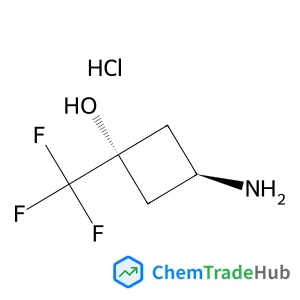
cis-3-Amino-1-(trifluoromethyl)cyclobutanol hydrochloride (1:1)
CAS Number:
1408075-16-0
Molecular Formula:
C5H9ClF3NO

Recommended Suppliers




Disclaimer
This page provides academic journal information for reference and research purposes only. We are not affiliated with any journal publishers and do not handle publication submissions. For publication-related inquiries, please contact the respective journal publishers directly.
If you notice any inaccuracies in the information displayed, please contact us at support@chemtradehub.com. We will promptly review and address your concerns.