












![[(1S,2S,3R,4S,7R,9S,10S,12R,15S)-4,12-Diacetyloxy-15-[(2R,3S)-3-benzamido-3-phenyl-2-(2,2,2-trichloroethoxycarbonyloxy)propanoyl]oxy-1,9-dihydroxy-10,14,17,17-tetramethyl-11-oxo-6-oxatetracyclo[11.3.1.03,10.04,7]heptadec-13-en-2-yl] benzoate structure](https://static.chemtradehub.com/structs/100/100431-55-8-7104.webp "[(1S,2S,3R,4S,7R,9S,10S,12R,15S)-4,12-Diacetyloxy-15-[(2R,3S)-3-benzamido-3-phenyl-2-(2,2,2-trichloroethoxycarbonyloxy)propanoyl]oxy-1,9-dihydroxy-10,14,17,17-tetramethyl-11-oxo-6-oxatetracyclo[11.3.1.03,10.04,7]heptadec-13-en-2-yl] benzoate structure")
Gas-phase regiocontrolled generation of charged amino acid and peptide radicals
Literature Information
Publication Date
2006-08-29
DOI
10.1039/B608724H
Impact Factor
6.222
Authors
Sheena Wee, Adam Wright
View Original
Abstract
The combined use of advanced mass spectrometry experiments, condensed-phase synthesis of serine and homoserine nitrate ester radical precursors, and high-level ab initio calculations provides a powerful way of examining the fundamental reactivity of radicals derived from peptides.
Related Literature
Unprecedented cucurbituril-based ternary host–guest supramolecular polymers mediated through included alkyl chains
Nana Sun, Dongdong Qi, Jianzhuang Jiang
2014-05-30
Communication
DOI: 10.1039/C4PY00512K
A supramolecular polymer gel with dual-responsiveness constructed by crown ether based molecular recognition
Danyu Xia, Min Xue
2014-06-03
Paper
DOI: 10.1039/C4PY00590B
A highly active chiral (S,S)-bis(oxazoline) Pd(ii) alkyl complex/activator catalytic system for vinyl polymerization of norbornene in air and water
Yingda Huang, Jianyun He, Zhanxiong Liu, Guilong Cai, Shaowen Zhang, Xiaofang Li
2016-12-26
Paper
DOI: 10.1039/C6PY01859A
High solids content nitroxide mediated miniemulsion polymerization of n-butyl methacrylate
Nicholas Ballard, Miren Aguirre, Alexandre Simula, Jose R. Leiza, José M. Asua
2017-02-09
Paper
DOI: 10.1039/C7PY00067G
Visible-light-induced living radical polymerization using in situ bromine-iodine transformation as an internal boost
Xiaodong Liu, Qinghua Xu, Lifen Zhang, Zhenping Cheng, Xiulin Zhu
2017-03-24
Paper
DOI: 10.1039/C7PY00366H
Tailoring the properties of polypropylene in the polymerization reactor using polymeric nucleating agents as prepolymers on the Ziegler–Natta catalyst granule
Claudio De Rosa, Finizia Auriemma, Oreste Tarallo, Rocco Di Girolamo, Enrico M. Troisi, Simona Esposito, Dario Liguori, Fabrizio Piemontesi, Gianni Vitale, Giampiero Morini
2016-12-23
Communication
DOI: 10.1039/C6PY01950A
Zirconocene-catalyzed stereoselective cyclocopolymerization of 2-methyl-1,5-hexadiene with propylene
Manuela Bader, Gabriel Theurkauff, Katty Den Dauw, Christian Lamotte, Olivier Lhost, Evgueni Kirillov, Jean-François Carpentier
2014-06-27
Paper
DOI: 10.1039/C4PY00612G
Vesicles of double hydrophilic pullulan and poly(acrylamide) block copolymers: a combination of synthetic- and bio-derived blocks
Jochen Willersinn, Anna Bogomolova, Marc Brunet Cabré, Bernhard V. K. J. Schmidt
2017-01-09
Paper
DOI: 10.1039/C6PY02212J
Synthesis of poly(ethylene glycol)-b-poly(N-(2-hydroxypropyl) methacrylamide) block copolymers with well-defined structures and their influence on in vivo circulation and biodistribution
Chengyan Dong, Jiajing Zhang, Jiyun Shi, Bing Jia, Fan Wang
2014-05-30
Paper
DOI: 10.1039/C4PY00681J
Nanocomposite latexes containing layered double hydroxides via RAFT-assisted encapsulating emulsion polymerization
Ana Cenacchi Perreira, Samuel Pearson, Franck D'Agosto, Muriel Lansalot, Elodie Bourgeat-Lami
2017-01-05
Paper
DOI: 10.1039/C6PY01742H
You might also like
Compound Q&A
What are the main uses of 4-Nitrophenyl phosphate disodium salt hexahydrate (CAS: 333338-18-4)?
4-Nitrophenyl phosphate disodium salt hexahydrate is primarily used as a substra...
333338-18-44-Nitrophenyl phosph...
Compound Q&A
What are the main uses of 2-(Trifluoromethyl)-1,3-oxazole-4-carboxylic Acid (CAS: 1060816-01-4)?
2-(Trifluoromethyl)-1,3-oxazole-4-carboxylic Acid (CAS: 1060816-01-4) is widely ...
1060816-01-42-(Trifluoromethyl)-...
Compound Q&A
How should 2-Fluoro-4-biphenylcarboxylic acid (CAS: 137045-30-8) be stored?
2-Fluoro-4-biphenylcarboxylic acid should be stored in a cool, dry place at room...
137045-30-82-Fluoro-4-biphenylc...
Compound Q&A
What industries use Prednisolone-21-Carboxylic Acid (CAS: 61549-70-0)?
Prednisolone-21-Carboxylic Acid is primarily used in the pharmaceutical industry...
61549-70-0Prednisolone-21-Carb...
Compound Q&A
How should 4-(Hydrazinomethyl)-1,2,3-benzenetriol (CAS: 3614-72-0) be stored?
4-(Hydrazinomethyl)-1,2,3-benzenetriol (CAS: 3614-72-0) should be stored in a co...
3614-72-04-(Hydrazinomethyl)-...
Compound Q&A
What industries use 4-Amino-1-methyl-1H-pyrazole-5-carboxylic acid hydrochloride (CAS: 92534-70-8)?
4-Amino-1-methyl-1H-pyrazole-5-carboxylic acid hydrochloride (CAS: 92534-70-8) i...
92534-70-84-Amino-1-methyl-1H-...
Compound Q&A
What regulatory guidelines apply to dehydropachymic acid (CAS: 77012-31-8)?
Dehydropachymic acid (CAS: 77012-31-8) is regulated by various agencies. It fall...
77012-31-8Dehydropachymic acid
Compound Q&A
What is the market or research trend for 6-[(2,2-Dimethylpropanoyl)amino]nicotinic acid (CAS: 898561-66-5)?
The market and research trends for 6-[(2,2-Dimethylpropanoyl)amino]nicotinic aci...
898561-66-56-[(2,2-Dimethylprop...
Compound Q&A
How should 1,10-Phenanthroline-2,9-dicarbaldehyde (CAS: 57709-62-3) be stored?
1,10-Phenanthroline-2,9-dicarbaldehyde should be stored in a cool, dry place awa...
57709-62-31,10-Phenanthroline-...
Compound Q&A
How is 5-Carbamoyl-11-oxo-10,11-dihydro-5H-dibenzo[b,f]azepin-10-yl acetate (CAS: 113952-21-9) typically synthesized?
5-Carbamoyl-11-oxo-10,11-dihydro-5H-dibenzo[b,f]azepin-10-yl acetate can be synt...
113952-21-95-Carbamoyl-11-oxo-1...
Source Journal
Chemical Communications

CiteScore:
8.6
Self-citation Rate:
4.7%
Articles per Year:
2458
ChemComm publishes urgent research which is of outstanding significance and interest to experts in the field, while also appealing to the journal’s broad chemistry readership. Our communication format is ideally suited to short, urgent studies that are of such importance that they require accelerated publication. Our scope covers all topics in chemistry, and research at the interface of chemistry and other disciplines (such as materials science, nanoscience, physics, engineering and biology) where there is a significant novelty in the chemistry aspects. Major topic areas covered include: Analytical Chemistry Catalysis Chemical Biology and medicinal chemistry Computational Chemistry and Machine Learning Energy and sustainable chemistry Environmental Chemistry Green Chemistry Inorganic Chemistry Materials Chemistry Nanoscience Organic Chemistry Physical Chemistry Polymer Chemistry Supramolecular Chemistry
Recommended Compounds
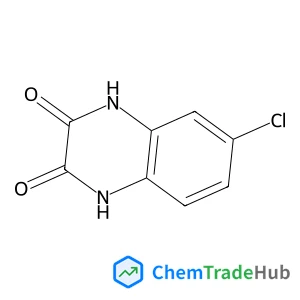
6-CHLORO-2,3-DIOXO-1,2,3,4-TETRAHYDROQUINOXALINE, 97
CAS Number:
169-14-2
Molecular Formula:
C8H5ClN2O2
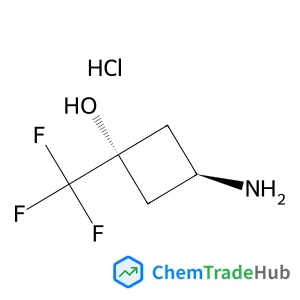
cis-3-Amino-1-(trifluoromethyl)cyclobutanol hydrochloride (1:1)
CAS Number:
1408075-16-0
Molecular Formula:
C5H9ClF3NO
Recommended Suppliers






Disclaimer
This page provides academic journal information for reference and research purposes only. We are not affiliated with any journal publishers and do not handle publication submissions. For publication-related inquiries, please contact the respective journal publishers directly.
If you notice any inaccuracies in the information displayed, please contact us at support@chemtradehub.com. We will promptly review and address your concerns.