











Cathodic chemistry of high performance Zr coated alkaline materials
Literature Information
Publication Date
2006-09-05
DOI
10.1039/B608716G
Impact Factor
6.222
Authors
Stuart Licht, Xingwen Yu, Dong Zheng
View Original
Abstract
A low level zirconia modification significantly stabilizes alternative higher energy cathodes under consideration to improve the energy storage capacity of alkaline batteries, and is demonstrated on materials including periodate, Fe(VI) “super-iron”, manganese, nickel, bismuthate and silver oxide cathodes.
Related Literature
Self-healable polymer gels with multi-responsiveness of gel–sol–gel transition and degradability
Ruixue Chang, Heng An, Xu Li, Ruyi Zhou, Jianglei Qin, Yuelan Tian, Kuilin Deng
2017-01-10
Paper
DOI: 10.1039/C6PY02122K
Synthesis of nanoscaled poly(styrene-co-n-butyl acrylate)/silica particles with dumbbell- and snowman-like morphologies by emulsion polymerization
Lucie Malosse, Etienne Duguet, Muriel Lansalot, Elodie Bourgeat-Lami, Serge Ravaine
2014-06-05
Paper
DOI: 10.1039/C4PY00370E
Deep eutectic solvents for green and efficient iron-mediated ligand-free atom transfer radical polymerization
Jirong Wang, Jianyu Han, Mohd Yusuf Khan, Dan He, Haiyan Peng, Dianyu Chen, Xiaolin Xie, Zhigang Xue
2017-01-23
Paper
DOI: 10.1039/C6PY02066F
Ultra-pH-sensitive polypeptide micelles with large fluorescence off/on ratio in near infrared range
Liyi Fu, Pan Yuan, Zheng Ruan, Le Liu, Tuanwei Li, Lifeng Yan
2016-12-16
Paper
DOI: 10.1039/C6PY01818A
Camptothecin prodrug block copolymer micelles with high drug loading and target specificity
Sue Watson, Anna M. Grabowska
2014-05-15
Paper
DOI: 10.1039/C4PY00369A
Palladium nanoparticles supported on a carbazole functionalized mesoporous organic polymer: synthesis and their application as efficient catalysts for the Suzuki–Miyaura cross coupling reaction
Hui Zhou, Chuanguang Wu, Qiaolin Wu, Bixuan Guo, Wanting Liu, Guanghua Li, Ying Mu
2017-01-26
Paper
DOI: 10.1039/C6PY01784C
Unprecedented cucurbituril-based ternary host–guest supramolecular polymers mediated through included alkyl chains
Nana Sun, Dongdong Qi, Jianzhuang Jiang
2014-05-30
Communication
DOI: 10.1039/C4PY00512K
Synthesis of cardo-polymers using Tröger's base formation
Mariolino Carta, Matthew Croad, Johannes C. Jansen, Paola Bernardo, Gabriele Clarizia, Neil B. McKeown
2014-06-20
Paper
DOI: 10.1039/C4PY00607K
Synthetic strategies for the generation of ABCA' type asymmetric tetrablock terpolymers
Siddharth Chanpuriya, Marc A. Hillmyer, Frank S. Bates
2014-06-13
Paper
DOI: 10.1039/C4PY00614C
You might also like
Compound Q&A
What are the main uses of 4-Nitrophenyl phosphate disodium salt hexahydrate (CAS: 333338-18-4)?
4-Nitrophenyl phosphate disodium salt hexahydrate is primarily used as a substra...
333338-18-44-Nitrophenyl phosph...
Compound Q&A
What are the main uses of 2-(Trifluoromethyl)-1,3-oxazole-4-carboxylic Acid (CAS: 1060816-01-4)?
2-(Trifluoromethyl)-1,3-oxazole-4-carboxylic Acid (CAS: 1060816-01-4) is widely ...
1060816-01-42-(Trifluoromethyl)-...
Compound Q&A
How should 2-Fluoro-4-biphenylcarboxylic acid (CAS: 137045-30-8) be stored?
2-Fluoro-4-biphenylcarboxylic acid should be stored in a cool, dry place at room...
137045-30-82-Fluoro-4-biphenylc...
Compound Q&A
What industries use Prednisolone-21-Carboxylic Acid (CAS: 61549-70-0)?
Prednisolone-21-Carboxylic Acid is primarily used in the pharmaceutical industry...
61549-70-0Prednisolone-21-Carb...
Compound Q&A
How should 4-(Hydrazinomethyl)-1,2,3-benzenetriol (CAS: 3614-72-0) be stored?
4-(Hydrazinomethyl)-1,2,3-benzenetriol (CAS: 3614-72-0) should be stored in a co...
3614-72-04-(Hydrazinomethyl)-...
Compound Q&A
What industries use 4-Amino-1-methyl-1H-pyrazole-5-carboxylic acid hydrochloride (CAS: 92534-70-8)?
4-Amino-1-methyl-1H-pyrazole-5-carboxylic acid hydrochloride (CAS: 92534-70-8) i...
92534-70-84-Amino-1-methyl-1H-...
Compound Q&A
What regulatory guidelines apply to dehydropachymic acid (CAS: 77012-31-8)?
Dehydropachymic acid (CAS: 77012-31-8) is regulated by various agencies. It fall...
77012-31-8Dehydropachymic acid
Compound Q&A
What is the market or research trend for 6-[(2,2-Dimethylpropanoyl)amino]nicotinic acid (CAS: 898561-66-5)?
The market and research trends for 6-[(2,2-Dimethylpropanoyl)amino]nicotinic aci...
898561-66-56-[(2,2-Dimethylprop...
Compound Q&A
How should 1,10-Phenanthroline-2,9-dicarbaldehyde (CAS: 57709-62-3) be stored?
1,10-Phenanthroline-2,9-dicarbaldehyde should be stored in a cool, dry place awa...
57709-62-31,10-Phenanthroline-...
Compound Q&A
How is 5-Carbamoyl-11-oxo-10,11-dihydro-5H-dibenzo[b,f]azepin-10-yl acetate (CAS: 113952-21-9) typically synthesized?
5-Carbamoyl-11-oxo-10,11-dihydro-5H-dibenzo[b,f]azepin-10-yl acetate can be synt...
113952-21-95-Carbamoyl-11-oxo-1...
Source Journal
Chemical Communications

CiteScore:
8.6
Self-citation Rate:
4.7%
Articles per Year:
2458
ChemComm publishes urgent research which is of outstanding significance and interest to experts in the field, while also appealing to the journal’s broad chemistry readership. Our communication format is ideally suited to short, urgent studies that are of such importance that they require accelerated publication. Our scope covers all topics in chemistry, and research at the interface of chemistry and other disciplines (such as materials science, nanoscience, physics, engineering and biology) where there is a significant novelty in the chemistry aspects. Major topic areas covered include: Analytical Chemistry Catalysis Chemical Biology and medicinal chemistry Computational Chemistry and Machine Learning Energy and sustainable chemistry Environmental Chemistry Green Chemistry Inorganic Chemistry Materials Chemistry Nanoscience Organic Chemistry Physical Chemistry Polymer Chemistry Supramolecular Chemistry
Recommended Compounds
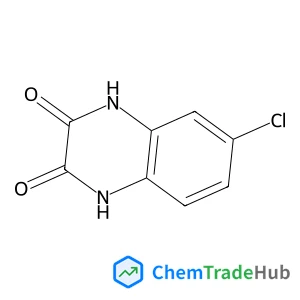
6-CHLORO-2,3-DIOXO-1,2,3,4-TETRAHYDROQUINOXALINE, 97
CAS Number:
169-14-2
Molecular Formula:
C8H5ClN2O2


cis-3-Amino-1-(trifluoromethyl)cyclobutanol hydrochloride (1:1)
CAS Number:
1408075-16-0
Molecular Formula:
C5H9ClF3NO
Recommended Suppliers






Disclaimer
This page provides academic journal information for reference and research purposes only. We are not affiliated with any journal publishers and do not handle publication submissions. For publication-related inquiries, please contact the respective journal publishers directly.
If you notice any inaccuracies in the information displayed, please contact us at support@chemtradehub.com. We will promptly review and address your concerns.