













Structural relationship between a host included chain of spirocyclic water hexamers and bulk water – the role of water clusters in self assembly and crystallization processes
Literature Information
Publication Date
2005-10-11
DOI
10.1039/B509787H
Impact Factor
6.222
Authors
Rolando Luna-García, Berenice M. Damián-Murillo, Victor Barba, Herbert Höpfl, Hiram I. Beltrán, Luis S. Zamudio-Rivera
View Original
Abstract
Infinite chains of spirocyclic water hexamers are included in the crystal lattice of a tin complex with a curved, hydrophobic surface and only weak intermolecular bonding interactions between the host molecules, so that the enclosed water clusters might be reminiscent of the solvation sphere in solution.
Related Literature
Synthesis of thermally cleavable multisegmented polystyrene by an atom transfer nitroxide radical polymerization (ATNRP) mechanism
Wenguang Song, Jian Huang, Cheng Hang, Chenyan Liu, Xuepu Wang, Guowei Wang
2015-09-28
Paper
DOI: 10.1039/C5PY01493J
Chemical vapour deposition of soluble poly(p-xylylene) copolymers with tuneable properties
Ilka E. Paulus, Andreas Greiner
2015-10-07
Paper
DOI: 10.1039/C5PY01343G
Classical photopolymerization kinetics, exceptional gelation, and improved diffraction efficiency and driving voltage in scaffolding morphological H-PDLCs afforded using a photoinitibitor
Guannan Chen, Mingli Ni, Yan Yan, Jiaqing Zhuang, V. A. L. Roy, Robert K. Y. Li
2015-10-26
Paper
DOI: 10.1039/C5PY01414J
SET-LRP of NIPAM in water via in situ reduction of Cu(ii) to Cu(0) with NaBH4
Mikhail Gavrilov, Timothy J. Zerk, Paul V. Bernhardt, Virgil Percec, Michael J. Monteiro
2015-12-09
Paper
DOI: 10.1039/C5PY01855B
Regio- and stereoselective construction of stimuli-responsive macromolecules by a sequential coupling-hydroamination polymerization route
2015-10-06
Paper
DOI: 10.1039/C5PY01424G
Cheap and fast: oxalic acid initiated CO2-based polyols synthesized by a novel preactivation approach
Yusheng Qin, Lijun Qiao, Yuyang Miao, Xianhong Wang, Fosong Wang
2015-10-12
Paper
DOI: 10.1039/C5PY01338K
Turning into poly(ionic liquid)s as a tool for polyimide modification: synthesis, characterization and CO2 separation properties
Alexander S. Shaplov, Sofia M. Morozova, Elena I. Lozinskaya, Petr S. Vlasov, Andreia S. L. Gouveia, Liliana C. Tomé, Isabel M. Marrucho, Yakov S. Vygodskii
2015-11-09
Paper
DOI: 10.1039/C5PY01553G
You might also like
Compound Q&A
What are the main uses of 4-Nitrophenyl phosphate disodium salt hexahydrate (CAS: 333338-18-4)?
4-Nitrophenyl phosphate disodium salt hexahydrate is primarily used as a substra...
333338-18-44-Nitrophenyl phosph...
Compound Q&A
What are the main uses of 2-(Trifluoromethyl)-1,3-oxazole-4-carboxylic Acid (CAS: 1060816-01-4)?
2-(Trifluoromethyl)-1,3-oxazole-4-carboxylic Acid (CAS: 1060816-01-4) is widely ...
1060816-01-42-(Trifluoromethyl)-...
Compound Q&A
How should 2-Fluoro-4-biphenylcarboxylic acid (CAS: 137045-30-8) be stored?
2-Fluoro-4-biphenylcarboxylic acid should be stored in a cool, dry place at room...
137045-30-82-Fluoro-4-biphenylc...
Compound Q&A
What industries use Prednisolone-21-Carboxylic Acid (CAS: 61549-70-0)?
Prednisolone-21-Carboxylic Acid is primarily used in the pharmaceutical industry...
61549-70-0Prednisolone-21-Carb...
Compound Q&A
How should 4-(Hydrazinomethyl)-1,2,3-benzenetriol (CAS: 3614-72-0) be stored?
4-(Hydrazinomethyl)-1,2,3-benzenetriol (CAS: 3614-72-0) should be stored in a co...
3614-72-04-(Hydrazinomethyl)-...
Compound Q&A
What industries use 4-Amino-1-methyl-1H-pyrazole-5-carboxylic acid hydrochloride (CAS: 92534-70-8)?
4-Amino-1-methyl-1H-pyrazole-5-carboxylic acid hydrochloride (CAS: 92534-70-8) i...
92534-70-84-Amino-1-methyl-1H-...
Compound Q&A
What regulatory guidelines apply to dehydropachymic acid (CAS: 77012-31-8)?
Dehydropachymic acid (CAS: 77012-31-8) is regulated by various agencies. It fall...
77012-31-8Dehydropachymic acid
Compound Q&A
What is the market or research trend for 6-[(2,2-Dimethylpropanoyl)amino]nicotinic acid (CAS: 898561-66-5)?
The market and research trends for 6-[(2,2-Dimethylpropanoyl)amino]nicotinic aci...
898561-66-56-[(2,2-Dimethylprop...
Compound Q&A
How should 1,10-Phenanthroline-2,9-dicarbaldehyde (CAS: 57709-62-3) be stored?
1,10-Phenanthroline-2,9-dicarbaldehyde should be stored in a cool, dry place awa...
57709-62-31,10-Phenanthroline-...
Compound Q&A
How is 5-Carbamoyl-11-oxo-10,11-dihydro-5H-dibenzo[b,f]azepin-10-yl acetate (CAS: 113952-21-9) typically synthesized?
5-Carbamoyl-11-oxo-10,11-dihydro-5H-dibenzo[b,f]azepin-10-yl acetate can be synt...
113952-21-95-Carbamoyl-11-oxo-1...
Source Journal
Chemical Communications

CiteScore:
8.6
Self-citation Rate:
4.7%
Articles per Year:
2458
ChemComm publishes urgent research which is of outstanding significance and interest to experts in the field, while also appealing to the journal’s broad chemistry readership. Our communication format is ideally suited to short, urgent studies that are of such importance that they require accelerated publication. Our scope covers all topics in chemistry, and research at the interface of chemistry and other disciplines (such as materials science, nanoscience, physics, engineering and biology) where there is a significant novelty in the chemistry aspects. Major topic areas covered include: Analytical Chemistry Catalysis Chemical Biology and medicinal chemistry Computational Chemistry and Machine Learning Energy and sustainable chemistry Environmental Chemistry Green Chemistry Inorganic Chemistry Materials Chemistry Nanoscience Organic Chemistry Physical Chemistry Polymer Chemistry Supramolecular Chemistry
Recommended Compounds

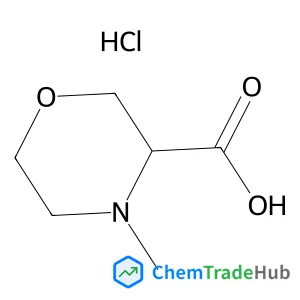
4-Methyl-3-morpholinecarboxylic acid hydrochloride (1:1)
CAS Number:
1240518-90-4
Molecular Formula:
C6H12ClNO3
Recommended Suppliers






Disclaimer
This page provides academic journal information for reference and research purposes only. We are not affiliated with any journal publishers and do not handle publication submissions. For publication-related inquiries, please contact the respective journal publishers directly.
If you notice any inaccuracies in the information displayed, please contact us at support@chemtradehub.com. We will promptly review and address your concerns.