












RAIRS of small alkynes on Pd(100)
Literature Information
Publication Date
2000-09-06
DOI
10.1039/B004344N
Impact Factor
3.676
Authors
John P. Camplin, Jemimah K. Eve, Elaine M. McCash
View Original
Abstract
The adsorption of small alkynes on Pd(100) at 80 K has been studied using reflection–absorption infrared spectroscopy (RAIRS). Ethyne is found to form a physisorbed multilayer at 80 K, which converts to a chemisorbed monolayer when heated above 100 K. The ethyne is adsorbed with the CC bond parallel to the surface, through a di-σ+di-π interaction, and the H atoms tilted away from the surface. Propyne exhibits similar behaviour: at 80 K a physisorbed multilayer forms which converts to a chemisorbed monolayer on heating to 100 K. Again adsorption is ia the CC bond with the H and CH3 groups tilted away from surface parallel. A disordered multilayer forms above the chemisorbed layer. Small doses were found to chemisorb directly at 80 K. But-2-yne chemisorbed directly ia the CC bond at 80 K, and further addition of but-2-yne formed a disordered, physisorbed multilayer above the chemisorbed layer. The geometry of the chemisorbed species is discussed; ethyne is assigned conclusively to a configuration in which the HCCH plane is normal to the surface, but the spectra obtained for propyne and but-2-yne are consistent with either this or a configuration in which the HCCC/CCCC plane is tilted with respect to the surface normal.
Related Literature
Electrochemical tuning of oxygen-containing groups on graphene oxides: towards control of the performance for the analysis of biomarkers
Chee Shan Lim, Adriano Ambrosi, Martin Pumera
2014-05-09
Paper
DOI: 10.1039/C4CP01558D
Identifying sp–sp2 carbon materials by Raman and infrared spectroscopies
Jinying Wang, Shuqing Zhang, Jingyuan Zhou, Rong Liu, Ran Du, Hua Xu, Zhongfan Liu, Jin Zhang, Zhirong Liu
2014-04-23
Paper
DOI: 10.1039/C4CP00539B
A conformation-selective IR-UV study of the dipeptides Ac-Phe-Ser-NH2 and Ac-Phe-Cys-NH2: probing the SH⋯O and OH⋯O hydrogen bond interactions
Bin Yan, Sander Jaeqx, Wim J. van der Zande, Anouk M. Rijs
2014-04-23
Paper
DOI: 10.1039/C4CP00810C
Probing crystal structure and mesoscale assembly of cellulose microfibrils in plant cell walls, tunicate tests, and bacterial films using vibrational Sum Frequency Generation (SFG) spectroscopy
Christopher M. Lee, Kabindra Kafle, Yong Bum Park, Seong H. Kim
2014-04-24
Paper
DOI: 10.1039/C4CP00515E
Efficient water oxidation with organometallic iridium complexes as precatalysts
Anna Lewandowska-Andralojc, Dmitry E. Polyansky, Chiu-Hui Wang, Etsuko Fujita
2014-01-30
Paper
DOI: 10.1039/C3CP55101F
Confined H2O molecules as local probes of pressure-induced amorphisation in faujasite
Frederico Alabarse, Claire Levelut, Aude Isambert, Philippe Hébert, Shinji Kohara, David Maurin, Jean-Louis Bantignies, Olivier Cambon, Gaëlle Creff, Pascale Roy, Jean-Blaise Brubach, Tahar Hammouda, Denis Andrault, Julien Haines
2014-04-28
Paper
DOI: 10.1039/C4CP00186A
Steric matching and the concentration induced self-assembled structural variety of 2,7-bis(n-alkoxy)-9-fluorenone at the aliphatic solvent/graphite interface
Xinrui Miao, Li Xu, Lihua Cui, Wenli Deng
2014-05-01
Paper
DOI: 10.1039/C4CP00871E
Experimental determination of electrostatic properties of Na–X zeolite from high resolution X-ray diffraction
2014-03-31
Paper
DOI: 10.1039/C3CP55397C
Understanding the chemical dynamics of the reactions of dicarbon with 1-butyne, 2-butyne, and 1,2-butadiene – toward the formation of resonantly stabilized free radicals
Dorian S. N. Parker, Surajit Maity, Beni B. Dangi, Ralf I. Kaiser, Alexander Landera, Alexander M. Mebel
2014-05-02
Paper
DOI: 10.1039/C4CP00639A
The effect of atomic ions on model σ-hole bonded complexes of AH3Y (A = C, Si, Ge; Y = F, Cl, Br)
Sean A. C. McDowell, Jerelle A. Joseph
2014-04-07
Paper
DOI: 10.1039/C4CP01074D
You might also like
Compound Q&A
What precautions should be taken when handling 4-Methyl-6-(trifluoromethyl)quinoline (CAS: 40716-16-3)?
When handling 4-Methyl-6-(trifluoromethyl)quinoline (CAS: 40716-16-3), safety go...
40716-16-34-Methyl-6-(trifluor...
Compound Q&A
What is 4-(3,5-Difluorophenyl)aniline (CAS: 405058-00-6)?
4-(3,5-Difluorophenyl)aniline is an aromatic organic compound with the CAS numbe...
405058-00-64-(3,5-Difluoropheny...
Compound Q&A
How is 5-{[4-(Trifluoromethyl)phenyl]sulfanyl}-1,2,3-thiadiazole-4-carboxylic acid (CAS: 338982-07-3) typically synthesized?
5-{[4-(Trifluoromethyl)phenyl]sulfanyl}-1,2,3-thiadiazole-4-carboxylic acid can ...
338982-07-35-{[4-(Trifluorometh...
Compound Q&A
What is the market or research trend for 4-Benzylaniline hydrochloride (CAS: 6317-57-3)?
The market for 4-Benzylaniline hydrochloride (CAS: 6317-57-3) is steadily growin...
6317-57-34-Benzylaniline hydr...
Compound Q&A
Is [3-(Diethylsulfamoyl)phenyl]boronic acid (CAS: 871329-58-7) safe?
[3-(Diethylsulfamoyl)phenyl]boronic acid is generally considered safe when handl...
871329-58-7[3-(Diethylsulfamoyl...
Compound Q&A
What are the main uses of 3-Bromo-2,5-dimethoxyaniline (CAS: 115929-62-9)?
3-Bromo-2,5-dimethoxyaniline is mainly used in the pharmaceutical and chemical i...
115929-62-93-Bromo-2,5-dimethox...
Compound Q&A
What regulatory guidelines apply to N-Methyl-1-(5-methyl-1H-indol-3-yl)methanamine (CAS: 915922-67-7)?
N-Methyl-1-(5-methyl-1H-indol-3-yl)methanamine (CAS: 915922-67-7) is subject to ...
915922-67-7N-Methyl-1-(5-methyl...
Compound Q&A
What industries use Carbamic acid, N-[(5S)-5,6-diamino-6-oxohexyl]-, 1,1-dimethylethyl ester (CAS: 24828-96-4)?
This compound is primarily used in the pharmaceutical industry for the synthesis...
24828-96-4Carbamic acid, N-[(5...
Compound Q&A
How should 2-Methyl-2-propanyl [(1S,3R)-3-aminocyclohexyl]carbamate (CAS: 1298101-47-9) be stored?
2-Methyl-2-propanyl [(1S,3R)-3-aminocyclohexyl]carbamate (CAS: 1298101-47-9) sho...
1298101-47-92-Methyl-2-propanyl ...
Compound Q&A
What industries use Ethyl 2-bromo-4,4,4-trifluorobutanoate (CAS: 367-33-9)?
Ethyl 2-bromo-4,4,4-trifluorobutanoate (CAS: 367-33-9) is utilized in the pharma...
367-33-9Ethyl 2-bromo-4,4,4-...
Source Journal
Physical Chemistry Chemical Physics

CiteScore:
5.5
Self-citation Rate:
10.3%
Articles per Year:
3036
Physical Chemistry Chemical Physics (PCCP) is an international journal co-owned by 19 physical chemistry and physics societies from around the world. This journal publishes original, cutting-edge research in physical chemistry, chemical physics and biophysical chemistry. To be suitable for publication in PCCP, articles must include significant innovation and/or insight into physical chemistry; this is the most important criterion that reviewers and Editors will judge against when evaluating submissions. The journal has a broad scope and welcomes contributions spanning experiment, theory, computation and data science. Topical coverage includes spectroscopy, dynamics, kinetics, statistical mechanics, thermodynamics, electrochemistry, catalysis, surface science, quantum mechanics, quantum computing and machine learning. Interdisciplinary research areas such as polymers and soft matter, materials, nanoscience, energy, surfaces/interfaces, and biophysical chemistry are welcomed if they demonstrate significant innovation and/or insight into physical chemistry. Joined experimental/theoretical studies are particularly appreciated when complementary and based on up-to-date approaches.
Recommended Compounds

![1-[(4-Methylphenyl)sulfonyl]-3-(4,4,5,5-tetramethyl-1,3,2-dioxaborolan-2-yl)-1H-pyrrolo[2,3-b]pyridine-5-carbonitrile structure](https://static.chemtradehub.com/structs/143/1434747-57-5-fc0d.webp "1-[(4-Methylphenyl)sulfonyl]-3-(4,4,5,5-tetramethyl-1,3,2-dioxaborolan-2-yl)-1H-pyrrolo[2,3-b]pyridine-5-carbonitrile structure")
1-[(4-Methylphenyl)sulfonyl]-3-(4,4,5,5-tetramethyl-1,3,2-dioxaborolan-2-yl)-1H-pyrrolo[2,3-b]pyridine-5-carbonitrile
CAS Number:
1434747-57-5
Molecular Formula:
C21H22BN3O4S
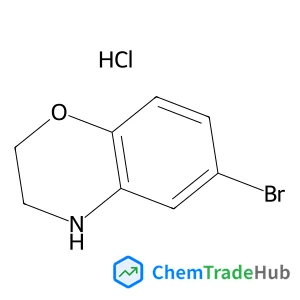
6-Bromo-3,4-dihydro-2H-1,4-benzoxazine hydrochloride (1:1)
CAS Number:
1260803-10-8
Molecular Formula:
C8H9BrClNO
Recommended Suppliers






Disclaimer
This page provides academic journal information for reference and research purposes only. We are not affiliated with any journal publishers and do not handle publication submissions. For publication-related inquiries, please contact the respective journal publishers directly.
If you notice any inaccuracies in the information displayed, please contact us at support@chemtradehub.com. We will promptly review and address your concerns.