












Theoretical study of alkoxyl radical decomposition reactions: structure–activity relationships
Literature Information
Publication Date
2000-08-03
DOI
10.1039/B003993O
Impact Factor
3.676
Authors
Raphaël Méreau, Marie-Thérèse Rayez, Françoise Caralp, Jean-Claude Rayez
View Original
Abstract
Simple expressions for predicting independently the kinetic and thermodynamic parameters for the decomposition reactions of alkoxyl radicals are proposed. These relationships have been parametrized, using quantum chemistry ab initio BAC-MP4 and density functional theory calculated activation energies and reaction enthalpies on a set of linear and branched C1 to C5 alkoxyl radical decomposition processes. Once parametrized, and validated against experimental data, the proposed relationships can be extrapolated to larger alkoxyl radical decomposition reactions relevant to atmospheric modelling. They only involve the ionisation potential of the departing alkyl group of the alkoxyl radicals and the parameter nH, defining whether the radical is primary, secondary or tertiary. One of the main interests of these findings is to predict with a reasonable accuracy the activation energies without knowing a priori the enthalpies of the reactions. In addition, RRKM calculations have shown that rate constant corrections for fall-off behavior are less than a factor of 2, at room temperature and atmospheric pressure, which is within experimental uncertainties. Nevertheless, Arrhenius pre-exponential factors can be very low at that pressure, compared with their high pressure limit value. The relationships proposed in this work provide kinetic parameters that are in reasonable agreement with available experimental data.
Related Literature
Clusters in the adsorbates of vapours and gases: Zeta isotherm approach
Seyed Hadi Zandavi, Charles A. Ward
2014-04-17
Paper
DOI: 10.1039/C4CP00843J
The nature of coherences in the B820 bacteriochlorophyll dimer revealed by two-dimensional electronic spectroscopy
Marco Ferretti, Vladimir I. Novoderezhkin, Elisabet Romero, Ramunas Augulis, Anjali Pandit, Donatas Zigmantas, Rienk van Grondelle
2013-12-18
Paper
DOI: 10.1039/C3CP54634A
Combined excitatory and inhibitory coupling in a 1-D array of Belousov–Zhabotinsky droplets
Ning Li, Irving R. Epstein, Seth Fraden
2014-04-17
Paper
DOI: 10.1039/C4CP00957F
Collecting meaningful early-time kinetic data in homogeneous catalytic water oxidation with a sacrificial oxidant
James W. Vickers, Jordan M. Sumliner, Hongjin Lv, Mike Morris, Yurii V. Geletii, Craig L. Hill
2014-03-07
Paper
DOI: 10.1039/C3CP55406F
Perfect spin filtering and large spin thermoelectric effects in organic transition-metal molecular junctions
X. F. Yang, Y. S. Liu, X. Zhang, L. P. Zhou, X. F. Wang, F. Chi, J. F. Feng
2014-04-15
Paper
DOI: 10.1039/C4CP00390J
Insight into the structure and the mechanism of the slow proton transfer in the GFP double mutant T203V/S205A
Ron Simkovitch, Shay Shomer, Rinat Gepshtein, Dan Huppert, Mari Saif, Karen Kallio, S. James Remington
2014-04-14
Paper
DOI: 10.1039/C4CP00311J
Radical O–O coupling reaction in diferrate-mediated water oxidation studied using multireference wave function theory
Masaaki Saitow, Jakub Chalupský
2014-03-21
Paper
DOI: 10.1039/C3CP55225J
Introducing manganese complexes as redox mediators for dye-sensitized solar cells
Ishanie Rangeeka Perera, Wanchun Xiang, Torben Daeneke, Richard A. Evans, C. André Ohlin, Leone Spiccia
2013-12-06
Paper
DOI: 10.1039/C3CP54894E
Spiropyran as a reusable chemosensor for selective colorimetric detection of aromatic thiols
Yasuhiro Shiraishi, Kohei Yamamoto, Shigehiro Sumiya, Takayuki Hirai
2014-02-19
Paper
DOI: 10.1039/C3CP55478C
You might also like
Compound Q&A
What precautions should be taken when handling 4-Methyl-6-(trifluoromethyl)quinoline (CAS: 40716-16-3)?
When handling 4-Methyl-6-(trifluoromethyl)quinoline (CAS: 40716-16-3), safety go...
40716-16-34-Methyl-6-(trifluor...
Compound Q&A
What is 4-(3,5-Difluorophenyl)aniline (CAS: 405058-00-6)?
4-(3,5-Difluorophenyl)aniline is an aromatic organic compound with the CAS numbe...
405058-00-64-(3,5-Difluoropheny...
Compound Q&A
How is 5-{[4-(Trifluoromethyl)phenyl]sulfanyl}-1,2,3-thiadiazole-4-carboxylic acid (CAS: 338982-07-3) typically synthesized?
5-{[4-(Trifluoromethyl)phenyl]sulfanyl}-1,2,3-thiadiazole-4-carboxylic acid can ...
338982-07-35-{[4-(Trifluorometh...
Compound Q&A
What is the market or research trend for 4-Benzylaniline hydrochloride (CAS: 6317-57-3)?
The market for 4-Benzylaniline hydrochloride (CAS: 6317-57-3) is steadily growin...
6317-57-34-Benzylaniline hydr...
Compound Q&A
Is [3-(Diethylsulfamoyl)phenyl]boronic acid (CAS: 871329-58-7) safe?
[3-(Diethylsulfamoyl)phenyl]boronic acid is generally considered safe when handl...
871329-58-7[3-(Diethylsulfamoyl...
Compound Q&A
What are the main uses of 3-Bromo-2,5-dimethoxyaniline (CAS: 115929-62-9)?
3-Bromo-2,5-dimethoxyaniline is mainly used in the pharmaceutical and chemical i...
115929-62-93-Bromo-2,5-dimethox...
Compound Q&A
What regulatory guidelines apply to N-Methyl-1-(5-methyl-1H-indol-3-yl)methanamine (CAS: 915922-67-7)?
N-Methyl-1-(5-methyl-1H-indol-3-yl)methanamine (CAS: 915922-67-7) is subject to ...
915922-67-7N-Methyl-1-(5-methyl...
Compound Q&A
What industries use Carbamic acid, N-[(5S)-5,6-diamino-6-oxohexyl]-, 1,1-dimethylethyl ester (CAS: 24828-96-4)?
This compound is primarily used in the pharmaceutical industry for the synthesis...
24828-96-4Carbamic acid, N-[(5...
Compound Q&A
How should 2-Methyl-2-propanyl [(1S,3R)-3-aminocyclohexyl]carbamate (CAS: 1298101-47-9) be stored?
2-Methyl-2-propanyl [(1S,3R)-3-aminocyclohexyl]carbamate (CAS: 1298101-47-9) sho...
1298101-47-92-Methyl-2-propanyl ...
Compound Q&A
What industries use Ethyl 2-bromo-4,4,4-trifluorobutanoate (CAS: 367-33-9)?
Ethyl 2-bromo-4,4,4-trifluorobutanoate (CAS: 367-33-9) is utilized in the pharma...
367-33-9Ethyl 2-bromo-4,4,4-...
Source Journal
Physical Chemistry Chemical Physics

CiteScore:
5.5
Self-citation Rate:
10.3%
Articles per Year:
3036
Physical Chemistry Chemical Physics (PCCP) is an international journal co-owned by 19 physical chemistry and physics societies from around the world. This journal publishes original, cutting-edge research in physical chemistry, chemical physics and biophysical chemistry. To be suitable for publication in PCCP, articles must include significant innovation and/or insight into physical chemistry; this is the most important criterion that reviewers and Editors will judge against when evaluating submissions. The journal has a broad scope and welcomes contributions spanning experiment, theory, computation and data science. Topical coverage includes spectroscopy, dynamics, kinetics, statistical mechanics, thermodynamics, electrochemistry, catalysis, surface science, quantum mechanics, quantum computing and machine learning. Interdisciplinary research areas such as polymers and soft matter, materials, nanoscience, energy, surfaces/interfaces, and biophysical chemistry are welcomed if they demonstrate significant innovation and/or insight into physical chemistry. Joined experimental/theoretical studies are particularly appreciated when complementary and based on up-to-date approaches.
Recommended Compounds
![[(1S,2S,3R,4S,7R,9S,10S,12R,15S)-4,12-Diacetyloxy-15-[(2R,3S)-3-benzamido-3-phenyl-2-(2,2,2-trichloroethoxycarbonyloxy)propanoyl]oxy-1,9-dihydroxy-10,14,17,17-tetramethyl-11-oxo-6-oxatetracyclo[11.3.1.03,10.04,7]heptadec-13-en-2-yl] benzoate structure](https://static.chemtradehub.com/structs/100/100431-55-8-7104.webp "[(1S,2S,3R,4S,7R,9S,10S,12R,15S)-4,12-Diacetyloxy-15-[(2R,3S)-3-benzamido-3-phenyl-2-(2,2,2-trichloroethoxycarbonyloxy)propanoyl]oxy-1,9-dihydroxy-10,14,17,17-tetramethyl-11-oxo-6-oxatetracyclo[11.3.1.03,10.04,7]heptadec-13-en-2-yl] benzoate structure")
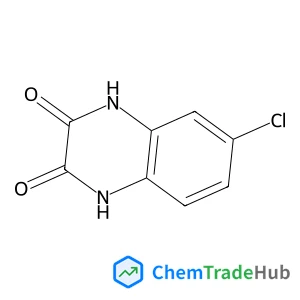
6-CHLORO-2,3-DIOXO-1,2,3,4-TETRAHYDROQUINOXALINE, 97
CAS Number:
169-14-2
Molecular Formula:
C8H5ClN2O2
Recommended Suppliers





Disclaimer
This page provides academic journal information for reference and research purposes only. We are not affiliated with any journal publishers and do not handle publication submissions. For publication-related inquiries, please contact the respective journal publishers directly.
If you notice any inaccuracies in the information displayed, please contact us at support@chemtradehub.com. We will promptly review and address your concerns.