











Kinetics of the Dushman reaction at low I− concentrations
Literature Information
Publication Date
2000-08-15
DOI
10.1039/B003606O
Impact Factor
3.676
Authors
View Original
Abstract
We have reinvestigated the kinetics of the Dushman reaction, IO3−+5 I−+6 H+→3 I2+3 H2O, under the conditions of the oscillating Bray–Liebhafsky reaction, perchloric acid solutions and low iodide concentrations, using a CSTR (continuous flow stirred tank reactor) and an iodide ion selective electrode. We show that it is possible to get meaningful results with this electrode at iodide concentrations in the range [I−]=5×10⁻⁸ to 5×10⁻⁶ M. The experimental rate law is r=[IO3−][H+]2 {k′[I−]+k″[I−]2} with k′=(1200±150) M−3 s−1 and k″=(4.2±0.8)×108 M−4 s−1 at 25°C and 0.2 M ionic strength. It is the first time that the two terms, first and second order in [I−], are observed simultaneously.
Related Literature
Long-term self-assembly of inorganic layered materials influenced by the local states of the interlayer cations
Kiminori Sato, Kazuomi Numata, Weili Dai, Michael Hunger
2014-04-22
Paper
DOI: 10.1039/C4CP00990H
Adsorption of linear aliphatic α,ω-dithiols on plasmonic metal nanoparticles: a structural study based on surface-enhanced Raman spectra
I. Izquierdo-Lorenzo, S. Sanchez-Cortes
2014-04-15
Paper
DOI: 10.1039/C4CP00424H
Confined H2O molecules as local probes of pressure-induced amorphisation in faujasite
Frederico Alabarse, Claire Levelut, Aude Isambert, Philippe Hébert, Shinji Kohara, David Maurin, Jean-Louis Bantignies, Olivier Cambon, Gaëlle Creff, Pascale Roy, Jean-Blaise Brubach, Tahar Hammouda, Denis Andrault, Julien Haines
2014-04-28
Paper
DOI: 10.1039/C4CP00186A
A quasi-classical trajectory study of the OH + SO reaction: the role of ro-vibrational energy
W. A. D. Pires, J. D. Garrido, M. A. C. Nascimento, M. Y. Ballester
2014-05-02
Paper
DOI: 10.1039/C4CP01363H
Enhancing photo-induced ultrafast charge transfer across heterojunctions of CdS and laser-sintered TiO2 nanocrystals
Bryan T. Spann, S. Venkataprasad Bhat, Qiong Nian, Kelly M. Rickey, Gary J. Cheng, Xiulin Ruan, Xianfan Xu
2014-04-14
Paper
DOI: 10.1039/C4CP01298D
Selective oxidation of alcohols in aqueous suspensions of rhodium ion-modified TiO2 photocatalysts under irradiation of visible light
Sho Kitano, Atsuhiro Tanaka, Keiji Hashimoto, Hiroshi Kominami
2014-05-08
Paper
DOI: 10.1039/C4CP00863D
Reaction rate constants of H-abstraction by OH from large ketones: measurements and site-specific rate rules
Ahmed E. Elwardany, Aamir Farooq
2014-04-29
Paper
DOI: 10.1039/C4CP01253D
Characterisation of the electronic structure of some stable nitroxyl radicals using variable energy photoelectron spectroscopy
Branka Kovač, Ivan Ljubić, Antti Kivimäki, Marcello Coreno, Igor Novak
2014-04-02
Paper
DOI: 10.1039/C4CP00867G
Key scientific challenges in current rechargeable non-aqueous Li–O2 batteries: experiment and theory
Michael Nolan
2014-05-07
Perspective
DOI: 10.1039/C4CP01309C
Effect of amide bonds on the self-assembly of gemini surfactants
Jiaul Hoque, Spandhana Gonuguntla, Venkateswarlu Yarlagadda, Vinod K. Aswal, Jayanta Haldar
2014-04-09
Paper
DOI: 10.1039/C3CP55244F
You might also like
Compound Q&A
What precautions should be taken when handling 4-Methyl-6-(trifluoromethyl)quinoline (CAS: 40716-16-3)?
When handling 4-Methyl-6-(trifluoromethyl)quinoline (CAS: 40716-16-3), safety go...
40716-16-34-Methyl-6-(trifluor...
Compound Q&A
What is 4-(3,5-Difluorophenyl)aniline (CAS: 405058-00-6)?
4-(3,5-Difluorophenyl)aniline is an aromatic organic compound with the CAS numbe...
405058-00-64-(3,5-Difluoropheny...
Compound Q&A
How is 5-{[4-(Trifluoromethyl)phenyl]sulfanyl}-1,2,3-thiadiazole-4-carboxylic acid (CAS: 338982-07-3) typically synthesized?
5-{[4-(Trifluoromethyl)phenyl]sulfanyl}-1,2,3-thiadiazole-4-carboxylic acid can ...
338982-07-35-{[4-(Trifluorometh...
Compound Q&A
What is the market or research trend for 4-Benzylaniline hydrochloride (CAS: 6317-57-3)?
The market for 4-Benzylaniline hydrochloride (CAS: 6317-57-3) is steadily growin...
6317-57-34-Benzylaniline hydr...
Compound Q&A
Is [3-(Diethylsulfamoyl)phenyl]boronic acid (CAS: 871329-58-7) safe?
[3-(Diethylsulfamoyl)phenyl]boronic acid is generally considered safe when handl...
871329-58-7[3-(Diethylsulfamoyl...
Compound Q&A
What are the main uses of 3-Bromo-2,5-dimethoxyaniline (CAS: 115929-62-9)?
3-Bromo-2,5-dimethoxyaniline is mainly used in the pharmaceutical and chemical i...
115929-62-93-Bromo-2,5-dimethox...
Compound Q&A
What regulatory guidelines apply to N-Methyl-1-(5-methyl-1H-indol-3-yl)methanamine (CAS: 915922-67-7)?
N-Methyl-1-(5-methyl-1H-indol-3-yl)methanamine (CAS: 915922-67-7) is subject to ...
915922-67-7N-Methyl-1-(5-methyl...
Compound Q&A
What industries use Carbamic acid, N-[(5S)-5,6-diamino-6-oxohexyl]-, 1,1-dimethylethyl ester (CAS: 24828-96-4)?
This compound is primarily used in the pharmaceutical industry for the synthesis...
24828-96-4Carbamic acid, N-[(5...
Compound Q&A
How should 2-Methyl-2-propanyl [(1S,3R)-3-aminocyclohexyl]carbamate (CAS: 1298101-47-9) be stored?
2-Methyl-2-propanyl [(1S,3R)-3-aminocyclohexyl]carbamate (CAS: 1298101-47-9) sho...
1298101-47-92-Methyl-2-propanyl ...
Compound Q&A
What industries use Ethyl 2-bromo-4,4,4-trifluorobutanoate (CAS: 367-33-9)?
Ethyl 2-bromo-4,4,4-trifluorobutanoate (CAS: 367-33-9) is utilized in the pharma...
367-33-9Ethyl 2-bromo-4,4,4-...
Source Journal
Physical Chemistry Chemical Physics

CiteScore:
5.5
Self-citation Rate:
10.3%
Articles per Year:
3036
Physical Chemistry Chemical Physics (PCCP) is an international journal co-owned by 19 physical chemistry and physics societies from around the world. This journal publishes original, cutting-edge research in physical chemistry, chemical physics and biophysical chemistry. To be suitable for publication in PCCP, articles must include significant innovation and/or insight into physical chemistry; this is the most important criterion that reviewers and Editors will judge against when evaluating submissions. The journal has a broad scope and welcomes contributions spanning experiment, theory, computation and data science. Topical coverage includes spectroscopy, dynamics, kinetics, statistical mechanics, thermodynamics, electrochemistry, catalysis, surface science, quantum mechanics, quantum computing and machine learning. Interdisciplinary research areas such as polymers and soft matter, materials, nanoscience, energy, surfaces/interfaces, and biophysical chemistry are welcomed if they demonstrate significant innovation and/or insight into physical chemistry. Joined experimental/theoretical studies are particularly appreciated when complementary and based on up-to-date approaches.
Recommended Compounds
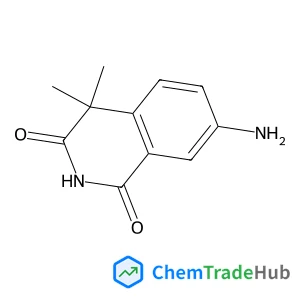
1,3(2H,4H)-Isoquinolinedione, 7-amino-4,4-dimethyl-
CAS Number:
14576-22-8
Molecular Formula:
C11H12N2O2
Recommended Suppliers






Disclaimer
This page provides academic journal information for reference and research purposes only. We are not affiliated with any journal publishers and do not handle publication submissions. For publication-related inquiries, please contact the respective journal publishers directly.
If you notice any inaccuracies in the information displayed, please contact us at support@chemtradehub.com. We will promptly review and address your concerns.