













Thermal desorption–degradation of cyclohexylamine over Ni2+- and Al3+-exchanged bentonite studied using evolved gas analysis (TG-EGA) and diffuse reflectance spectroscopy (DRIFTS)
Literature Information
Publication Date
2000-08-01
DOI
10.1039/B003587O
Impact Factor
3.676
Authors
Christopher Breen, Jeffrey Forsyth, Jack Yarwood, Trevor Hughes
View Original
Abstract
Ni2+- and Al3+-exchanged montmorillonite are known to demonstrate Lewis and Bronsted acidity, respectively, when probed using the diagnostic base pyridine (C. Breen, Clay Miner., 1991, 26, 487). Thermogravimetric analysis (TGA) of pyridine saturated Al3+- and Ni2+-montmorillonite differ whereas here it was found that cyclohexylamine (CHA) desorption profiles were very similar, albeit CHA was held to a higher temperature on Ni2+-SWy-2 than on Al3+-SWy-2. Evolved gas analysis (EGA) of the desorbed products revealed significant differences in the amount of cyclohexylamine, cyclohexene, methylcyclopentene, benzene and aniline produced, which demonstrated different decomposition pathways for CHA sorbed to Al3+- and Ni2+-exchanged SWy-2. For example, cyclohexene is produced over both exchange forms whereas aniline and methylcyclopentene were the major products over Ni2+- and Al3+-SWy-2, respectively. Variable-temperature DRIFTS was unable to distinguish between CHA-treated Al3+- and Ni2+-SWy-2 at temperatures <250°C, but at 300°C the Ni2+ form exhibited a strong, intense band at 1648 cm−1 which identifies cyclohexylimine as a surface bound intermediate which transforms before desorption.
Recommended Journals
Related Literature
Pressure dependent OH yields in the reactions of CH3CO and HOCH2CO with O2
C. B. M. Groß, T. J. Dillon, J. N. Crowley
2014-04-28
Paper
DOI: 10.1039/C4CP01108B
Electrochemical tuning of oxygen-containing groups on graphene oxides: towards control of the performance for the analysis of biomarkers
Chee Shan Lim, Adriano Ambrosi, Martin Pumera
2014-05-09
Paper
DOI: 10.1039/C4CP01558D
Synergistic contributions by decreasing overpotential and enhancing charge-transfer in α-Fe2O3/Mn3O4/graphene catalysts with heterostructures for photocatalytic water oxidation
Shunli Yin, Xiaomei Wang, Zhigang Mou, Yijie Wu, Hui Huang, Mingshan Zhu, Yukou Du, Ping Yang
2014-03-11
Paper
DOI: 10.1039/C4CP00384E
Efficient water oxidation with organometallic iridium complexes as precatalysts
Anna Lewandowska-Andralojc, Dmitry E. Polyansky, Chiu-Hui Wang, Etsuko Fujita
2014-01-30
Paper
DOI: 10.1039/C3CP55101F
Computational investigation of structural and electronic properties of aqueous interfaces of GaN, ZnO, and a GaN/ZnO alloy
Neerav Kharche, Mark S. Hybertsen, James T. Muckerman
2014-03-24
Paper
DOI: 10.1039/C4CP00486H
13C NMR relaxation and reorientation dynamics in imidazolium-based ionic liquids: revising interpretation
Petri Ingman, Erkki Lähderanta
2014-04-09
Paper
DOI: 10.1039/C4CP00637B
Thermoresponsive fluorescence of a graphene–polymer composite based on a local surface plasmon resonance effect
Yunyun Huang, Wensheng Lin, Kan Chen, Wenkai Zhang, Xudong Chen, Ming Qiu Zhang
2014-03-14
Paper
DOI: 10.1039/C4CP00773E
Flux-assisted synthesis of SnNb2O6 for tuning photocatalytic properties
Dalal Noureldine, Dalaver H. Anjum, Kazuhiro Takanabe
2014-04-03
Paper
DOI: 10.1039/C4CP00654B
Flow dependent performance of microfluidic microbial fuel cells
Daniele Vigolo, Talal T. Al-Housseiny, Yi Shen, Fiyinfoluwa O. Akinlawon, Saif T. Al-Housseiny, Ronald K. Hobson, Amaresh Sahu, Katherine I. Bedkowski, Thomas J. DiChristina, Howard A. Stone
2014-05-08
Paper
DOI: 10.1039/C4CP01086H
Redox hydrogels with adjusted redox potential for improved efficiency in Z-scheme inspired biophotovoltaic cells
Volker Hartmann, Tim Kothe, Sascha Pöller, Eithar El-Mohsnawy, Marc M. Nowaczyk, Nicolas Plumeré, Wolfgang Schuhmann, Matthias Rögner
2014-03-10
Paper
DOI: 10.1039/C4CP00380B
You might also like
Compound Q&A
What precautions should be taken when handling 4-Methyl-6-(trifluoromethyl)quinoline (CAS: 40716-16-3)?
When handling 4-Methyl-6-(trifluoromethyl)quinoline (CAS: 40716-16-3), safety go...
40716-16-34-Methyl-6-(trifluor...
Compound Q&A
What is 4-(3,5-Difluorophenyl)aniline (CAS: 405058-00-6)?
4-(3,5-Difluorophenyl)aniline is an aromatic organic compound with the CAS numbe...
405058-00-64-(3,5-Difluoropheny...
Compound Q&A
How is 5-{[4-(Trifluoromethyl)phenyl]sulfanyl}-1,2,3-thiadiazole-4-carboxylic acid (CAS: 338982-07-3) typically synthesized?
5-{[4-(Trifluoromethyl)phenyl]sulfanyl}-1,2,3-thiadiazole-4-carboxylic acid can ...
338982-07-35-{[4-(Trifluorometh...
Compound Q&A
What is the market or research trend for 4-Benzylaniline hydrochloride (CAS: 6317-57-3)?
The market for 4-Benzylaniline hydrochloride (CAS: 6317-57-3) is steadily growin...
6317-57-34-Benzylaniline hydr...
Compound Q&A
Is [3-(Diethylsulfamoyl)phenyl]boronic acid (CAS: 871329-58-7) safe?
[3-(Diethylsulfamoyl)phenyl]boronic acid is generally considered safe when handl...
871329-58-7[3-(Diethylsulfamoyl...
Compound Q&A
What are the main uses of 3-Bromo-2,5-dimethoxyaniline (CAS: 115929-62-9)?
3-Bromo-2,5-dimethoxyaniline is mainly used in the pharmaceutical and chemical i...
115929-62-93-Bromo-2,5-dimethox...
Compound Q&A
What regulatory guidelines apply to N-Methyl-1-(5-methyl-1H-indol-3-yl)methanamine (CAS: 915922-67-7)?
N-Methyl-1-(5-methyl-1H-indol-3-yl)methanamine (CAS: 915922-67-7) is subject to ...
915922-67-7N-Methyl-1-(5-methyl...
Compound Q&A
What industries use Carbamic acid, N-[(5S)-5,6-diamino-6-oxohexyl]-, 1,1-dimethylethyl ester (CAS: 24828-96-4)?
This compound is primarily used in the pharmaceutical industry for the synthesis...
24828-96-4Carbamic acid, N-[(5...
Compound Q&A
How should 2-Methyl-2-propanyl [(1S,3R)-3-aminocyclohexyl]carbamate (CAS: 1298101-47-9) be stored?
2-Methyl-2-propanyl [(1S,3R)-3-aminocyclohexyl]carbamate (CAS: 1298101-47-9) sho...
1298101-47-92-Methyl-2-propanyl ...
Compound Q&A
What industries use Ethyl 2-bromo-4,4,4-trifluorobutanoate (CAS: 367-33-9)?
Ethyl 2-bromo-4,4,4-trifluorobutanoate (CAS: 367-33-9) is utilized in the pharma...
367-33-9Ethyl 2-bromo-4,4,4-...
Source Journal
Physical Chemistry Chemical Physics

CiteScore:
5.5
Self-citation Rate:
10.3%
Articles per Year:
3036
Physical Chemistry Chemical Physics (PCCP) is an international journal co-owned by 19 physical chemistry and physics societies from around the world. This journal publishes original, cutting-edge research in physical chemistry, chemical physics and biophysical chemistry. To be suitable for publication in PCCP, articles must include significant innovation and/or insight into physical chemistry; this is the most important criterion that reviewers and Editors will judge against when evaluating submissions. The journal has a broad scope and welcomes contributions spanning experiment, theory, computation and data science. Topical coverage includes spectroscopy, dynamics, kinetics, statistical mechanics, thermodynamics, electrochemistry, catalysis, surface science, quantum mechanics, quantum computing and machine learning. Interdisciplinary research areas such as polymers and soft matter, materials, nanoscience, energy, surfaces/interfaces, and biophysical chemistry are welcomed if they demonstrate significant innovation and/or insight into physical chemistry. Joined experimental/theoretical studies are particularly appreciated when complementary and based on up-to-date approaches.
Recommended Compounds
![(2E)-3-(3-Chlorophenyl)-N-{2-[4-(methylsulfonyl)-1-piperazinyl]-2-oxoethyl}acrylamide structure](https://static.chemtradehub.com/structs/250/2505001-54-5-c1e9.webp "(2E)-3-(3-Chlorophenyl)-N-{2-[4-(methylsulfonyl)-1-piperazinyl]-2-oxoethyl}acrylamide structure")
(2E)-3-(3-Chlorophenyl)-N-{2-[4-(methylsulfonyl)-1-piperazinyl]-2-oxoethyl}acrylamide
CAS Number:
2505001-54-5
Molecular Formula:
C16H20ClN3O4S
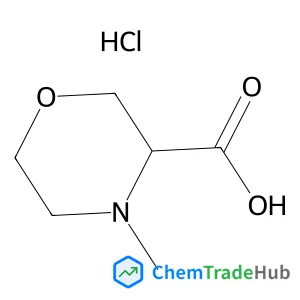
4-Methyl-3-morpholinecarboxylic acid hydrochloride (1:1)
CAS Number:
1240518-90-4
Molecular Formula:
C6H12ClNO3
Recommended Suppliers




Disclaimer
This page provides academic journal information for reference and research purposes only. We are not affiliated with any journal publishers and do not handle publication submissions. For publication-related inquiries, please contact the respective journal publishers directly.
If you notice any inaccuracies in the information displayed, please contact us at support@chemtradehub.com. We will promptly review and address your concerns.