


Effects of carboxylic acid adsorbates on CO adsorption and crotonaldehyde hydrogenation over Cu/Al2O3 catalyst
Literature Information
Publication Date
2000-08-04
DOI
10.1039/B003429K
Impact Factor
3.676
Authors
Halim A. Abdullah, Colin H. Rochester, James A. Anderson, Jillian E. Bailie, Neville V. Richardson, Graham J. Hutchings
View Original
Abstract
The hydrogenation of crotonaldehyde over Cu/Al2O3 which was modified by formic acid or acetic acid adsorption has been investigated, exposed Cu sites being characterised using infrared spectroscopy with CO as a probe molecule. Formic acid adsorption on reduced Cu0 sites generated adsorbed bidentate formate which blocked CO adsorption at many sites, induced cationic character at the remaining available sites, and partially poisoned hydrogenation reactions. Modification of the surface poisoned CO hydrogenation more than CC hydrogenation and hence promoted butanal as the dominant hydrogenation product. Desorption of formate by “ flashing” at high temperature resulted in a partly reconstructed surface which gave higher catalytic activities than an unmodified surface before formic acid treatment. However, crotyl alcohol remained a minor product. The effects of acetic acid adsorption were similar to those for formic acid except that attempts at desorption of the modifier resulted in carbonaceous residues which partially poisoned both CO adsorption and catalytic activity.
Recommended Journals

Journal of the Indian Institute of Science

Cellulose

Bioorganic & Medicinal Chemistry Letters

Journal of Chemical Sciences

Biocatalysis and Biotransformation

Critical Reviews in Solid State and Materials Sciences

Polycyclic Aromatic Compounds

Bioorganic & Medicinal Chemistry

Herald of the Russian Academy of Sciences

Topics in Catalysis
Related Literature
Selective cross-dehydrogenative C–O coupling of N-hydroxy compounds with pyrazolones. Introduction of the diacetyliminoxyl radical into the practice of organic synthesis
Igor B. Krylov, Stanislav A. Paveliev, Boris N. Shelimov, Boris V. Lokshin, Irina A. Garbuzova, Viktor A. Tafeenko, Gennady I. Nikishin, Alexander O. Terent'ev
2017-07-18
Research Article
DOI: 10.1039/C7QO00447H
Tunable regiodivergent phosphine-catalyzed [3 + 2] cycloaddition of alkynones and trifluoroacetyl phenylamides
Yao-Liang Sun, Yin Wei
2017-08-29
Research Article
DOI: 10.1039/C7QO00512A
Total synthesis of strictamine: a tutorial for novel and efficient synthesis
Shiju Zhang, Sha-Hua Huang
2017-10-17
Highlight
DOI: 10.1039/C7QO00837F
A one-pot synthetic approach for the construction of a thiazolo[3,2-a]benzimidazole-linked quinazoline scaffold via palladium-catalyzed reactions
Ali Keivanloo, Atena Soozani, Mohammad Bakherad, Amir Hossein Amin
2018-01-09
Research Article
DOI: 10.1039/C7QO00751E
A practical approach for the synthesis of oxindole and isatin derivatives by Pd-catalyzed intramolecular amination
Yubo Pang, Mingyu Guan, Runsheng Zeng, Yingsheng Zhao
2017-09-05
Research Article
DOI: 10.1039/C7QO00710H
Cu-Catalyzed tertiary alkylation of α-(trifluoromethyl)styrenes with tertiary alkylmagnesium reagents
Wenpeng Dai, Yingyin Lin, Yan Wan, Song Cao
2017-09-18
Research Article
DOI: 10.1039/C7QO00716G
Copper-catalyzed oxidative dehydrogenative coupling of carboxylic acids with H-phosphonates: an efficient and practical approach to acyl phosphate esters
Hong Fu, Tao Yang, Jia-Qi Shang, Jia-Li Zhou, Meng Sun, Ya-Min Li
2017-06-05
Research Article
DOI: 10.1039/C7QO00298J
Cu(i)-catalyzed Michael addition of ketiminoesters to β-trifluoromethyl β,β-disubstituted enones: rapid access to 1-pyrrolines bearing a quaternary all-carbon stereocenter
Bing Liu, Zhan-Ming Zhang, Bing Xu, Shan Xu, Hai-Hong Wu, Yuanyuan Liu, Junliang Zhang
2017-05-25
Research Article
DOI: 10.1039/C7QO00291B
Sodium nitrite-promoted aerobic oxidative coupling of aryl methyl ketones with ammonium under metal-free conditions: a facile access to polysubstitution imidazoles
Cheng-Kou Liu, Zhao Yang, Yu Zeng, Zheng Fang, Bo Li
2017-05-02
Research Article
DOI: 10.1039/C7QO00247E
You might also like
Compound Q&A
What precautions should be taken when handling 4-Methyl-6-(trifluoromethyl)quinoline (CAS: 40716-16-3)?
When handling 4-Methyl-6-(trifluoromethyl)quinoline (CAS: 40716-16-3), safety go...
40716-16-34-Methyl-6-(trifluor...
Compound Q&A
What is 4-(3,5-Difluorophenyl)aniline (CAS: 405058-00-6)?
4-(3,5-Difluorophenyl)aniline is an aromatic organic compound with the CAS numbe...
405058-00-64-(3,5-Difluoropheny...
Compound Q&A
How is 5-{[4-(Trifluoromethyl)phenyl]sulfanyl}-1,2,3-thiadiazole-4-carboxylic acid (CAS: 338982-07-3) typically synthesized?
5-{[4-(Trifluoromethyl)phenyl]sulfanyl}-1,2,3-thiadiazole-4-carboxylic acid can ...
338982-07-35-{[4-(Trifluorometh...
Compound Q&A
What is the market or research trend for 4-Benzylaniline hydrochloride (CAS: 6317-57-3)?
The market for 4-Benzylaniline hydrochloride (CAS: 6317-57-3) is steadily growin...
6317-57-34-Benzylaniline hydr...
Compound Q&A
Is [3-(Diethylsulfamoyl)phenyl]boronic acid (CAS: 871329-58-7) safe?
[3-(Diethylsulfamoyl)phenyl]boronic acid is generally considered safe when handl...
871329-58-7[3-(Diethylsulfamoyl...
Compound Q&A
What are the main uses of 3-Bromo-2,5-dimethoxyaniline (CAS: 115929-62-9)?
3-Bromo-2,5-dimethoxyaniline is mainly used in the pharmaceutical and chemical i...
115929-62-93-Bromo-2,5-dimethox...
Compound Q&A
What regulatory guidelines apply to N-Methyl-1-(5-methyl-1H-indol-3-yl)methanamine (CAS: 915922-67-7)?
N-Methyl-1-(5-methyl-1H-indol-3-yl)methanamine (CAS: 915922-67-7) is subject to ...
915922-67-7N-Methyl-1-(5-methyl...
Compound Q&A
What industries use Carbamic acid, N-[(5S)-5,6-diamino-6-oxohexyl]-, 1,1-dimethylethyl ester (CAS: 24828-96-4)?
This compound is primarily used in the pharmaceutical industry for the synthesis...
24828-96-4Carbamic acid, N-[(5...
Compound Q&A
How should 2-Methyl-2-propanyl [(1S,3R)-3-aminocyclohexyl]carbamate (CAS: 1298101-47-9) be stored?
2-Methyl-2-propanyl [(1S,3R)-3-aminocyclohexyl]carbamate (CAS: 1298101-47-9) sho...
1298101-47-92-Methyl-2-propanyl ...
Compound Q&A
What industries use Ethyl 2-bromo-4,4,4-trifluorobutanoate (CAS: 367-33-9)?
Ethyl 2-bromo-4,4,4-trifluorobutanoate (CAS: 367-33-9) is utilized in the pharma...
367-33-9Ethyl 2-bromo-4,4,4-...
Source Journal
Physical Chemistry Chemical Physics

CiteScore:
5.5
Self-citation Rate:
10.3%
Articles per Year:
3036
Physical Chemistry Chemical Physics (PCCP) is an international journal co-owned by 19 physical chemistry and physics societies from around the world. This journal publishes original, cutting-edge research in physical chemistry, chemical physics and biophysical chemistry. To be suitable for publication in PCCP, articles must include significant innovation and/or insight into physical chemistry; this is the most important criterion that reviewers and Editors will judge against when evaluating submissions. The journal has a broad scope and welcomes contributions spanning experiment, theory, computation and data science. Topical coverage includes spectroscopy, dynamics, kinetics, statistical mechanics, thermodynamics, electrochemistry, catalysis, surface science, quantum mechanics, quantum computing and machine learning. Interdisciplinary research areas such as polymers and soft matter, materials, nanoscience, energy, surfaces/interfaces, and biophysical chemistry are welcomed if they demonstrate significant innovation and/or insight into physical chemistry. Joined experimental/theoretical studies are particularly appreciated when complementary and based on up-to-date approaches.
Recommended Compounds
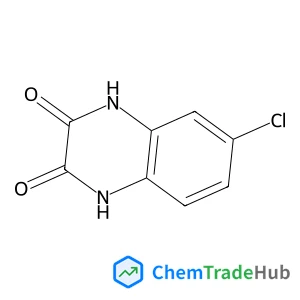
6-CHLORO-2,3-DIOXO-1,2,3,4-TETRAHYDROQUINOXALINE, 97
CAS Number:
169-14-2
Molecular Formula:
C8H5ClN2O2
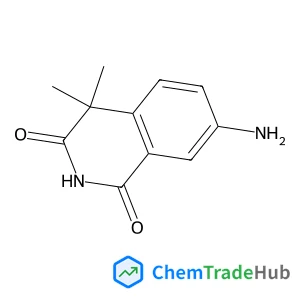
1,3(2H,4H)-Isoquinolinedione, 7-amino-4,4-dimethyl-
CAS Number:
14576-22-8
Molecular Formula:
C11H12N2O2
Recommended Suppliers




Disclaimer
This page provides academic journal information for reference and research purposes only. We are not affiliated with any journal publishers and do not handle publication submissions. For publication-related inquiries, please contact the respective journal publishers directly.
If you notice any inaccuracies in the information displayed, please contact us at support@chemtradehub.com. We will promptly review and address your concerns.