












Use of a surface acoustic wave device for investigation of water adsorption on NaCl
Literature Information
Publication Date
2000-09-13
DOI
10.1039/B003028G
Impact Factor
3.676
Authors
Mattias Hallquist, Noemi B. Petrucci, Christopher Kreuzer, Victor P. Ostanin, R. Anthony Cox
View Original
Abstract
A new method for measurement of water adsorption on thin films of inorganic salts using a surface acoustic wave (SAW) device is described. Mass changes on the SAW chip were detected as a phase shift in an 83 MHz acoustic wave, measured using an electrical delay line. It was shown that coating of the sensor with polycrystalline NaCl can be achieved without appreciable loss of sensitivity for detection of the small changes in mass loading due to water adsorption. Reproducible adsorption isotherms were measured which agreed quantitatively with isotherms measured by conventional methods. There are indications that the adsorption of water on thin polycrystalline films at high humidities differs from that on bulk and single surface crystals. The SAW device can in principle be used to characterise a whole range of surfaces of interest to atmospheric chemistry, such as sea salt, sulfates, mineral dust or low volatile organics, in a relatively simple fashion, provided the substrate can be deposited in a suitable thin film or layer.
Recommended Journals
Related Literature
Structural relaxation of vapor-deposited molecular glasses and supercooled liquids
Kikujiro Ishii, Hideyuki Nakayama
2014-04-24
Perspective
DOI: 10.1039/C4CP00458B
Identifying sp–sp2 carbon materials by Raman and infrared spectroscopies
Jinying Wang, Shuqing Zhang, Jingyuan Zhou, Rong Liu, Ran Du, Hua Xu, Zhongfan Liu, Jin Zhang, Zhirong Liu
2014-04-23
Paper
DOI: 10.1039/C4CP00539B
The effect of atomic ions on model σ-hole bonded complexes of AH3Y (A = C, Si, Ge; Y = F, Cl, Br)
Sean A. C. McDowell, Jerelle A. Joseph
2014-04-07
Paper
DOI: 10.1039/C4CP01074D
Effect of chromophore encapsulation on linear and nonlinear optical properties: the case of “miniSOG”, a protein-encased flavin
Nanna H. List, Frederico M. Pimenta, Lotte Holmegaard, Rasmus L. Jensen, Michael Etzerodt, Tobias Schwabe, Jacob Kongsted, Peter R. Ogilby, Ove Christiansen
2014-01-07
Paper
DOI: 10.1039/C3CP54470B
Synergistic contributions by decreasing overpotential and enhancing charge-transfer in α-Fe2O3/Mn3O4/graphene catalysts with heterostructures for photocatalytic water oxidation
Shunli Yin, Xiaomei Wang, Zhigang Mou, Yijie Wu, Hui Huang, Mingshan Zhu, Yukou Du, Ping Yang
2014-03-11
Paper
DOI: 10.1039/C4CP00384E
Concentration dependence of hydration water in a model peptide
Stefania Perticaroli, Marco Paolantoni, Paola Sassi, Silvia Corezzi, Assunta Morresi
2014-05-06
Paper
DOI: 10.1039/C4CP00840E
Long-term self-assembly of inorganic layered materials influenced by the local states of the interlayer cations
Kiminori Sato, Kazuomi Numata, Weili Dai, Michael Hunger
2014-04-22
Paper
DOI: 10.1039/C4CP00990H
A first-principle investigation of double-side CVD catalyst metal/graphene contacts
Xiang Ji, Yan Wang, Zhiping Yu
2014-03-25
Paper
DOI: 10.1039/C4CP00960F
Self-healing mechanism of metallopolymers investigated by QM/MM simulations and Raman spectroscopy
Julien Guthmuller
2014-05-15
Paper
DOI: 10.1039/C4CP00562G
Computer simulation studies on passive recruitment dynamics of lipids induced by the adsorption of charged nanoparticles
2014-05-07
Paper
DOI: 10.1039/C4CP00553H
You might also like
Compound Q&A
What precautions should be taken when handling 4-Methyl-6-(trifluoromethyl)quinoline (CAS: 40716-16-3)?
When handling 4-Methyl-6-(trifluoromethyl)quinoline (CAS: 40716-16-3), safety go...
40716-16-34-Methyl-6-(trifluor...
Compound Q&A
What is 4-(3,5-Difluorophenyl)aniline (CAS: 405058-00-6)?
4-(3,5-Difluorophenyl)aniline is an aromatic organic compound with the CAS numbe...
405058-00-64-(3,5-Difluoropheny...
Compound Q&A
How is 5-{[4-(Trifluoromethyl)phenyl]sulfanyl}-1,2,3-thiadiazole-4-carboxylic acid (CAS: 338982-07-3) typically synthesized?
5-{[4-(Trifluoromethyl)phenyl]sulfanyl}-1,2,3-thiadiazole-4-carboxylic acid can ...
338982-07-35-{[4-(Trifluorometh...
Compound Q&A
What is the market or research trend for 4-Benzylaniline hydrochloride (CAS: 6317-57-3)?
The market for 4-Benzylaniline hydrochloride (CAS: 6317-57-3) is steadily growin...
6317-57-34-Benzylaniline hydr...
Compound Q&A
Is [3-(Diethylsulfamoyl)phenyl]boronic acid (CAS: 871329-58-7) safe?
[3-(Diethylsulfamoyl)phenyl]boronic acid is generally considered safe when handl...
871329-58-7[3-(Diethylsulfamoyl...
Compound Q&A
What are the main uses of 3-Bromo-2,5-dimethoxyaniline (CAS: 115929-62-9)?
3-Bromo-2,5-dimethoxyaniline is mainly used in the pharmaceutical and chemical i...
115929-62-93-Bromo-2,5-dimethox...
Compound Q&A
What regulatory guidelines apply to N-Methyl-1-(5-methyl-1H-indol-3-yl)methanamine (CAS: 915922-67-7)?
N-Methyl-1-(5-methyl-1H-indol-3-yl)methanamine (CAS: 915922-67-7) is subject to ...
915922-67-7N-Methyl-1-(5-methyl...
Compound Q&A
What industries use Carbamic acid, N-[(5S)-5,6-diamino-6-oxohexyl]-, 1,1-dimethylethyl ester (CAS: 24828-96-4)?
This compound is primarily used in the pharmaceutical industry for the synthesis...
24828-96-4Carbamic acid, N-[(5...
Compound Q&A
How should 2-Methyl-2-propanyl [(1S,3R)-3-aminocyclohexyl]carbamate (CAS: 1298101-47-9) be stored?
2-Methyl-2-propanyl [(1S,3R)-3-aminocyclohexyl]carbamate (CAS: 1298101-47-9) sho...
1298101-47-92-Methyl-2-propanyl ...
Compound Q&A
What industries use Ethyl 2-bromo-4,4,4-trifluorobutanoate (CAS: 367-33-9)?
Ethyl 2-bromo-4,4,4-trifluorobutanoate (CAS: 367-33-9) is utilized in the pharma...
367-33-9Ethyl 2-bromo-4,4,4-...
Source Journal
Physical Chemistry Chemical Physics

CiteScore:
5.5
Self-citation Rate:
10.3%
Articles per Year:
3036
Physical Chemistry Chemical Physics (PCCP) is an international journal co-owned by 19 physical chemistry and physics societies from around the world. This journal publishes original, cutting-edge research in physical chemistry, chemical physics and biophysical chemistry. To be suitable for publication in PCCP, articles must include significant innovation and/or insight into physical chemistry; this is the most important criterion that reviewers and Editors will judge against when evaluating submissions. The journal has a broad scope and welcomes contributions spanning experiment, theory, computation and data science. Topical coverage includes spectroscopy, dynamics, kinetics, statistical mechanics, thermodynamics, electrochemistry, catalysis, surface science, quantum mechanics, quantum computing and machine learning. Interdisciplinary research areas such as polymers and soft matter, materials, nanoscience, energy, surfaces/interfaces, and biophysical chemistry are welcomed if they demonstrate significant innovation and/or insight into physical chemistry. Joined experimental/theoretical studies are particularly appreciated when complementary and based on up-to-date approaches.
Recommended Compounds

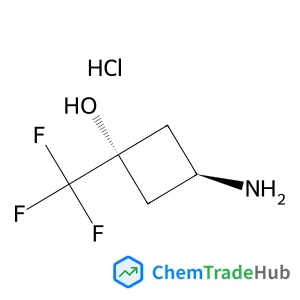
cis-3-Amino-1-(trifluoromethyl)cyclobutanol hydrochloride (1:1)
CAS Number:
1408075-16-0
Molecular Formula:
C5H9ClF3NO
Recommended Suppliers






Disclaimer
This page provides academic journal information for reference and research purposes only. We are not affiliated with any journal publishers and do not handle publication submissions. For publication-related inquiries, please contact the respective journal publishers directly.
If you notice any inaccuracies in the information displayed, please contact us at support@chemtradehub.com. We will promptly review and address your concerns.