












Study of a hydrogenic atom near a rigid wall by using the finite element method
Literature Information
Publication Date
2000-07-13
DOI
10.1039/B001750G
Impact Factor
3.676
Authors
Juan David Serna-Salazar, Jorge Mahecha-Gómez
View Original
Abstract
A direct numerical solution of the Schrödinger equation for a hydrogenic atom near a rigid wall, and the corresponding graphics of some of the energies and wave functions are presented. The solution is obtained by using the finite-element method (FEM) with the appropriate boundary conditions. In particular, crossings of the von Neumann–Wigner type are observed and a classification is suggested of different eigenenergy sets, according to symmetries of the system. The limit with the nucleus being on the wall and the 3D bulk limit are also studied. A discussion of a possible role of the model for the treatment of atom–surface interactions is presented. This system can also be used as a model for 2D and 3D quantum devices, such as shallow state of impurity atoms or Wannier exciton near interfaces.
Related Literature
Collecting meaningful early-time kinetic data in homogeneous catalytic water oxidation with a sacrificial oxidant
James W. Vickers, Jordan M. Sumliner, Hongjin Lv, Mike Morris, Yurii V. Geletii, Craig L. Hill
2014-03-07
Paper
DOI: 10.1039/C3CP55406F
Efficient water oxidation with organometallic iridium complexes as precatalysts
Anna Lewandowska-Andralojc, Dmitry E. Polyansky, Chiu-Hui Wang, Etsuko Fujita
2014-01-30
Paper
DOI: 10.1039/C3CP55101F
Coupled-cluster calculations of the lowest 0–0 bands of the electronic excitation spectrum of naphthalene
Heike Fliegl, Dage Sundholm
2013-12-18
Paper
DOI: 10.1039/C3CP54421D
Molecular self-assembly at nanometer scale modulated surfaces: trimesic acid on Ag(111), Cu(111) and Ag/Cu(111)
Mahdi Sadeghzadeh Baviloliaei, Lars Diekhöner
2014-04-24
Paper
DOI: 10.1039/C4CP01429D
Electrical conductivity and glass formation in nitrile-functionalized pyrrolidinium bis(trifluoromethylsulfonyl)imide ionic liquids: chain length and odd–even effects of the alkyl spacer between the pyrrolidinium ring and the nitrile group
Jan Leys, Chandra Shekhar Pati Tripathi, Christ Glorieux, Stefan Zahn, Barbara Kirchner, Stéphane Longuemart, Kallidanthiyil Chellappan Lethesh, Peter Nockemann, Wim Dehaen, Koen Binnemans
2014-03-24
Paper
DOI: 10.1039/C4CP00259H
Selective oxidation of alcohols in aqueous suspensions of rhodium ion-modified TiO2 photocatalysts under irradiation of visible light
Sho Kitano, Atsuhiro Tanaka, Keiji Hashimoto, Hiroshi Kominami
2014-05-08
Paper
DOI: 10.1039/C4CP00863D
Selective adsorption of bismuth telluride nanoplatelets through electrostatic attraction
2014-04-23
Paper
DOI: 10.1039/C4CP00690A
Key scientific challenges in current rechargeable non-aqueous Li–O2 batteries: experiment and theory
Michael Nolan
2014-05-07
Perspective
DOI: 10.1039/C4CP01309C
Electrochemical properties of oxygenated cup-stacked carbon nanofiber-modified electrodes
Seongjae Ko, Tetsu Tatsuma, Akiyoshi Sakoda, Yasuyuki Sakai, Kikuo Komori
2014-05-12
Paper
DOI: 10.1039/C4CP01278J
Combined excitatory and inhibitory coupling in a 1-D array of Belousov–Zhabotinsky droplets
Ning Li, Irving R. Epstein, Seth Fraden
2014-04-17
Paper
DOI: 10.1039/C4CP00957F
You might also like
Compound Q&A
What precautions should be taken when handling 4-Methyl-6-(trifluoromethyl)quinoline (CAS: 40716-16-3)?
When handling 4-Methyl-6-(trifluoromethyl)quinoline (CAS: 40716-16-3), safety go...
40716-16-34-Methyl-6-(trifluor...
Compound Q&A
What is 4-(3,5-Difluorophenyl)aniline (CAS: 405058-00-6)?
4-(3,5-Difluorophenyl)aniline is an aromatic organic compound with the CAS numbe...
405058-00-64-(3,5-Difluoropheny...
Compound Q&A
How is 5-{[4-(Trifluoromethyl)phenyl]sulfanyl}-1,2,3-thiadiazole-4-carboxylic acid (CAS: 338982-07-3) typically synthesized?
5-{[4-(Trifluoromethyl)phenyl]sulfanyl}-1,2,3-thiadiazole-4-carboxylic acid can ...
338982-07-35-{[4-(Trifluorometh...
Compound Q&A
What is the market or research trend for 4-Benzylaniline hydrochloride (CAS: 6317-57-3)?
The market for 4-Benzylaniline hydrochloride (CAS: 6317-57-3) is steadily growin...
6317-57-34-Benzylaniline hydr...
Compound Q&A
Is [3-(Diethylsulfamoyl)phenyl]boronic acid (CAS: 871329-58-7) safe?
[3-(Diethylsulfamoyl)phenyl]boronic acid is generally considered safe when handl...
871329-58-7[3-(Diethylsulfamoyl...
Compound Q&A
What are the main uses of 3-Bromo-2,5-dimethoxyaniline (CAS: 115929-62-9)?
3-Bromo-2,5-dimethoxyaniline is mainly used in the pharmaceutical and chemical i...
115929-62-93-Bromo-2,5-dimethox...
Compound Q&A
What regulatory guidelines apply to N-Methyl-1-(5-methyl-1H-indol-3-yl)methanamine (CAS: 915922-67-7)?
N-Methyl-1-(5-methyl-1H-indol-3-yl)methanamine (CAS: 915922-67-7) is subject to ...
915922-67-7N-Methyl-1-(5-methyl...
Compound Q&A
What industries use Carbamic acid, N-[(5S)-5,6-diamino-6-oxohexyl]-, 1,1-dimethylethyl ester (CAS: 24828-96-4)?
This compound is primarily used in the pharmaceutical industry for the synthesis...
24828-96-4Carbamic acid, N-[(5...
Compound Q&A
How should 2-Methyl-2-propanyl [(1S,3R)-3-aminocyclohexyl]carbamate (CAS: 1298101-47-9) be stored?
2-Methyl-2-propanyl [(1S,3R)-3-aminocyclohexyl]carbamate (CAS: 1298101-47-9) sho...
1298101-47-92-Methyl-2-propanyl ...
Compound Q&A
What industries use Ethyl 2-bromo-4,4,4-trifluorobutanoate (CAS: 367-33-9)?
Ethyl 2-bromo-4,4,4-trifluorobutanoate (CAS: 367-33-9) is utilized in the pharma...
367-33-9Ethyl 2-bromo-4,4,4-...
Source Journal
Physical Chemistry Chemical Physics

CiteScore:
5.5
Self-citation Rate:
10.3%
Articles per Year:
3036
Physical Chemistry Chemical Physics (PCCP) is an international journal co-owned by 19 physical chemistry and physics societies from around the world. This journal publishes original, cutting-edge research in physical chemistry, chemical physics and biophysical chemistry. To be suitable for publication in PCCP, articles must include significant innovation and/or insight into physical chemistry; this is the most important criterion that reviewers and Editors will judge against when evaluating submissions. The journal has a broad scope and welcomes contributions spanning experiment, theory, computation and data science. Topical coverage includes spectroscopy, dynamics, kinetics, statistical mechanics, thermodynamics, electrochemistry, catalysis, surface science, quantum mechanics, quantum computing and machine learning. Interdisciplinary research areas such as polymers and soft matter, materials, nanoscience, energy, surfaces/interfaces, and biophysical chemistry are welcomed if they demonstrate significant innovation and/or insight into physical chemistry. Joined experimental/theoretical studies are particularly appreciated when complementary and based on up-to-date approaches.
Recommended Compounds
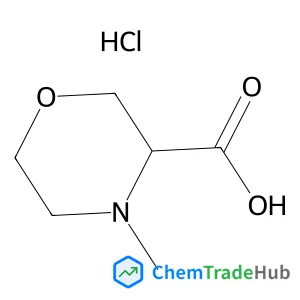
4-Methyl-3-morpholinecarboxylic acid hydrochloride (1:1)
CAS Number:
1240518-90-4
Molecular Formula:
C6H12ClNO3
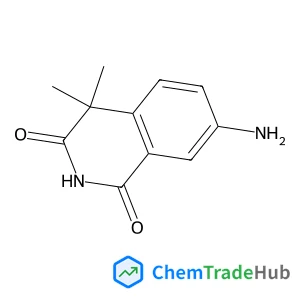
1,3(2H,4H)-Isoquinolinedione, 7-amino-4,4-dimethyl-
CAS Number:
14576-22-8
Molecular Formula:
C11H12N2O2
Recommended Suppliers





Disclaimer
This page provides academic journal information for reference and research purposes only. We are not affiliated with any journal publishers and do not handle publication submissions. For publication-related inquiries, please contact the respective journal publishers directly.
If you notice any inaccuracies in the information displayed, please contact us at support@chemtradehub.com. We will promptly review and address your concerns.