


An inelastic neutron scattering study and re-assignment of the vibrational spectrum of [Os3(CO)9(µ2-CO)(µ3-η2-C2H2)], a model compound for chemisorbed ethyne
Literature Information
Publication Date
DOI
10.1039/A901514K
Impact Factor
3.676
Authors
View Original
Abstract
The complex [Os3(CO)9(µ2-CO)(µ3-η2-C2H2)] (1) has been used as a vibrational model compound for the bonding of ethyne on metal single crystal surfaces. The original vibrational assignment of the ethyne ligand in 1 was based on the infrared and Raman spectra of the protonated and deuterated complexes and comparison with the spectra of related compounds. We have now measured the inelastic neutron scattering (INS) spectrum of the complex, and the assignment of the C–H bending and the Os–C stretching modes of 1 has been partially revised in the light of this. Since the revisions largely affect the antisymmetric modes, (A″), the conclusions from previous work regarding the assignment of the type B (di-σ/π) ethyne chemisorption on metal single crystals are still valid.
Recommended Journals

European Journal of Organic Chemistry

Molecular Diversity

Physical Chemistry Chemical Physics

Journal of Medical Biochemistry

Current Pharmaceutical Biotechnology

Contact Lens & Anterior Eye

Environmental Toxicology and Pharmacology

Angewandte Chemie International Edition

Photochemical & Photobiological Sciences

Lab on a Chip
Related Literature
Interactions of ionic liquids with hydration layer of poly(N-isopropylacrylamide): comprehensive analysis of biophysical techniques results
P. Madhusudhana Reddy, R. Umapathi, P. Venkatesu
2014-03-05
Paper
DOI: 10.1039/C4CP00010B
Long-term self-assembly of inorganic layered materials influenced by the local states of the interlayer cations
Kiminori Sato, Kazuomi Numata, Weili Dai, Michael Hunger
2014-04-22
Paper
DOI: 10.1039/C4CP00990H
TiO2(B) nanoparticle-functionalized WO3 nanorods with enhanced gas sensing properties
Hongxin Zhang, Shurong Wang, Yanshuang Wang, Jiedi Yang, Xueling Gao, Liwei Wang
2014-03-04
Paper
DOI: 10.1039/C4CP00356J
Theoretical study of thermoelectric properties of few-layer MoS2 and WSe2
Wen Huang, Chee Kwan Gan, Gengchiau Liang
2014-04-14
Paper
DOI: 10.1039/C4CP00487F
Experimental determination of electrostatic properties of Na–X zeolite from high resolution X-ray diffraction
2014-03-31
Paper
DOI: 10.1039/C3CP55397C
Combined excitatory and inhibitory coupling in a 1-D array of Belousov–Zhabotinsky droplets
Ning Li, Irving R. Epstein, Seth Fraden
2014-04-17
Paper
DOI: 10.1039/C4CP00957F
A water-soluble tin(iv) porphyrin as a bioinspired photosensitiser for light-driven proton-reduction
Anne-Marie Manke, Karen Geisel, Anne Fetzer, Philipp Kurz
2014-01-31
Paper
DOI: 10.1039/C3CP55023K
Spiropyran as a reusable chemosensor for selective colorimetric detection of aromatic thiols
Yasuhiro Shiraishi, Kohei Yamamoto, Shigehiro Sumiya, Takayuki Hirai
2014-02-19
Paper
DOI: 10.1039/C3CP55478C
Carbon dioxide reduction via light activation of a ruthenium–Ni(cyclam) complex
Christian Herrero, Annamaria Quaranta, Sanae El Ghachtouli, Winfried Leibl
2014-02-11
Paper
DOI: 10.1039/C3CP54946A
Selective adsorption of bismuth telluride nanoplatelets through electrostatic attraction
2014-04-23
Paper
DOI: 10.1039/C4CP00690A
You might also like
Compound Q&A
What precautions should be taken when handling 4-Methyl-6-(trifluoromethyl)quinoline (CAS: 40716-16-3)?
When handling 4-Methyl-6-(trifluoromethyl)quinoline (CAS: 40716-16-3), safety go...
40716-16-34-Methyl-6-(trifluor...
Compound Q&A
What is 4-(3,5-Difluorophenyl)aniline (CAS: 405058-00-6)?
4-(3,5-Difluorophenyl)aniline is an aromatic organic compound with the CAS numbe...
405058-00-64-(3,5-Difluoropheny...
Compound Q&A
How is 5-{[4-(Trifluoromethyl)phenyl]sulfanyl}-1,2,3-thiadiazole-4-carboxylic acid (CAS: 338982-07-3) typically synthesized?
5-{[4-(Trifluoromethyl)phenyl]sulfanyl}-1,2,3-thiadiazole-4-carboxylic acid can ...
338982-07-35-{[4-(Trifluorometh...
Compound Q&A
What is the market or research trend for 4-Benzylaniline hydrochloride (CAS: 6317-57-3)?
The market for 4-Benzylaniline hydrochloride (CAS: 6317-57-3) is steadily growin...
6317-57-34-Benzylaniline hydr...
Compound Q&A
Is [3-(Diethylsulfamoyl)phenyl]boronic acid (CAS: 871329-58-7) safe?
[3-(Diethylsulfamoyl)phenyl]boronic acid is generally considered safe when handl...
871329-58-7[3-(Diethylsulfamoyl...
Compound Q&A
What are the main uses of 3-Bromo-2,5-dimethoxyaniline (CAS: 115929-62-9)?
3-Bromo-2,5-dimethoxyaniline is mainly used in the pharmaceutical and chemical i...
115929-62-93-Bromo-2,5-dimethox...
Compound Q&A
What regulatory guidelines apply to N-Methyl-1-(5-methyl-1H-indol-3-yl)methanamine (CAS: 915922-67-7)?
N-Methyl-1-(5-methyl-1H-indol-3-yl)methanamine (CAS: 915922-67-7) is subject to ...
915922-67-7N-Methyl-1-(5-methyl...
Compound Q&A
What industries use Carbamic acid, N-[(5S)-5,6-diamino-6-oxohexyl]-, 1,1-dimethylethyl ester (CAS: 24828-96-4)?
This compound is primarily used in the pharmaceutical industry for the synthesis...
24828-96-4Carbamic acid, N-[(5...
Compound Q&A
How should 2-Methyl-2-propanyl [(1S,3R)-3-aminocyclohexyl]carbamate (CAS: 1298101-47-9) be stored?
2-Methyl-2-propanyl [(1S,3R)-3-aminocyclohexyl]carbamate (CAS: 1298101-47-9) sho...
1298101-47-92-Methyl-2-propanyl ...
Compound Q&A
What industries use Ethyl 2-bromo-4,4,4-trifluorobutanoate (CAS: 367-33-9)?
Ethyl 2-bromo-4,4,4-trifluorobutanoate (CAS: 367-33-9) is utilized in the pharma...
367-33-9Ethyl 2-bromo-4,4,4-...
Source Journal
Physical Chemistry Chemical Physics
CiteScore:
5.5
Self-citation Rate:
10.3%
Articles per Year:
3036
Physical Chemistry Chemical Physics (PCCP) is an international journal co-owned by 19 physical chemistry and physics societies from around the world. This journal publishes original, cutting-edge research in physical chemistry, chemical physics and biophysical chemistry. To be suitable for publication in PCCP, articles must include significant innovation and/or insight into physical chemistry; this is the most important criterion that reviewers and Editors will judge against when evaluating submissions. The journal has a broad scope and welcomes contributions spanning experiment, theory, computation and data science. Topical coverage includes spectroscopy, dynamics, kinetics, statistical mechanics, thermodynamics, electrochemistry, catalysis, surface science, quantum mechanics, quantum computing and machine learning. Interdisciplinary research areas such as polymers and soft matter, materials, nanoscience, energy, surfaces/interfaces, and biophysical chemistry are welcomed if they demonstrate significant innovation and/or insight into physical chemistry. Joined experimental/theoretical studies are particularly appreciated when complementary and based on up-to-date approaches.
Recommended Compounds
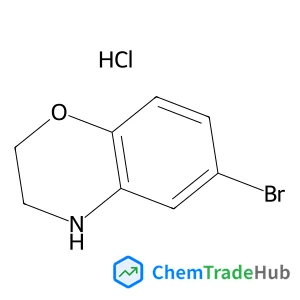
6-Bromo-3,4-dihydro-2H-1,4-benzoxazine hydrochloride (1:1)
CAS Number:
1260803-10-8
Molecular Formula:
C8H9BrClNO
Recommended Suppliers







Disclaimer
This page provides academic journal information for reference and research purposes only. We are not affiliated with any journal publishers and do not handle publication submissions. For publication-related inquiries, please contact the respective journal publishers directly.
If you notice any inaccuracies in the information displayed, please contact us at support@chemtradehub.com. We will promptly review and address your concerns.