













Multi-step photolysis of benzenetetracarboxylic dianhydrides in low-temperature argon matrices: exploration of reactive intermediates containing benzdiynes produced stepwise during photochemical reactions
Literature Information
Publication Date
DOI
10.1039/A900212J
Impact Factor
3.676
Authors
View Original
Abstract
Photolyses of 1,2;4,5- and 1,2;3,4-benzenetetracarboxylic dianhydrides (3a and 3b), which would be precursors of 1,4- and 1,3-benzdiyne (2a and 2b), were studied by a matrix isolation technique and a selective irradiation technique using three kinds of excimer lasers in order to directly observe intermediates produced stepwise. The photolyzed products in the matrix were characterized by FT-IR and UV–vis spectroscopies. As a result, sequential decarboxylation and decarbonylation from one anhydride moiety of 3a and 3b produced corresponding benzocyclopropenone and benzyne intermediates in the initial stage. In both the photolyses, further decomposition proceeded to form 1,3,5-hexatriyne (4) as a final product. Although neither 2a nor 2b was observed directly, it seems that the benzdiynes including another isomer, 1,2,3,5-tetradehydrobenzene (2c), participated as precursors to acyclic C4H–Câ–·C–H biradical 13 and/or carbene 14, which were formed in the reaction from benzdiyne to 4. Additionally, as a result of CCSD(T)/6-31G**//CASSCF(4,4)/6-31G** level calculations for 2a, 2b and 2c, it is clear that the energy of 2c was comparable to those of 2a and 2b, which supports the formation of 13 from 2a/2b and of 14 from 2c after isomerization of 2a→2c and 2b→2c.
Recommended Journals
Related Literature
Electrochemical properties of oxygenated cup-stacked carbon nanofiber-modified electrodes
Seongjae Ko, Tetsu Tatsuma, Akiyoshi Sakoda, Yasuyuki Sakai, Kikuo Komori
2014-05-12
Paper
DOI: 10.1039/C4CP01278J
Graphene mechanics: II. Atomic stress distribution during indentation until rupture
Bogdan I. Costescu
2014-04-15
Paper
DOI: 10.1039/C3CP55341H
The protective effect of the mesoporous host on the photo oxidation of fluorescent guests: a UV-Vis spectroscopy study
Annalisa Massa, Elena Ugazio
2014-04-29
Paper
DOI: 10.1039/C4CP01143K
Direct CO oxidation by lattice oxygen on the SnO2(110) surface: a DFT study
Zhansheng Lu, Dongwei Ma, Lin Yang, Xiaobing Wang, Guoliang Xu, Zongxian Yang
2014-04-28
Paper
DOI: 10.1039/C4CP00540F
Interactions of ionic liquids with hydration layer of poly(N-isopropylacrylamide): comprehensive analysis of biophysical techniques results
P. Madhusudhana Reddy, R. Umapathi, P. Venkatesu
2014-03-05
Paper
DOI: 10.1039/C4CP00010B
Effect of ozone exposure on the electrical characteristics of high-purity, large-diameter semiconducting carbon nanotubes
Jia Gao, Yueh-Lin Loo
2014-04-08
Paper
DOI: 10.1039/C4CP00665H
Effect of post-treatments on the photocatalytic activity of Sm2Ti2S2O5 for the hydrogen evolution reaction
Wen Zhao, Fuxiang Zhang, Takashi Hisatomi, Kazunari Domen
2013-12-06
Paper
DOI: 10.1039/C3CP54668C
Optical response of quantum-sized Ag and Au clusters – cage vs. compact structures and the remarkable insensitivity to compression
Robert L. Whetten, Xóchitl López-Lozano
2014-05-07
Paper
DOI: 10.1039/C4CP01277A
The one-electron reduction of dithiolate and diselenolate ligands
Eric A. C. Bushnell, Thomas D. Burns, Russell J. Boyd
2014-04-25
Paper
DOI: 10.1039/C4CP01105H
Silicon based tandem cells: novel photocathodes for hydrogen production
W. Calvet, E. Murugasen, J. Klett, B. Kaiser, W. Jaegermann, F. Finger, S. Hoch, M. Blug, J. Busse
2014-03-12
Paper
DOI: 10.1039/C3CP55198A
You might also like
Compound Q&A
What precautions should be taken when handling 4-Methyl-6-(trifluoromethyl)quinoline (CAS: 40716-16-3)?
When handling 4-Methyl-6-(trifluoromethyl)quinoline (CAS: 40716-16-3), safety go...
40716-16-34-Methyl-6-(trifluor...
Compound Q&A
What is 4-(3,5-Difluorophenyl)aniline (CAS: 405058-00-6)?
4-(3,5-Difluorophenyl)aniline is an aromatic organic compound with the CAS numbe...
405058-00-64-(3,5-Difluoropheny...
Compound Q&A
How is 5-{[4-(Trifluoromethyl)phenyl]sulfanyl}-1,2,3-thiadiazole-4-carboxylic acid (CAS: 338982-07-3) typically synthesized?
5-{[4-(Trifluoromethyl)phenyl]sulfanyl}-1,2,3-thiadiazole-4-carboxylic acid can ...
338982-07-35-{[4-(Trifluorometh...
Compound Q&A
What is the market or research trend for 4-Benzylaniline hydrochloride (CAS: 6317-57-3)?
The market for 4-Benzylaniline hydrochloride (CAS: 6317-57-3) is steadily growin...
6317-57-34-Benzylaniline hydr...
Compound Q&A
Is [3-(Diethylsulfamoyl)phenyl]boronic acid (CAS: 871329-58-7) safe?
[3-(Diethylsulfamoyl)phenyl]boronic acid is generally considered safe when handl...
871329-58-7[3-(Diethylsulfamoyl...
Compound Q&A
What are the main uses of 3-Bromo-2,5-dimethoxyaniline (CAS: 115929-62-9)?
3-Bromo-2,5-dimethoxyaniline is mainly used in the pharmaceutical and chemical i...
115929-62-93-Bromo-2,5-dimethox...
Compound Q&A
What regulatory guidelines apply to N-Methyl-1-(5-methyl-1H-indol-3-yl)methanamine (CAS: 915922-67-7)?
N-Methyl-1-(5-methyl-1H-indol-3-yl)methanamine (CAS: 915922-67-7) is subject to ...
915922-67-7N-Methyl-1-(5-methyl...
Compound Q&A
What industries use Carbamic acid, N-[(5S)-5,6-diamino-6-oxohexyl]-, 1,1-dimethylethyl ester (CAS: 24828-96-4)?
This compound is primarily used in the pharmaceutical industry for the synthesis...
24828-96-4Carbamic acid, N-[(5...
Compound Q&A
How should 2-Methyl-2-propanyl [(1S,3R)-3-aminocyclohexyl]carbamate (CAS: 1298101-47-9) be stored?
2-Methyl-2-propanyl [(1S,3R)-3-aminocyclohexyl]carbamate (CAS: 1298101-47-9) sho...
1298101-47-92-Methyl-2-propanyl ...
Compound Q&A
What industries use Ethyl 2-bromo-4,4,4-trifluorobutanoate (CAS: 367-33-9)?
Ethyl 2-bromo-4,4,4-trifluorobutanoate (CAS: 367-33-9) is utilized in the pharma...
367-33-9Ethyl 2-bromo-4,4,4-...
Source Journal
Physical Chemistry Chemical Physics

CiteScore:
5.5
Self-citation Rate:
10.3%
Articles per Year:
3036
Physical Chemistry Chemical Physics (PCCP) is an international journal co-owned by 19 physical chemistry and physics societies from around the world. This journal publishes original, cutting-edge research in physical chemistry, chemical physics and biophysical chemistry. To be suitable for publication in PCCP, articles must include significant innovation and/or insight into physical chemistry; this is the most important criterion that reviewers and Editors will judge against when evaluating submissions. The journal has a broad scope and welcomes contributions spanning experiment, theory, computation and data science. Topical coverage includes spectroscopy, dynamics, kinetics, statistical mechanics, thermodynamics, electrochemistry, catalysis, surface science, quantum mechanics, quantum computing and machine learning. Interdisciplinary research areas such as polymers and soft matter, materials, nanoscience, energy, surfaces/interfaces, and biophysical chemistry are welcomed if they demonstrate significant innovation and/or insight into physical chemistry. Joined experimental/theoretical studies are particularly appreciated when complementary and based on up-to-date approaches.
Recommended Compounds
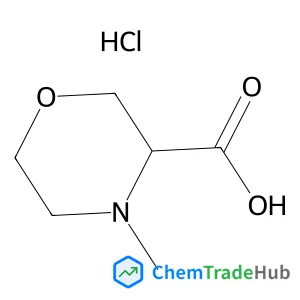
4-Methyl-3-morpholinecarboxylic acid hydrochloride (1:1)
CAS Number:
1240518-90-4
Molecular Formula:
C6H12ClNO3
phosphoryl}methyl 4-methylbenzenesulfonate structure](https://static.chemtradehub.com/structs/864/864068-45-1-ba7c.webp "{[3-(Hexadecyloxy)propoxy](hydroxy)phosphoryl}methyl 4-methylbenzenesulfonate structure")
{[3-(Hexadecyloxy)propoxy](hydroxy)phosphoryl}methyl 4-methylbenzenesulfonate
CAS Number:
864068-45-1
Molecular Formula:
C27H49O7PS
Recommended Suppliers



Disclaimer
This page provides academic journal information for reference and research purposes only. We are not affiliated with any journal publishers and do not handle publication submissions. For publication-related inquiries, please contact the respective journal publishers directly.
If you notice any inaccuracies in the information displayed, please contact us at support@chemtradehub.com. We will promptly review and address your concerns.