












Electron paramagnetic resonance and electron spin echo study of supported and unsupported vanadium oxides
Literature Information
Publication Date
DOI
10.1039/A900119K
Impact Factor
3.676
Authors
View Original
Abstract
Electron paramagnetic resonance (EPR) and electron spin echo envelope modulation (ESEEM) spectroscopies have been used to characterize paramagnetic centers in crystalline and gel forms of vanadium pentoxide as well as vanadia supported on silica, titania, and magnesia. A number of different paramagnetic centers are observed in the bulk and supported vanadia phases that are characterized by their spin Hamiltonian parameters. ESEEM data for all the bulk vanadium oxide samples show intense modulation at the 51V Larmor frequency. This modulation originates from interlayer VO2+ species in gel samples and from V4+ centers in crystalline oxides. The intensity of the 51V modulation varies considerably from sample to sample depending on the specific nature of the paramagnetic center. For the supported vanadia samples, complex EPR spectra are obtained that show two classes of signals. Signals with narrow linewidths and resolved hyperfine structure are observed suggesting magnetically isolated V4+ in addition to dipolar exchange broadened signals. ESEEM spectroscopy reveals that the spectra observed for vanadia supported on silica are from surface bound vanadyl species that interact with predominantly diamagnetic surface vanadia clusters. In contrast, for vanadia supported on titania, the V4+ signals observed by pulsed EPR show no modulation. The absence of modulation is attributed to well dispersed surface vanadyl species and subsurface V4+6c centers. Vanadium supported on magnesia interacts to form new magnesium vanadate phases containing V4+6c. It is shown that ESEEM is a valuable tool for characterizing vanadia supported on various oxides.
Recommended Journals
Related Literature
Probing crystal structure and mesoscale assembly of cellulose microfibrils in plant cell walls, tunicate tests, and bacterial films using vibrational Sum Frequency Generation (SFG) spectroscopy
Christopher M. Lee, Kabindra Kafle, Yong Bum Park, Seong H. Kim
2014-04-24
Paper
DOI: 10.1039/C4CP00515E
Enhancing photo-induced ultrafast charge transfer across heterojunctions of CdS and laser-sintered TiO2 nanocrystals
Bryan T. Spann, S. Venkataprasad Bhat, Qiong Nian, Kelly M. Rickey, Gary J. Cheng, Xiulin Ruan, Xianfan Xu
2014-04-14
Paper
DOI: 10.1039/C4CP01298D
Clusters in the adsorbates of vapours and gases: Zeta isotherm approach
Seyed Hadi Zandavi, Charles A. Ward
2014-04-17
Paper
DOI: 10.1039/C4CP00843J
Non-innocent side-chains with dipole moments in organic solar cells improve charge separation
Hilde D. de Gier, Ria Broer
2014-05-06
Paper
DOI: 10.1039/C4CP01070A
13C NMR relaxation and reorientation dynamics in imidazolium-based ionic liquids: revising interpretation
Petri Ingman, Erkki Lähderanta
2014-04-09
Paper
DOI: 10.1039/C4CP00637B
Spiropyran as a reusable chemosensor for selective colorimetric detection of aromatic thiols
Yasuhiro Shiraishi, Kohei Yamamoto, Shigehiro Sumiya, Takayuki Hirai
2014-02-19
Paper
DOI: 10.1039/C3CP55478C
Conversion efficiency of skutterudite-based thermoelectric modules
James R. Salvador, Jung Y. Cho, Zuxin Ye, Joshua E. Moczygemba, Alan J. Thompson, Jeffrey W. Sharp, Jan D. Koenig, Ryan Maloney, Travis Thompson, Jeffrey Sakamoto, Hsin Wang, Andrew A. Wereszczak
2014-05-16
Paper
DOI: 10.1039/C4CP01582G
Radical O–O coupling reaction in diferrate-mediated water oxidation studied using multireference wave function theory
Masaaki Saitow, Jakub Chalupský
2014-03-21
Paper
DOI: 10.1039/C3CP55225J
Absolute electron total ionization cross-sections: molecular analogues of DNA and RNA nucleobase and sugar constituents
James N. Bull, Jason W. L. Lee, Claire Vallance
2014-04-03
Paper
DOI: 10.1039/C4CP00490F
Direct CO oxidation by lattice oxygen on the SnO2(110) surface: a DFT study
Zhansheng Lu, Dongwei Ma, Lin Yang, Xiaobing Wang, Guoliang Xu, Zongxian Yang
2014-04-28
Paper
DOI: 10.1039/C4CP00540F
You might also like
Compound Q&A
What precautions should be taken when handling 4-Methyl-6-(trifluoromethyl)quinoline (CAS: 40716-16-3)?
When handling 4-Methyl-6-(trifluoromethyl)quinoline (CAS: 40716-16-3), safety go...
40716-16-34-Methyl-6-(trifluor...
Compound Q&A
What is 4-(3,5-Difluorophenyl)aniline (CAS: 405058-00-6)?
4-(3,5-Difluorophenyl)aniline is an aromatic organic compound with the CAS numbe...
405058-00-64-(3,5-Difluoropheny...
Compound Q&A
How is 5-{[4-(Trifluoromethyl)phenyl]sulfanyl}-1,2,3-thiadiazole-4-carboxylic acid (CAS: 338982-07-3) typically synthesized?
5-{[4-(Trifluoromethyl)phenyl]sulfanyl}-1,2,3-thiadiazole-4-carboxylic acid can ...
338982-07-35-{[4-(Trifluorometh...
Compound Q&A
What is the market or research trend for 4-Benzylaniline hydrochloride (CAS: 6317-57-3)?
The market for 4-Benzylaniline hydrochloride (CAS: 6317-57-3) is steadily growin...
6317-57-34-Benzylaniline hydr...
Compound Q&A
Is [3-(Diethylsulfamoyl)phenyl]boronic acid (CAS: 871329-58-7) safe?
[3-(Diethylsulfamoyl)phenyl]boronic acid is generally considered safe when handl...
871329-58-7[3-(Diethylsulfamoyl...
Compound Q&A
What are the main uses of 3-Bromo-2,5-dimethoxyaniline (CAS: 115929-62-9)?
3-Bromo-2,5-dimethoxyaniline is mainly used in the pharmaceutical and chemical i...
115929-62-93-Bromo-2,5-dimethox...
Compound Q&A
What regulatory guidelines apply to N-Methyl-1-(5-methyl-1H-indol-3-yl)methanamine (CAS: 915922-67-7)?
N-Methyl-1-(5-methyl-1H-indol-3-yl)methanamine (CAS: 915922-67-7) is subject to ...
915922-67-7N-Methyl-1-(5-methyl...
Compound Q&A
What industries use Carbamic acid, N-[(5S)-5,6-diamino-6-oxohexyl]-, 1,1-dimethylethyl ester (CAS: 24828-96-4)?
This compound is primarily used in the pharmaceutical industry for the synthesis...
24828-96-4Carbamic acid, N-[(5...
Compound Q&A
How should 2-Methyl-2-propanyl [(1S,3R)-3-aminocyclohexyl]carbamate (CAS: 1298101-47-9) be stored?
2-Methyl-2-propanyl [(1S,3R)-3-aminocyclohexyl]carbamate (CAS: 1298101-47-9) sho...
1298101-47-92-Methyl-2-propanyl ...
Compound Q&A
What industries use Ethyl 2-bromo-4,4,4-trifluorobutanoate (CAS: 367-33-9)?
Ethyl 2-bromo-4,4,4-trifluorobutanoate (CAS: 367-33-9) is utilized in the pharma...
367-33-9Ethyl 2-bromo-4,4,4-...
Source Journal
Physical Chemistry Chemical Physics

CiteScore:
5.5
Self-citation Rate:
10.3%
Articles per Year:
3036
Physical Chemistry Chemical Physics (PCCP) is an international journal co-owned by 19 physical chemistry and physics societies from around the world. This journal publishes original, cutting-edge research in physical chemistry, chemical physics and biophysical chemistry. To be suitable for publication in PCCP, articles must include significant innovation and/or insight into physical chemistry; this is the most important criterion that reviewers and Editors will judge against when evaluating submissions. The journal has a broad scope and welcomes contributions spanning experiment, theory, computation and data science. Topical coverage includes spectroscopy, dynamics, kinetics, statistical mechanics, thermodynamics, electrochemistry, catalysis, surface science, quantum mechanics, quantum computing and machine learning. Interdisciplinary research areas such as polymers and soft matter, materials, nanoscience, energy, surfaces/interfaces, and biophysical chemistry are welcomed if they demonstrate significant innovation and/or insight into physical chemistry. Joined experimental/theoretical studies are particularly appreciated when complementary and based on up-to-date approaches.
Recommended Compounds
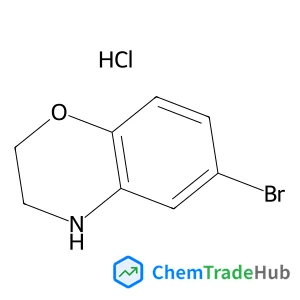
6-Bromo-3,4-dihydro-2H-1,4-benzoxazine hydrochloride (1:1)
CAS Number:
1260803-10-8
Molecular Formula:
C8H9BrClNO


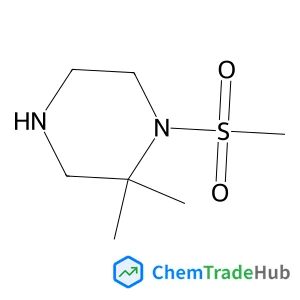
Recommended Suppliers




Disclaimer
This page provides academic journal information for reference and research purposes only. We are not affiliated with any journal publishers and do not handle publication submissions. For publication-related inquiries, please contact the respective journal publishers directly.
If you notice any inaccuracies in the information displayed, please contact us at support@chemtradehub.com. We will promptly review and address your concerns.