


Organic molecular beam deposition: technology and applications in electronics and photonics Invited Lecture
Literature Information
Publication Date
DOI
10.1039/A809431D
Impact Factor
3.676
Authors
View Original
Abstract
Organic semiconductors have been intensively studied over the past decades. The potential of this new class of materials for photonic and electronic device applications is demonstrated by successful fabrication of organic and organic-on-inorganic heterostructures for electroluminescent devices, photodetectors, and microwave diodes. The fabrication technology of organic semiconductor devices for both electronic and photonic applications is discussed. In contrast to spin-on or dipping techniques for fabrication of polymeric films, organic compounds with low molecular weight are sublimated under ultra high vacuum (UHV) conditions. The organic molecular beam deposition (OMBD) technology employed allows the reproducible growth of complex layer sequences with a defined thickness of various organic semiconductors in combination with dielectric films, different metallizations, and indium–tin oxide layers. Growth rates from 1–5 nm min-1 and substrate temperatures from 77 to 350 K are used. Organic-on-inorganic heterostructure diodes based on crystalline thin PTCDA (3,4,9,10-perylenetetracarboxylic dianhydride) films on III–V semiconductors are investigated with regard to microwave applications with reduced forward voltage and high cut-off frequencies in the GHz regime. Secondly, efficient organic light emitting diodes with bright emission in the blue [1-AZM-Hex (N,N′-disalicylidene-1,6-hexanediaminate)zinc(II)], green, [Alq3 (tris(8-hydroxyquinoline)-aluminum)], and red (Eu complexes) spectral region and with low operation voltages are presented. In general an onset voltage of 2.7 V, efficiencies up to 7 lm W-1 and a luminance up to 2×10⁵ cd m-2 (CW, RT) are attained for N,N′-diphenyl-quinacridone doped Alq3 devices. An undoped device can be operated up to 5000 h without any loss in brightness and just a small increase of the driving voltage of about 2 V. Embedding emissive organic thin films with a narrow spectral characteristic into planar Fabry–Perot microcavities, a light intensity enhancement and a spatial redistribution of the emission is achieved.
Recommended Journals

Angewandte Chemie International Edition

Molecular Diversity

Nature Reviews Drug Discovery

Journal of Enzyme inhibition and Medicinal Chemistry

Environmental Toxicology and Pharmacology

CrystEngComm

Journal of Medical Biochemistry

Photochemical & Photobiological Sciences

Lab on a Chip

Advanced Engineering Materials
Related Literature
Self-healing mechanism of metallopolymers investigated by QM/MM simulations and Raman spectroscopy
Julien Guthmuller
2014-05-15
Paper
DOI: 10.1039/C4CP00562G
TiO2(B) nanoparticle-functionalized WO3 nanorods with enhanced gas sensing properties
Hongxin Zhang, Shurong Wang, Yanshuang Wang, Jiedi Yang, Xueling Gao, Liwei Wang
2014-03-04
Paper
DOI: 10.1039/C4CP00356J
Introducing manganese complexes as redox mediators for dye-sensitized solar cells
Ishanie Rangeeka Perera, Wanchun Xiang, Torben Daeneke, Richard A. Evans, C. André Ohlin, Leone Spiccia
2013-12-06
Paper
DOI: 10.1039/C3CP54894E
Artificial photosynthesis – functional devices for light driven water splitting with photoactive anodes based on molecular catalysts
Yan Gao, Linlin Zhang, Xin Ding
2014-03-07
Paper
DOI: 10.1039/C3CP55204G
Ab initio study of TaON, an active photocatalyst under visible light irradiation
2014-03-03
Paper
DOI: 10.1039/C4CP00285G
Computational study of the Rayleigh light scattering properties of atmospheric pre-nucleation clusters
Jonas Elm, Patrick Norman, Merete Bilde, Kurt V. Mikkelsen
2014-04-15
Paper
DOI: 10.1039/C4CP01206B
Effect of amide bonds on the self-assembly of gemini surfactants
Jiaul Hoque, Spandhana Gonuguntla, Venkateswarlu Yarlagadda, Vinod K. Aswal, Jayanta Haldar
2014-04-09
Paper
DOI: 10.1039/C3CP55244F
Characterisation of the electronic structure of some stable nitroxyl radicals using variable energy photoelectron spectroscopy
Branka Kovač, Ivan Ljubić, Antti Kivimäki, Marcello Coreno, Igor Novak
2014-04-02
Paper
DOI: 10.1039/C4CP00867G
Adsorption and splitting of H2S on 2D-ZnO1−xNy: first-principles analysis
Summayya Kouser, Nacir Tit
2014-04-22
Paper
DOI: 10.1039/C4CP01092B
Cobalt porphyrin electrode films for electrocatalytic water oxidation
Ali Han, Hongxing Jia, Hao Ma, Shifan Ye, Haotian Wu, Haitao Lei, Yongzhen Han, Rui Cao, Pingwu Du
2014-04-15
Paper
DOI: 10.1039/C4CP00523F
You might also like
Compound Q&A
What precautions should be taken when handling 4-Methyl-6-(trifluoromethyl)quinoline (CAS: 40716-16-3)?
When handling 4-Methyl-6-(trifluoromethyl)quinoline (CAS: 40716-16-3), safety go...
40716-16-34-Methyl-6-(trifluor...
Compound Q&A
What is 4-(3,5-Difluorophenyl)aniline (CAS: 405058-00-6)?
4-(3,5-Difluorophenyl)aniline is an aromatic organic compound with the CAS numbe...
405058-00-64-(3,5-Difluoropheny...
Compound Q&A
How is 5-{[4-(Trifluoromethyl)phenyl]sulfanyl}-1,2,3-thiadiazole-4-carboxylic acid (CAS: 338982-07-3) typically synthesized?
5-{[4-(Trifluoromethyl)phenyl]sulfanyl}-1,2,3-thiadiazole-4-carboxylic acid can ...
338982-07-35-{[4-(Trifluorometh...
Compound Q&A
What is the market or research trend for 4-Benzylaniline hydrochloride (CAS: 6317-57-3)?
The market for 4-Benzylaniline hydrochloride (CAS: 6317-57-3) is steadily growin...
6317-57-34-Benzylaniline hydr...
Compound Q&A
Is [3-(Diethylsulfamoyl)phenyl]boronic acid (CAS: 871329-58-7) safe?
[3-(Diethylsulfamoyl)phenyl]boronic acid is generally considered safe when handl...
871329-58-7[3-(Diethylsulfamoyl...
Compound Q&A
What are the main uses of 3-Bromo-2,5-dimethoxyaniline (CAS: 115929-62-9)?
3-Bromo-2,5-dimethoxyaniline is mainly used in the pharmaceutical and chemical i...
115929-62-93-Bromo-2,5-dimethox...
Compound Q&A
What regulatory guidelines apply to N-Methyl-1-(5-methyl-1H-indol-3-yl)methanamine (CAS: 915922-67-7)?
N-Methyl-1-(5-methyl-1H-indol-3-yl)methanamine (CAS: 915922-67-7) is subject to ...
915922-67-7N-Methyl-1-(5-methyl...
Compound Q&A
What industries use Carbamic acid, N-[(5S)-5,6-diamino-6-oxohexyl]-, 1,1-dimethylethyl ester (CAS: 24828-96-4)?
This compound is primarily used in the pharmaceutical industry for the synthesis...
24828-96-4Carbamic acid, N-[(5...
Compound Q&A
How should 2-Methyl-2-propanyl [(1S,3R)-3-aminocyclohexyl]carbamate (CAS: 1298101-47-9) be stored?
2-Methyl-2-propanyl [(1S,3R)-3-aminocyclohexyl]carbamate (CAS: 1298101-47-9) sho...
1298101-47-92-Methyl-2-propanyl ...
Compound Q&A
What industries use Ethyl 2-bromo-4,4,4-trifluorobutanoate (CAS: 367-33-9)?
Ethyl 2-bromo-4,4,4-trifluorobutanoate (CAS: 367-33-9) is utilized in the pharma...
367-33-9Ethyl 2-bromo-4,4,4-...
Source Journal
Physical Chemistry Chemical Physics

CiteScore:
5.5
Self-citation Rate:
10.3%
Articles per Year:
3036
Physical Chemistry Chemical Physics (PCCP) is an international journal co-owned by 19 physical chemistry and physics societies from around the world. This journal publishes original, cutting-edge research in physical chemistry, chemical physics and biophysical chemistry. To be suitable for publication in PCCP, articles must include significant innovation and/or insight into physical chemistry; this is the most important criterion that reviewers and Editors will judge against when evaluating submissions. The journal has a broad scope and welcomes contributions spanning experiment, theory, computation and data science. Topical coverage includes spectroscopy, dynamics, kinetics, statistical mechanics, thermodynamics, electrochemistry, catalysis, surface science, quantum mechanics, quantum computing and machine learning. Interdisciplinary research areas such as polymers and soft matter, materials, nanoscience, energy, surfaces/interfaces, and biophysical chemistry are welcomed if they demonstrate significant innovation and/or insight into physical chemistry. Joined experimental/theoretical studies are particularly appreciated when complementary and based on up-to-date approaches.
Recommended Compounds

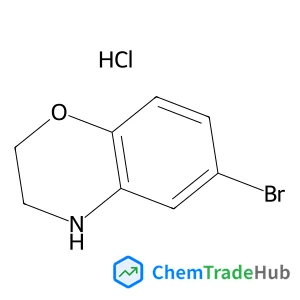
6-Bromo-3,4-dihydro-2H-1,4-benzoxazine hydrochloride (1:1)
CAS Number:
1260803-10-8
Molecular Formula:
C8H9BrClNO
Recommended Suppliers



Disclaimer
This page provides academic journal information for reference and research purposes only. We are not affiliated with any journal publishers and do not handle publication submissions. For publication-related inquiries, please contact the respective journal publishers directly.
If you notice any inaccuracies in the information displayed, please contact us at support@chemtradehub.com. We will promptly review and address your concerns.