












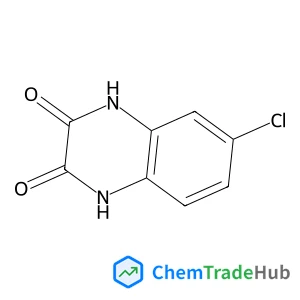
6-CHLORO-2,3-DIOXO-1,2,3,4-TETRAHYDROQUINOXALINE, 97
CAS Number:
169-14-2
Molecular Formula:
C8H5ClN2O2
Brownian dynamics, BD, simulation has been used to model the structural evolution, phase separation dynamics and rheology of transient particle colloidal gels during formation, by quenching model monodisperse attractive spherical colloidal particles from a supercritical state point into the vapour/liquid or vapour/solid parts of their phase diagrams. Calculations were performed with particles interacting via 12:6, 24:12 and 36:18 Lennard-Jones type interaction laws at sub-critical temperatures kBT/ε, where ε is the depth of the potential well, down to 0.01 and low volume fractions (φ⩽0.2). These systems developed a gel-like morphology during the simulations, with the aggregate morphology and rheology sensitive to the range of the attractive part of the potential and the position in the phase diagram of the quench. The long-range 12:6 potential induced compact structures with thick filaments, whereas the systems generated using the shorter-ranged 24:12 and 36:18 potentials persisted in a more diffuse network for the duration of the simulations and evolved more slowly with time. The rheology of these systems was characterized using the linear shear stress relaxation function, Cs(t), computed using the Green–Kubo fluctuation formula. The rheology of many of the systems displayed gel-like viscoelastic features, especially for the long-range attractive interaction potentials, which manifested a non-zero plateau in Cs(t), the so-called equilibrium modulus, Geq, a useful indicator of a gel, which suggests also the presence of an apparent yield stress. A formal statistical mechanical definition of Geq is presented. The infinite frequency shear rigidity modulus G∞ is extremely sensitive to the form of the potential. Despite being the most short-lived, the 12:6 potential systems gave the most pronounced gel-like rheological features, which suggests that the traditional picture of a particle gel as being formed by thin filametary networks might require reconsideration.
Hisham M. Dokainish, Bogdan F. Ion, James W. Gauld
DOI: 10.1039/C4CP01342E
DOI: 10.1039/C4CP00690A
Myeongjin Kim, Jooheon Kim
DOI: 10.1039/C4CP01141D
Summayya Kouser, Nacir Tit
DOI: 10.1039/C4CP01092B
Chee Shan Lim, Adriano Ambrosi, Martin Pumera
DOI: 10.1039/C4CP01558D
Elena Ermilova, Frank F. Bier, Ralph Hölzel
DOI: 10.1039/C3CP55272A
X. F. Yang, Y. S. Liu, X. Zhang, L. P. Zhou, X. F. Wang, F. Chi, J. F. Feng
DOI: 10.1039/C4CP00390J
H. Mendil-Jakani, I. Zamanillo Lopez, P. M. Legrand, V. H. Mareau, L. Gonon
DOI: 10.1039/C4CP00710G
Wael A. A. Arafa, Markus D. Kärkäs, Bao-Lin Lee, Torbjörn Åkermark, Rong-Zhen Liao, Hans-Martin Berends, Johannes Messinger, Per E. M. Siegbahn, Björn Åkermark
DOI: 10.1039/C3CP54800G
Recep Kas, Ruud Kortlever, Alexander Milbrat, Marc T. M. Koper, Guido Mul, Jonas Baltrusaitis
DOI: 10.1039/C4CP01520G
When handling 4-Methyl-6-(trifluoromethyl)quinoline (CAS: 40716-16-3), safety go...
4-(3,5-Difluorophenyl)aniline is an aromatic organic compound with the CAS numbe...
5-{[4-(Trifluoromethyl)phenyl]sulfanyl}-1,2,3-thiadiazole-4-carboxylic acid can ...
The market for 4-Benzylaniline hydrochloride (CAS: 6317-57-3) is steadily growin...
[3-(Diethylsulfamoyl)phenyl]boronic acid is generally considered safe when handl...
3-Bromo-2,5-dimethoxyaniline is mainly used in the pharmaceutical and chemical i...
N-Methyl-1-(5-methyl-1H-indol-3-yl)methanamine (CAS: 915922-67-7) is subject to ...
This compound is primarily used in the pharmaceutical industry for the synthesis...
2-Methyl-2-propanyl [(1S,3R)-3-aminocyclohexyl]carbamate (CAS: 1298101-47-9) sho...
Ethyl 2-bromo-4,4,4-trifluorobutanoate (CAS: 367-33-9) is utilized in the pharma...

Physical Chemistry Chemical Physics (PCCP) is an international journal co-owned by 19 physical chemistry and physics societies from around the world. This journal publishes original, cutting-edge research in physical chemistry, chemical physics and biophysical chemistry. To be suitable for publication in PCCP, articles must include significant innovation and/or insight into physical chemistry; this is the most important criterion that reviewers and Editors will judge against when evaluating submissions. The journal has a broad scope and welcomes contributions spanning experiment, theory, computation and data science. Topical coverage includes spectroscopy, dynamics, kinetics, statistical mechanics, thermodynamics, electrochemistry, catalysis, surface science, quantum mechanics, quantum computing and machine learning. Interdisciplinary research areas such as polymers and soft matter, materials, nanoscience, energy, surfaces/interfaces, and biophysical chemistry are welcomed if they demonstrate significant innovation and/or insight into physical chemistry. Joined experimental/theoretical studies are particularly appreciated when complementary and based on up-to-date approaches.
![(2E)-3-(3-Chlorophenyl)-N-{2-[4-(methylsulfonyl)-1-piperazinyl]-2-oxoethyl}acrylamide structure](https://static.chemtradehub.com/structs/250/2505001-54-5-c1e9.webp "(2E)-3-(3-Chlorophenyl)-N-{2-[4-(methylsulfonyl)-1-piperazinyl]-2-oxoethyl}acrylamide structure")
![N-[2-(4-Hydroxyphenoxy)-4-nitrophenyl]methanesulfonamide structure](https://static.chemtradehub.com/structs/109/109032-22-6-7c88.webp "N-[2-(4-Hydroxyphenoxy)-4-nitrophenyl]methanesulfonamide structure")
phosphoryl}methyl 4-methylbenzenesulfonate structure](https://static.chemtradehub.com/structs/864/864068-45-1-ba7c.webp "{[3-(Hexadecyloxy)propoxy](hydroxy)phosphoryl}methyl 4-methylbenzenesulfonate structure")



