


Single crystal Raman microscopic study of the asbestos mineral chrysotile
Literature Information
Publication Date
DOI
10.1039/A809238I
Impact Factor
3.676
Authors
View Original
Abstract
Polarisation Raman microscopy is used to study tubular chrysotile. The OH-stretching region is characterised by the inner surface OH bands at 3695, 3686 and 3678 cm-1 and the inner OH band at 3643 cm-1. The outer OH pointing away from the Mg-layer gives rise to two overlapping bands at 3695 and 3686 cm-1 due to a positional disorder caused by the folding of the layers. These bands are the in-phase vibrations whereas the bands at 3678 and 3643 cm-1 represent the out-of-phase vibrations. The 1102 cm-1 band is an antisymmetric stretching mode of Si–O perpendicular to the sheet. From the 692 and 705 cm-1 bands the first one is assigned to the symmetric Si–O–Si stretch and the second to an outer symmetric translation mode of the Mg–OH oriented sub-parallel to the a-axis. The 709 cm-1 band is assigned to the second outer symmetric translation mode of the Mg–OH oriented at a small angle to the b-axis and c-axis. The 629 and 622 cm-1 bands represent antisymmetric OH–Mg–OH translation modes. The band around 607 cm-1 is described as the symmetric libration mode of the inner Mg–OH group. The 458 cm-1 band is assigned as the v3(a1) mode of SiO4. The 466 cm-1 band is probably an OH translational vibration. A strong band at 388 cm-1 is ascribed to the antisymmetric v5(e) mode of the SiO4 tetrahedron. The band at 432 cm-1 is assigned as an antisymmetric Mg–OH translation mode. In the region between 450 and 200 cm-1 five bands can be observed at 374, 345, 318, 304 and 231 cm-1. The 374, 318 and 304 cm-1 bands are antisymmetric modes, whereas the 345 and 231 cm-1 bands are symmetric modes. The band at 374 cm-1 is associated with a symmetric Mg–OH vibration. At present a more detailed assignment of the other bands is not possible. The band at 199 cm-1 is assigned to the A1g mode of a Mg(O,OH)6 octahedron distorted in the direction normal to the octahedral sheet.
Recommended Journals

Mini-Reviews in Medicinal Chemistry

Environmental Toxicology and Pharmacology

Photochemical & Photobiological Sciences

Lab on a Chip

Green Chemistry

Advanced Engineering Materials

Foundations of Chemistry

Journal of Enzyme inhibition and Medicinal Chemistry

Physical Chemistry Chemical Physics

Coloration Technology
Related Literature
Concentration dependence of hydration water in a model peptide
Stefania Perticaroli, Marco Paolantoni, Paola Sassi, Silvia Corezzi, Assunta Morresi
2014-05-06
Paper
DOI: 10.1039/C4CP00840E
An acetate bound cobalt oxide catalyst for water oxidation: role of monovalent anions and cations in lowering overpotential
Subal Dey, Biswajit Mondal, Abhishek Dey
2014-04-11
Paper
DOI: 10.1039/C4CP01205D
Constructing a mixed π-conjugated bridge to effectively enhance the nonlinear optical response in the Möbius cyclacene-based systems
Liwei Chen, Guangtao Yu, Wei Chen, Chunyun Tu, Xingang Zhao, Xuri Huang
2014-04-04
Paper
DOI: 10.1039/C4CP00733F
Electrical conductivity and glass formation in nitrile-functionalized pyrrolidinium bis(trifluoromethylsulfonyl)imide ionic liquids: chain length and odd–even effects of the alkyl spacer between the pyrrolidinium ring and the nitrile group
Jan Leys, Chandra Shekhar Pati Tripathi, Christ Glorieux, Stefan Zahn, Barbara Kirchner, Stéphane Longuemart, Kallidanthiyil Chellappan Lethesh, Peter Nockemann, Wim Dehaen, Koen Binnemans
2014-03-24
Paper
DOI: 10.1039/C4CP00259H
Optical response of quantum-sized Ag and Au clusters – cage vs. compact structures and the remarkable insensitivity to compression
Robert L. Whetten, Xóchitl López-Lozano
2014-05-07
Paper
DOI: 10.1039/C4CP01277A
Efficient water oxidation with organometallic iridium complexes as precatalysts
Anna Lewandowska-Andralojc, Dmitry E. Polyansky, Chiu-Hui Wang, Etsuko Fujita
2014-01-30
Paper
DOI: 10.1039/C3CP55101F
Effect of chromophore encapsulation on linear and nonlinear optical properties: the case of “miniSOG”, a protein-encased flavin
Nanna H. List, Frederico M. Pimenta, Lotte Holmegaard, Rasmus L. Jensen, Michael Etzerodt, Tobias Schwabe, Jacob Kongsted, Peter R. Ogilby, Ove Christiansen
2014-01-07
Paper
DOI: 10.1039/C3CP54470B
Dinuclear manganese complexes for water oxidation: evaluation of electronic effects and catalytic activity
Wael A. A. Arafa, Markus D. Kärkäs, Bao-Lin Lee, Torbjörn Åkermark, Rong-Zhen Liao, Hans-Martin Berends, Johannes Messinger, Per E. M. Siegbahn, Björn Åkermark
2014-01-27
Paper
DOI: 10.1039/C3CP54800G
Conversion efficiency of skutterudite-based thermoelectric modules
James R. Salvador, Jung Y. Cho, Zuxin Ye, Joshua E. Moczygemba, Alan J. Thompson, Jeffrey W. Sharp, Jan D. Koenig, Ryan Maloney, Travis Thompson, Jeffrey Sakamoto, Hsin Wang, Andrew A. Wereszczak
2014-05-16
Paper
DOI: 10.1039/C4CP01582G
Conformation of the neurotransmitter γ-aminobutyric acid in liquid water
N. Ottosson, M. Pastorczak, Sietse T. van der Post, Huib J. Bakker
2014-04-10
Communication
DOI: 10.1039/C4CP00671B
You might also like
Compound Q&A
What precautions should be taken when handling 4-Methyl-6-(trifluoromethyl)quinoline (CAS: 40716-16-3)?
When handling 4-Methyl-6-(trifluoromethyl)quinoline (CAS: 40716-16-3), safety go...
40716-16-34-Methyl-6-(trifluor...
Compound Q&A
What is 4-(3,5-Difluorophenyl)aniline (CAS: 405058-00-6)?
4-(3,5-Difluorophenyl)aniline is an aromatic organic compound with the CAS numbe...
405058-00-64-(3,5-Difluoropheny...
Compound Q&A
How is 5-{[4-(Trifluoromethyl)phenyl]sulfanyl}-1,2,3-thiadiazole-4-carboxylic acid (CAS: 338982-07-3) typically synthesized?
5-{[4-(Trifluoromethyl)phenyl]sulfanyl}-1,2,3-thiadiazole-4-carboxylic acid can ...
338982-07-35-{[4-(Trifluorometh...
Compound Q&A
What is the market or research trend for 4-Benzylaniline hydrochloride (CAS: 6317-57-3)?
The market for 4-Benzylaniline hydrochloride (CAS: 6317-57-3) is steadily growin...
6317-57-34-Benzylaniline hydr...
Compound Q&A
Is [3-(Diethylsulfamoyl)phenyl]boronic acid (CAS: 871329-58-7) safe?
[3-(Diethylsulfamoyl)phenyl]boronic acid is generally considered safe when handl...
871329-58-7[3-(Diethylsulfamoyl...
Compound Q&A
What are the main uses of 3-Bromo-2,5-dimethoxyaniline (CAS: 115929-62-9)?
3-Bromo-2,5-dimethoxyaniline is mainly used in the pharmaceutical and chemical i...
115929-62-93-Bromo-2,5-dimethox...
Compound Q&A
What regulatory guidelines apply to N-Methyl-1-(5-methyl-1H-indol-3-yl)methanamine (CAS: 915922-67-7)?
N-Methyl-1-(5-methyl-1H-indol-3-yl)methanamine (CAS: 915922-67-7) is subject to ...
915922-67-7N-Methyl-1-(5-methyl...
Compound Q&A
What industries use Carbamic acid, N-[(5S)-5,6-diamino-6-oxohexyl]-, 1,1-dimethylethyl ester (CAS: 24828-96-4)?
This compound is primarily used in the pharmaceutical industry for the synthesis...
24828-96-4Carbamic acid, N-[(5...
Compound Q&A
How should 2-Methyl-2-propanyl [(1S,3R)-3-aminocyclohexyl]carbamate (CAS: 1298101-47-9) be stored?
2-Methyl-2-propanyl [(1S,3R)-3-aminocyclohexyl]carbamate (CAS: 1298101-47-9) sho...
1298101-47-92-Methyl-2-propanyl ...
Compound Q&A
What industries use Ethyl 2-bromo-4,4,4-trifluorobutanoate (CAS: 367-33-9)?
Ethyl 2-bromo-4,4,4-trifluorobutanoate (CAS: 367-33-9) is utilized in the pharma...
367-33-9Ethyl 2-bromo-4,4,4-...
Source Journal
Physical Chemistry Chemical Physics
CiteScore:
5.5
Self-citation Rate:
10.3%
Articles per Year:
3036
Physical Chemistry Chemical Physics (PCCP) is an international journal co-owned by 19 physical chemistry and physics societies from around the world. This journal publishes original, cutting-edge research in physical chemistry, chemical physics and biophysical chemistry. To be suitable for publication in PCCP, articles must include significant innovation and/or insight into physical chemistry; this is the most important criterion that reviewers and Editors will judge against when evaluating submissions. The journal has a broad scope and welcomes contributions spanning experiment, theory, computation and data science. Topical coverage includes spectroscopy, dynamics, kinetics, statistical mechanics, thermodynamics, electrochemistry, catalysis, surface science, quantum mechanics, quantum computing and machine learning. Interdisciplinary research areas such as polymers and soft matter, materials, nanoscience, energy, surfaces/interfaces, and biophysical chemistry are welcomed if they demonstrate significant innovation and/or insight into physical chemistry. Joined experimental/theoretical studies are particularly appreciated when complementary and based on up-to-date approaches.
Recommended Compounds
![(2E)-3-(3-Chlorophenyl)-N-{2-[4-(methylsulfonyl)-1-piperazinyl]-2-oxoethyl}acrylamide structure](https://static.chemtradehub.com/structs/250/2505001-54-5-c1e9.webp "(2E)-3-(3-Chlorophenyl)-N-{2-[4-(methylsulfonyl)-1-piperazinyl]-2-oxoethyl}acrylamide structure")
(2E)-3-(3-Chlorophenyl)-N-{2-[4-(methylsulfonyl)-1-piperazinyl]-2-oxoethyl}acrylamide
CAS Number:
2505001-54-5
Molecular Formula:
C16H20ClN3O4S
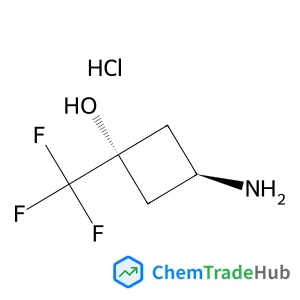
cis-3-Amino-1-(trifluoromethyl)cyclobutanol hydrochloride (1:1)
CAS Number:
1408075-16-0
Molecular Formula:
C5H9ClF3NO
Recommended Suppliers





Disclaimer
This page provides academic journal information for reference and research purposes only. We are not affiliated with any journal publishers and do not handle publication submissions. For publication-related inquiries, please contact the respective journal publishers directly.
If you notice any inaccuracies in the information displayed, please contact us at support@chemtradehub.com. We will promptly review and address your concerns.