












Brownian dynamics simulation of a bonded network of reversibly adsorbed particles: Towards a model of protein adsorbed layers
Literature Information
Publication Date
DOI
10.1039/A808990F
Impact Factor
3.676
Authors
View Original
Abstract
We present computer simulations of adsorbed protein monolayers modelled as networks of spherical particles. This network is generated through the formation of flexible bonds between the particles. The particles are attracted to a flat (fluid/fluid) interface by a potential well, which is truncated in one direction (the solution). As a consequence, unbonded particles establish an equilibrium between the bulk solution and the interface, where they become adsorbed. In an adsorbed monolayer consisting of bonded particles, the individual particles still have the freedom to adsorb and desorb. However, in this case, the monolayer as a whole does not desorb spontaneously. If such a monolayer is strongly compressed, it forms a far thicker interfacial structure with particles extending several particle diameters into the solution. As the interface is compressed, the interfacial pressure increases initially, but then reaches a maximum value, decreases slightly and levels off. Desorption of particles and their movement away from the (crowded) interface reduces the local repulsive interparticle interactions. Upon re-expansion, the particle network completely returns to its original monolayer structure. However, formation of new bonds between particles during the compression–expansion cycle (reflecting the chemical reactivity of the adsorbed protein) introduces a strong element of irreversibility. In this case, a patchy structure is formed at the interface after the expansion. Finally, the effect of strongly adsorbing displacer particles is explored, which can have a similar influence on the adsorbed monolayer as a compression of the interface.
Recommended Journals
Related Literature
Ab initio study of TaON, an active photocatalyst under visible light irradiation
2014-03-03
Paper
DOI: 10.1039/C4CP00285G
Flow dependent performance of microfluidic microbial fuel cells
Daniele Vigolo, Talal T. Al-Housseiny, Yi Shen, Fiyinfoluwa O. Akinlawon, Saif T. Al-Housseiny, Ronald K. Hobson, Amaresh Sahu, Katherine I. Bedkowski, Thomas J. DiChristina, Howard A. Stone
2014-05-08
Paper
DOI: 10.1039/C4CP01086H
Theoretical study of thermoelectric properties of few-layer MoS2 and WSe2
Wen Huang, Chee Kwan Gan, Gengchiau Liang
2014-04-14
Paper
DOI: 10.1039/C4CP00487F
Pressure dependent OH yields in the reactions of CH3CO and HOCH2CO with O2
C. B. M. Groß, T. J. Dillon, J. N. Crowley
2014-04-28
Paper
DOI: 10.1039/C4CP01108B
Computational investigations on the catalytic mechanism of maleate isomerase: the role of the active site cysteine residues
Hisham M. Dokainish, Bogdan F. Ion, James W. Gauld
2014-05-08
Paper
DOI: 10.1039/C4CP01342E
Ternary Pt/SnOx/TiO2 photocatalysts for hydrogen production: consequence of Pt sites for synergy of dual co-catalysts
Quan Gu, Jinlin Long, Huaqiang Zhuang, Chaoqiang Zhang, Yangen Zhou, Xuxu Wang
2014-05-08
Paper
DOI: 10.1039/C4CP01496K
Electron transport in MoWSeS monolayers in the presence of an external electric field
Nourdine Zibouche, Pier Philipsen, Thomas Heine, Agnieszka Kuc
2014-04-11
Paper
DOI: 10.1039/C4CP00966E
Non-innocent side-chains with dipole moments in organic solar cells improve charge separation
Hilde D. de Gier, Ria Broer
2014-05-06
Paper
DOI: 10.1039/C4CP01070A
Interactions of ionic liquids with hydration layer of poly(N-isopropylacrylamide): comprehensive analysis of biophysical techniques results
P. Madhusudhana Reddy, R. Umapathi, P. Venkatesu
2014-03-05
Paper
DOI: 10.1039/C4CP00010B
Dynamic control of Förster energy transfer in a photonic environment
Frank Schleifenbaum, Andreas M. Kern, Alexander Konrad, Alfred J. Meixner
2014-05-01
Paper
DOI: 10.1039/C4CP01306A
You might also like
Compound Q&A
What precautions should be taken when handling 4-Methyl-6-(trifluoromethyl)quinoline (CAS: 40716-16-3)?
When handling 4-Methyl-6-(trifluoromethyl)quinoline (CAS: 40716-16-3), safety go...
40716-16-34-Methyl-6-(trifluor...
Compound Q&A
What is 4-(3,5-Difluorophenyl)aniline (CAS: 405058-00-6)?
4-(3,5-Difluorophenyl)aniline is an aromatic organic compound with the CAS numbe...
405058-00-64-(3,5-Difluoropheny...
Compound Q&A
How is 5-{[4-(Trifluoromethyl)phenyl]sulfanyl}-1,2,3-thiadiazole-4-carboxylic acid (CAS: 338982-07-3) typically synthesized?
5-{[4-(Trifluoromethyl)phenyl]sulfanyl}-1,2,3-thiadiazole-4-carboxylic acid can ...
338982-07-35-{[4-(Trifluorometh...
Compound Q&A
What is the market or research trend for 4-Benzylaniline hydrochloride (CAS: 6317-57-3)?
The market for 4-Benzylaniline hydrochloride (CAS: 6317-57-3) is steadily growin...
6317-57-34-Benzylaniline hydr...
Compound Q&A
Is [3-(Diethylsulfamoyl)phenyl]boronic acid (CAS: 871329-58-7) safe?
[3-(Diethylsulfamoyl)phenyl]boronic acid is generally considered safe when handl...
871329-58-7[3-(Diethylsulfamoyl...
Compound Q&A
What are the main uses of 3-Bromo-2,5-dimethoxyaniline (CAS: 115929-62-9)?
3-Bromo-2,5-dimethoxyaniline is mainly used in the pharmaceutical and chemical i...
115929-62-93-Bromo-2,5-dimethox...
Compound Q&A
What regulatory guidelines apply to N-Methyl-1-(5-methyl-1H-indol-3-yl)methanamine (CAS: 915922-67-7)?
N-Methyl-1-(5-methyl-1H-indol-3-yl)methanamine (CAS: 915922-67-7) is subject to ...
915922-67-7N-Methyl-1-(5-methyl...
Compound Q&A
What industries use Carbamic acid, N-[(5S)-5,6-diamino-6-oxohexyl]-, 1,1-dimethylethyl ester (CAS: 24828-96-4)?
This compound is primarily used in the pharmaceutical industry for the synthesis...
24828-96-4Carbamic acid, N-[(5...
Compound Q&A
How should 2-Methyl-2-propanyl [(1S,3R)-3-aminocyclohexyl]carbamate (CAS: 1298101-47-9) be stored?
2-Methyl-2-propanyl [(1S,3R)-3-aminocyclohexyl]carbamate (CAS: 1298101-47-9) sho...
1298101-47-92-Methyl-2-propanyl ...
Compound Q&A
What industries use Ethyl 2-bromo-4,4,4-trifluorobutanoate (CAS: 367-33-9)?
Ethyl 2-bromo-4,4,4-trifluorobutanoate (CAS: 367-33-9) is utilized in the pharma...
367-33-9Ethyl 2-bromo-4,4,4-...
Source Journal
Physical Chemistry Chemical Physics

CiteScore:
5.5
Self-citation Rate:
10.3%
Articles per Year:
3036
Physical Chemistry Chemical Physics (PCCP) is an international journal co-owned by 19 physical chemistry and physics societies from around the world. This journal publishes original, cutting-edge research in physical chemistry, chemical physics and biophysical chemistry. To be suitable for publication in PCCP, articles must include significant innovation and/or insight into physical chemistry; this is the most important criterion that reviewers and Editors will judge against when evaluating submissions. The journal has a broad scope and welcomes contributions spanning experiment, theory, computation and data science. Topical coverage includes spectroscopy, dynamics, kinetics, statistical mechanics, thermodynamics, electrochemistry, catalysis, surface science, quantum mechanics, quantum computing and machine learning. Interdisciplinary research areas such as polymers and soft matter, materials, nanoscience, energy, surfaces/interfaces, and biophysical chemistry are welcomed if they demonstrate significant innovation and/or insight into physical chemistry. Joined experimental/theoretical studies are particularly appreciated when complementary and based on up-to-date approaches.
Recommended Compounds

2,2-dideuterio-2-(3,4,5,6-tetradeuterio-2-pyridyl)acetic acid;hydrochloride
CAS Number:
1329799-67-8
Molecular Formula:
C7H2ClD6NO2
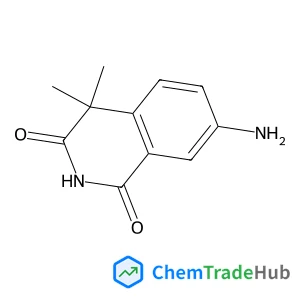
1,3(2H,4H)-Isoquinolinedione, 7-amino-4,4-dimethyl-
CAS Number:
14576-22-8
Molecular Formula:
C11H12N2O2
![[(1S,2S,3R,4S,7R,9S,10S,12R,15S)-4,12-Diacetyloxy-15-[(2R,3S)-3-benzamido-3-phenyl-2-(2,2,2-trichloroethoxycarbonyloxy)propanoyl]oxy-1,9-dihydroxy-10,14,17,17-tetramethyl-11-oxo-6-oxatetracyclo[11.3.1.03,10.04,7]heptadec-13-en-2-yl] benzoate structure](https://static.chemtradehub.com/structs/100/100431-55-8-7104.webp "[(1S,2S,3R,4S,7R,9S,10S,12R,15S)-4,12-Diacetyloxy-15-[(2R,3S)-3-benzamido-3-phenyl-2-(2,2,2-trichloroethoxycarbonyloxy)propanoyl]oxy-1,9-dihydroxy-10,14,17,17-tetramethyl-11-oxo-6-oxatetracyclo[11.3.1.03,10.04,7]heptadec-13-en-2-yl] benzoate structure")

Recommended Suppliers






Disclaimer
This page provides academic journal information for reference and research purposes only. We are not affiliated with any journal publishers and do not handle publication submissions. For publication-related inquiries, please contact the respective journal publishers directly.
If you notice any inaccuracies in the information displayed, please contact us at support@chemtradehub.com. We will promptly review and address your concerns.