












Optical and electrical characterization of a conducting polypyrrole composite prepared by insitu electropolymerization
Literature Information
Publication Date
DOI
10.1039/A808632J
Impact Factor
3.676
Authors
View Original
Abstract
A study of the optical and electrical properties of a conducting polypyrrole–polyoxyphenylene composite, PPy–POP, prepared by insitu electropolymerization is presented. Electropolymerization was performed potentiostatically in a solution of pH 9 which contained the monomers pyrrole, allylphenol and sodium 4-hydroxybenzenesulfonate (4HBS), by applying a potential of 1.25 V vs. SCE. The films obtained were characterized optically by UV/VIS and IR spectroscopy and electrically by measurements of the temperature dependence of the ac and dc conductivity. FTIR measurements indicated that the polymer blend obtained consists of PPy and the insulating polymer poly-2-allyloxyphenylene (POP), whereas the third monomer, 4HBS, is incorporated into the PPy–POP film as dopant for the conducting PPy. Furthermore, optical characterizations show a light degree of overoxidation of PPy in the PPy–POP composite. In the UV/VIS spectra, the formation of both polaron and bipolaron electronic states of the band structure of PPy can be seen, but the IR spectra demonstrate the transition of the PPy structure from a conducting quinoid to benzoid type with increasing polymerization potential. This is accompanied by the introduction of a carbonyl group into the PPy backbone and a reduction of the conjugation length of the polymer chain, which has a strong influence on the conductivity of the polymer composite. Despite this overoxidation process, the PPy–POP film retains a conductive character which allows the growth of thick films. The temperature dependence of the ac and dc conductivity of PPy–POP was investigated. The total ac conductivity, σtot(ω), in the frequency range 102–105 Hz, changes by approximately four orders of magnitude in the range from 77 to 300 K, showing a sub-linear dispersive behavior. The temperature dependence of the dc conductivity of such a polymer composite can be described by Mott's variable range hopping (VRH) model according to σ=σ0 exp[-(T0/T)γ], with γ=1/2
Related Literature
Computer simulation studies on passive recruitment dynamics of lipids induced by the adsorption of charged nanoparticles
2014-05-07
Paper
DOI: 10.1039/C4CP00553H
Cobalt porphyrin electrode films for electrocatalytic water oxidation
Ali Han, Hongxing Jia, Hao Ma, Shifan Ye, Haotian Wu, Haitao Lei, Yongzhen Han, Rui Cao, Pingwu Du
2014-04-15
Paper
DOI: 10.1039/C4CP00523F
Optical response of quantum-sized Ag and Au clusters – cage vs. compact structures and the remarkable insensitivity to compression
Robert L. Whetten, Xóchitl López-Lozano
2014-05-07
Paper
DOI: 10.1039/C4CP01277A
Conformation of the neurotransmitter γ-aminobutyric acid in liquid water
N. Ottosson, M. Pastorczak, Sietse T. van der Post, Huib J. Bakker
2014-04-10
Communication
DOI: 10.1039/C4CP00671B
Clusters in the adsorbates of vapours and gases: Zeta isotherm approach
Seyed Hadi Zandavi, Charles A. Ward
2014-04-17
Paper
DOI: 10.1039/C4CP00843J
Water oxidation by manganese oxides formed from tetranuclear precursor complexes: the influence of phosphate on structure and activity
Denys Shevchenko, Magnus F. Anderlund, Stenbjörn Styring, Holger Dau, Ivelina Zaharieva, Anders Thapper
2014-02-28
Paper
DOI: 10.1039/C3CP55125C
Conversion efficiency of skutterudite-based thermoelectric modules
James R. Salvador, Jung Y. Cho, Zuxin Ye, Joshua E. Moczygemba, Alan J. Thompson, Jeffrey W. Sharp, Jan D. Koenig, Ryan Maloney, Travis Thompson, Jeffrey Sakamoto, Hsin Wang, Andrew A. Wereszczak
2014-05-16
Paper
DOI: 10.1039/C4CP01582G
Artificial photosynthesis – functional devices for light driven water splitting with photoactive anodes based on molecular catalysts
Yan Gao, Linlin Zhang, Xin Ding
2014-03-07
Paper
DOI: 10.1039/C3CP55204G
Electrical conductivity and glass formation in nitrile-functionalized pyrrolidinium bis(trifluoromethylsulfonyl)imide ionic liquids: chain length and odd–even effects of the alkyl spacer between the pyrrolidinium ring and the nitrile group
Jan Leys, Chandra Shekhar Pati Tripathi, Christ Glorieux, Stefan Zahn, Barbara Kirchner, Stéphane Longuemart, Kallidanthiyil Chellappan Lethesh, Peter Nockemann, Wim Dehaen, Koen Binnemans
2014-03-24
Paper
DOI: 10.1039/C4CP00259H
You might also like
Compound Q&A
What precautions should be taken when handling 4-Methyl-6-(trifluoromethyl)quinoline (CAS: 40716-16-3)?
When handling 4-Methyl-6-(trifluoromethyl)quinoline (CAS: 40716-16-3), safety go...
40716-16-34-Methyl-6-(trifluor...
Compound Q&A
What is 4-(3,5-Difluorophenyl)aniline (CAS: 405058-00-6)?
4-(3,5-Difluorophenyl)aniline is an aromatic organic compound with the CAS numbe...
405058-00-64-(3,5-Difluoropheny...
Compound Q&A
How is 5-{[4-(Trifluoromethyl)phenyl]sulfanyl}-1,2,3-thiadiazole-4-carboxylic acid (CAS: 338982-07-3) typically synthesized?
5-{[4-(Trifluoromethyl)phenyl]sulfanyl}-1,2,3-thiadiazole-4-carboxylic acid can ...
338982-07-35-{[4-(Trifluorometh...
Compound Q&A
What is the market or research trend for 4-Benzylaniline hydrochloride (CAS: 6317-57-3)?
The market for 4-Benzylaniline hydrochloride (CAS: 6317-57-3) is steadily growin...
6317-57-34-Benzylaniline hydr...
Compound Q&A
Is [3-(Diethylsulfamoyl)phenyl]boronic acid (CAS: 871329-58-7) safe?
[3-(Diethylsulfamoyl)phenyl]boronic acid is generally considered safe when handl...
871329-58-7[3-(Diethylsulfamoyl...
Compound Q&A
What are the main uses of 3-Bromo-2,5-dimethoxyaniline (CAS: 115929-62-9)?
3-Bromo-2,5-dimethoxyaniline is mainly used in the pharmaceutical and chemical i...
115929-62-93-Bromo-2,5-dimethox...
Compound Q&A
What regulatory guidelines apply to N-Methyl-1-(5-methyl-1H-indol-3-yl)methanamine (CAS: 915922-67-7)?
N-Methyl-1-(5-methyl-1H-indol-3-yl)methanamine (CAS: 915922-67-7) is subject to ...
915922-67-7N-Methyl-1-(5-methyl...
Compound Q&A
What industries use Carbamic acid, N-[(5S)-5,6-diamino-6-oxohexyl]-, 1,1-dimethylethyl ester (CAS: 24828-96-4)?
This compound is primarily used in the pharmaceutical industry for the synthesis...
24828-96-4Carbamic acid, N-[(5...
Compound Q&A
How should 2-Methyl-2-propanyl [(1S,3R)-3-aminocyclohexyl]carbamate (CAS: 1298101-47-9) be stored?
2-Methyl-2-propanyl [(1S,3R)-3-aminocyclohexyl]carbamate (CAS: 1298101-47-9) sho...
1298101-47-92-Methyl-2-propanyl ...
Compound Q&A
What industries use Ethyl 2-bromo-4,4,4-trifluorobutanoate (CAS: 367-33-9)?
Ethyl 2-bromo-4,4,4-trifluorobutanoate (CAS: 367-33-9) is utilized in the pharma...
367-33-9Ethyl 2-bromo-4,4,4-...
Source Journal
Physical Chemistry Chemical Physics

CiteScore:
5.5
Self-citation Rate:
10.3%
Articles per Year:
3036
Physical Chemistry Chemical Physics (PCCP) is an international journal co-owned by 19 physical chemistry and physics societies from around the world. This journal publishes original, cutting-edge research in physical chemistry, chemical physics and biophysical chemistry. To be suitable for publication in PCCP, articles must include significant innovation and/or insight into physical chemistry; this is the most important criterion that reviewers and Editors will judge against when evaluating submissions. The journal has a broad scope and welcomes contributions spanning experiment, theory, computation and data science. Topical coverage includes spectroscopy, dynamics, kinetics, statistical mechanics, thermodynamics, electrochemistry, catalysis, surface science, quantum mechanics, quantum computing and machine learning. Interdisciplinary research areas such as polymers and soft matter, materials, nanoscience, energy, surfaces/interfaces, and biophysical chemistry are welcomed if they demonstrate significant innovation and/or insight into physical chemistry. Joined experimental/theoretical studies are particularly appreciated when complementary and based on up-to-date approaches.
Recommended Compounds
phosphoryl}methyl 4-methylbenzenesulfonate structure](https://static.chemtradehub.com/structs/864/864068-45-1-ba7c.webp "{[3-(Hexadecyloxy)propoxy](hydroxy)phosphoryl}methyl 4-methylbenzenesulfonate structure")
{[3-(Hexadecyloxy)propoxy](hydroxy)phosphoryl}methyl 4-methylbenzenesulfonate
CAS Number:
864068-45-1
Molecular Formula:
C27H49O7PS
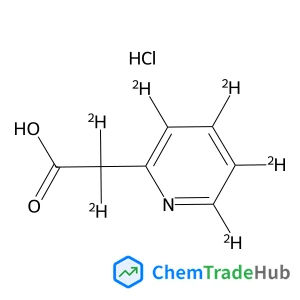
2,2-dideuterio-2-(3,4,5,6-tetradeuterio-2-pyridyl)acetic acid;hydrochloride
CAS Number:
1329799-67-8
Molecular Formula:
C7H2ClD6NO2

Recommended Suppliers






Disclaimer
This page provides academic journal information for reference and research purposes only. We are not affiliated with any journal publishers and do not handle publication submissions. For publication-related inquiries, please contact the respective journal publishers directly.
If you notice any inaccuracies in the information displayed, please contact us at support@chemtradehub.com. We will promptly review and address your concerns.