


Charge injection barrier modification in organic LEDs
Literature Information
Publication Date
DOI
10.1039/A808595A
Impact Factor
3.676
Authors
View Original
Abstract
Balanced injection of positive and negative charge carriers is a key issue for the operation of highly efficient organic light emitting devices at low operating voltage. In this article, we will give an overview of our investigations on the optimization of charge carrier injection from the anode and the cathode into organic semiconductors. These investigations include proper pretreatment of the indium–tin oxide substrate, and stacking of several organic hole transporting layers to increase the hole injection current from the transparent anode into the emissive layer. On the cathode side, binary metal alloys, and the effect of an insulating layer between the respective metal cathode and the first electron transporting layer are investigated.
Recommended Journals

Coloration Technology

European Journal of Organic Chemistry

Lab on a Chip

Nature Reviews Drug Discovery

Current Pharmaceutical Biotechnology

Photochemical & Photobiological Sciences

Molecular Diversity

Angewandte Chemie International Edition

Physical Chemistry Chemical Physics

Journal of Enzyme inhibition and Medicinal Chemistry
Related Literature
Concentration dependence of hydration water in a model peptide
Stefania Perticaroli, Marco Paolantoni, Paola Sassi, Silvia Corezzi, Assunta Morresi
2014-05-06
Paper
DOI: 10.1039/C4CP00840E
Conversion efficiency of skutterudite-based thermoelectric modules
James R. Salvador, Jung Y. Cho, Zuxin Ye, Joshua E. Moczygemba, Alan J. Thompson, Jeffrey W. Sharp, Jan D. Koenig, Ryan Maloney, Travis Thompson, Jeffrey Sakamoto, Hsin Wang, Andrew A. Wereszczak
2014-05-16
Paper
DOI: 10.1039/C4CP01582G
Water oxidation by manganese oxides formed from tetranuclear precursor complexes: the influence of phosphate on structure and activity
Denys Shevchenko, Magnus F. Anderlund, Stenbjörn Styring, Holger Dau, Ivelina Zaharieva, Anders Thapper
2014-02-28
Paper
DOI: 10.1039/C3CP55125C
A first-principle investigation of double-side CVD catalyst metal/graphene contacts
Xiang Ji, Yan Wang, Zhiping Yu
2014-03-25
Paper
DOI: 10.1039/C4CP00960F
Computational study of the Rayleigh light scattering properties of atmospheric pre-nucleation clusters
Jonas Elm, Patrick Norman, Merete Bilde, Kurt V. Mikkelsen
2014-04-15
Paper
DOI: 10.1039/C4CP01206B
Radical O–O coupling reaction in diferrate-mediated water oxidation studied using multireference wave function theory
Masaaki Saitow, Jakub Chalupský
2014-03-21
Paper
DOI: 10.1039/C3CP55225J
Electron transport in MoWSeS monolayers in the presence of an external electric field
Nourdine Zibouche, Pier Philipsen, Thomas Heine, Agnieszka Kuc
2014-04-11
Paper
DOI: 10.1039/C4CP00966E
Understanding the chemical dynamics of the reactions of dicarbon with 1-butyne, 2-butyne, and 1,2-butadiene – toward the formation of resonantly stabilized free radicals
Dorian S. N. Parker, Surajit Maity, Beni B. Dangi, Ralf I. Kaiser, Alexander Landera, Alexander M. Mebel
2014-05-02
Paper
DOI: 10.1039/C4CP00639A
Absolute electron total ionization cross-sections: molecular analogues of DNA and RNA nucleobase and sugar constituents
James N. Bull, Jason W. L. Lee, Claire Vallance
2014-04-03
Paper
DOI: 10.1039/C4CP00490F
Carbon dioxide reduction via light activation of a ruthenium–Ni(cyclam) complex
Christian Herrero, Annamaria Quaranta, Sanae El Ghachtouli, Winfried Leibl
2014-02-11
Paper
DOI: 10.1039/C3CP54946A
You might also like
Compound Q&A
What precautions should be taken when handling 4-Methyl-6-(trifluoromethyl)quinoline (CAS: 40716-16-3)?
When handling 4-Methyl-6-(trifluoromethyl)quinoline (CAS: 40716-16-3), safety go...
40716-16-34-Methyl-6-(trifluor...
Compound Q&A
What is 4-(3,5-Difluorophenyl)aniline (CAS: 405058-00-6)?
4-(3,5-Difluorophenyl)aniline is an aromatic organic compound with the CAS numbe...
405058-00-64-(3,5-Difluoropheny...
Compound Q&A
How is 5-{[4-(Trifluoromethyl)phenyl]sulfanyl}-1,2,3-thiadiazole-4-carboxylic acid (CAS: 338982-07-3) typically synthesized?
5-{[4-(Trifluoromethyl)phenyl]sulfanyl}-1,2,3-thiadiazole-4-carboxylic acid can ...
338982-07-35-{[4-(Trifluorometh...
Compound Q&A
What is the market or research trend for 4-Benzylaniline hydrochloride (CAS: 6317-57-3)?
The market for 4-Benzylaniline hydrochloride (CAS: 6317-57-3) is steadily growin...
6317-57-34-Benzylaniline hydr...
Compound Q&A
Is [3-(Diethylsulfamoyl)phenyl]boronic acid (CAS: 871329-58-7) safe?
[3-(Diethylsulfamoyl)phenyl]boronic acid is generally considered safe when handl...
871329-58-7[3-(Diethylsulfamoyl...
Compound Q&A
What are the main uses of 3-Bromo-2,5-dimethoxyaniline (CAS: 115929-62-9)?
3-Bromo-2,5-dimethoxyaniline is mainly used in the pharmaceutical and chemical i...
115929-62-93-Bromo-2,5-dimethox...
Compound Q&A
What regulatory guidelines apply to N-Methyl-1-(5-methyl-1H-indol-3-yl)methanamine (CAS: 915922-67-7)?
N-Methyl-1-(5-methyl-1H-indol-3-yl)methanamine (CAS: 915922-67-7) is subject to ...
915922-67-7N-Methyl-1-(5-methyl...
Compound Q&A
What industries use Carbamic acid, N-[(5S)-5,6-diamino-6-oxohexyl]-, 1,1-dimethylethyl ester (CAS: 24828-96-4)?
This compound is primarily used in the pharmaceutical industry for the synthesis...
24828-96-4Carbamic acid, N-[(5...
Compound Q&A
How should 2-Methyl-2-propanyl [(1S,3R)-3-aminocyclohexyl]carbamate (CAS: 1298101-47-9) be stored?
2-Methyl-2-propanyl [(1S,3R)-3-aminocyclohexyl]carbamate (CAS: 1298101-47-9) sho...
1298101-47-92-Methyl-2-propanyl ...
Compound Q&A
What industries use Ethyl 2-bromo-4,4,4-trifluorobutanoate (CAS: 367-33-9)?
Ethyl 2-bromo-4,4,4-trifluorobutanoate (CAS: 367-33-9) is utilized in the pharma...
367-33-9Ethyl 2-bromo-4,4,4-...
Source Journal
Physical Chemistry Chemical Physics
CiteScore:
5.5
Self-citation Rate:
10.3%
Articles per Year:
3036
Physical Chemistry Chemical Physics (PCCP) is an international journal co-owned by 19 physical chemistry and physics societies from around the world. This journal publishes original, cutting-edge research in physical chemistry, chemical physics and biophysical chemistry. To be suitable for publication in PCCP, articles must include significant innovation and/or insight into physical chemistry; this is the most important criterion that reviewers and Editors will judge against when evaluating submissions. The journal has a broad scope and welcomes contributions spanning experiment, theory, computation and data science. Topical coverage includes spectroscopy, dynamics, kinetics, statistical mechanics, thermodynamics, electrochemistry, catalysis, surface science, quantum mechanics, quantum computing and machine learning. Interdisciplinary research areas such as polymers and soft matter, materials, nanoscience, energy, surfaces/interfaces, and biophysical chemistry are welcomed if they demonstrate significant innovation and/or insight into physical chemistry. Joined experimental/theoretical studies are particularly appreciated when complementary and based on up-to-date approaches.
Recommended Compounds

6-Bromo-3,4-dihydro-2H-1,4-benzoxazine hydrochloride (1:1)
CAS Number:
1260803-10-8
Molecular Formula:
C8H9BrClNO
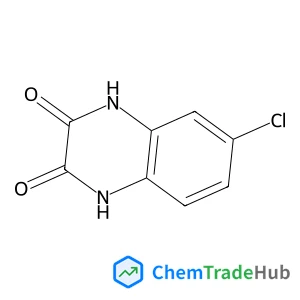
6-CHLORO-2,3-DIOXO-1,2,3,4-TETRAHYDROQUINOXALINE, 97
CAS Number:
169-14-2
Molecular Formula:
C8H5ClN2O2
Recommended Suppliers





Disclaimer
This page provides academic journal information for reference and research purposes only. We are not affiliated with any journal publishers and do not handle publication submissions. For publication-related inquiries, please contact the respective journal publishers directly.
If you notice any inaccuracies in the information displayed, please contact us at support@chemtradehub.com. We will promptly review and address your concerns.