


Photovoltaic yield from exciton dissociation in organic dye layers
Literature Information
Publication Date
DOI
10.1039/A808204I
Impact Factor
3.676
Authors
View Original
Abstract
Researchers working on organic photovoltaic cells are confronted with the problem of finding the optimal thickness of the organic layers. Obviously, there is a competition between the absorption length of the incident light and the exciton diffusion length, leading to optimal film thicknesses lying somewhere between these two mean path lengths (D. Wöhrle, L. Kreienhoop and D. Schlettwein, PhthalocyaninesandRelatedMacrocyclesinOrganicPhotovoltaicJunctions, ed. C. C. Leznoff and A. B. P. Lever, VCH, New York, 1996). In this paper we investigate the general conditions for optimization of the thickness of the organic layer for a maximum photovoltaic yield. At normal absorption, the optimal layer thickness is typically 1.5 times the exciton diffusion length. As an application we consider the zinc phthalocyanine layer in an organic p–n cell, for which an exciton diffusion length of 30±10 nm is determined from simulations. Using this value, a good correlation between simulations and experiments is found with respect to the thickness-dependent photocurrent yield of the solar cells.
Recommended Journals

Journal of Enzyme inhibition and Medicinal Chemistry

Physical Chemistry Chemical Physics

Lab on a Chip

Green Chemistry

Foundations of Chemistry

Coloration Technology

Current Pharmaceutical Biotechnology

Advanced Engineering Materials

Photochemical & Photobiological Sciences

Angewandte Chemie International Edition
Related Literature
Insight into the structure and the mechanism of the slow proton transfer in the GFP double mutant T203V/S205A
Ron Simkovitch, Shay Shomer, Rinat Gepshtein, Dan Huppert, Mari Saif, Karen Kallio, S. James Remington
2014-04-14
Paper
DOI: 10.1039/C4CP00311J
Experimental determination of electrostatic properties of Na–X zeolite from high resolution X-ray diffraction
2014-03-31
Paper
DOI: 10.1039/C3CP55397C
Flow dependent performance of microfluidic microbial fuel cells
Daniele Vigolo, Talal T. Al-Housseiny, Yi Shen, Fiyinfoluwa O. Akinlawon, Saif T. Al-Housseiny, Ronald K. Hobson, Amaresh Sahu, Katherine I. Bedkowski, Thomas J. DiChristina, Howard A. Stone
2014-05-08
Paper
DOI: 10.1039/C4CP01086H
Thermoresponsive fluorescence of a graphene–polymer composite based on a local surface plasmon resonance effect
Yunyun Huang, Wensheng Lin, Kan Chen, Wenkai Zhang, Xudong Chen, Ming Qiu Zhang
2014-03-14
Paper
DOI: 10.1039/C4CP00773E
Enhanced thermoelectric efficiency in ferromagnetic silicene nanoribbons terminated with hydrogen atoms
K. Zberecki, R. Swirkowicz, M. Wierzbicki
2014-05-01
Paper
DOI: 10.1039/C4CP01039F
Solvation dependence of valence electronic states of water diluted in organic solvents probed by soft X-ray spectroscopy
Takashi Tokushima, Yuka Horikawa, Osamu Takahashi, Koichiro Sadakane
2014-04-03
Paper
DOI: 10.1039/C4CP00762J
Adsorption of linear aliphatic α,ω-dithiols on plasmonic metal nanoparticles: a structural study based on surface-enhanced Raman spectra
I. Izquierdo-Lorenzo, S. Sanchez-Cortes
2014-04-15
Paper
DOI: 10.1039/C4CP00424H
Optical response of quantum-sized Ag and Au clusters – cage vs. compact structures and the remarkable insensitivity to compression
Robert L. Whetten, Xóchitl López-Lozano
2014-05-07
Paper
DOI: 10.1039/C4CP01277A
Combined excitatory and inhibitory coupling in a 1-D array of Belousov–Zhabotinsky droplets
Ning Li, Irving R. Epstein, Seth Fraden
2014-04-17
Paper
DOI: 10.1039/C4CP00957F
Ternary Pt/SnOx/TiO2 photocatalysts for hydrogen production: consequence of Pt sites for synergy of dual co-catalysts
Quan Gu, Jinlin Long, Huaqiang Zhuang, Chaoqiang Zhang, Yangen Zhou, Xuxu Wang
2014-05-08
Paper
DOI: 10.1039/C4CP01496K
You might also like
Compound Q&A
What precautions should be taken when handling 4-Methyl-6-(trifluoromethyl)quinoline (CAS: 40716-16-3)?
When handling 4-Methyl-6-(trifluoromethyl)quinoline (CAS: 40716-16-3), safety go...
40716-16-34-Methyl-6-(trifluor...
Compound Q&A
What is 4-(3,5-Difluorophenyl)aniline (CAS: 405058-00-6)?
4-(3,5-Difluorophenyl)aniline is an aromatic organic compound with the CAS numbe...
405058-00-64-(3,5-Difluoropheny...
Compound Q&A
How is 5-{[4-(Trifluoromethyl)phenyl]sulfanyl}-1,2,3-thiadiazole-4-carboxylic acid (CAS: 338982-07-3) typically synthesized?
5-{[4-(Trifluoromethyl)phenyl]sulfanyl}-1,2,3-thiadiazole-4-carboxylic acid can ...
338982-07-35-{[4-(Trifluorometh...
Compound Q&A
What is the market or research trend for 4-Benzylaniline hydrochloride (CAS: 6317-57-3)?
The market for 4-Benzylaniline hydrochloride (CAS: 6317-57-3) is steadily growin...
6317-57-34-Benzylaniline hydr...
Compound Q&A
Is [3-(Diethylsulfamoyl)phenyl]boronic acid (CAS: 871329-58-7) safe?
[3-(Diethylsulfamoyl)phenyl]boronic acid is generally considered safe when handl...
871329-58-7[3-(Diethylsulfamoyl...
Compound Q&A
What are the main uses of 3-Bromo-2,5-dimethoxyaniline (CAS: 115929-62-9)?
3-Bromo-2,5-dimethoxyaniline is mainly used in the pharmaceutical and chemical i...
115929-62-93-Bromo-2,5-dimethox...
Compound Q&A
What regulatory guidelines apply to N-Methyl-1-(5-methyl-1H-indol-3-yl)methanamine (CAS: 915922-67-7)?
N-Methyl-1-(5-methyl-1H-indol-3-yl)methanamine (CAS: 915922-67-7) is subject to ...
915922-67-7N-Methyl-1-(5-methyl...
Compound Q&A
What industries use Carbamic acid, N-[(5S)-5,6-diamino-6-oxohexyl]-, 1,1-dimethylethyl ester (CAS: 24828-96-4)?
This compound is primarily used in the pharmaceutical industry for the synthesis...
24828-96-4Carbamic acid, N-[(5...
Compound Q&A
How should 2-Methyl-2-propanyl [(1S,3R)-3-aminocyclohexyl]carbamate (CAS: 1298101-47-9) be stored?
2-Methyl-2-propanyl [(1S,3R)-3-aminocyclohexyl]carbamate (CAS: 1298101-47-9) sho...
1298101-47-92-Methyl-2-propanyl ...
Compound Q&A
What industries use Ethyl 2-bromo-4,4,4-trifluorobutanoate (CAS: 367-33-9)?
Ethyl 2-bromo-4,4,4-trifluorobutanoate (CAS: 367-33-9) is utilized in the pharma...
367-33-9Ethyl 2-bromo-4,4,4-...
Source Journal
Physical Chemistry Chemical Physics
CiteScore:
5.5
Self-citation Rate:
10.3%
Articles per Year:
3036
Physical Chemistry Chemical Physics (PCCP) is an international journal co-owned by 19 physical chemistry and physics societies from around the world. This journal publishes original, cutting-edge research in physical chemistry, chemical physics and biophysical chemistry. To be suitable for publication in PCCP, articles must include significant innovation and/or insight into physical chemistry; this is the most important criterion that reviewers and Editors will judge against when evaluating submissions. The journal has a broad scope and welcomes contributions spanning experiment, theory, computation and data science. Topical coverage includes spectroscopy, dynamics, kinetics, statistical mechanics, thermodynamics, electrochemistry, catalysis, surface science, quantum mechanics, quantum computing and machine learning. Interdisciplinary research areas such as polymers and soft matter, materials, nanoscience, energy, surfaces/interfaces, and biophysical chemistry are welcomed if they demonstrate significant innovation and/or insight into physical chemistry. Joined experimental/theoretical studies are particularly appreciated when complementary and based on up-to-date approaches.
Recommended Compounds
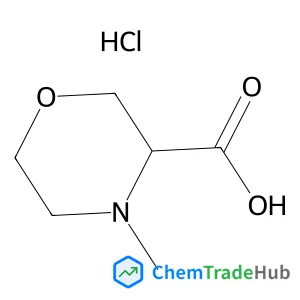
4-Methyl-3-morpholinecarboxylic acid hydrochloride (1:1)
CAS Number:
1240518-90-4
Molecular Formula:
C6H12ClNO3
Recommended Suppliers





Disclaimer
This page provides academic journal information for reference and research purposes only. We are not affiliated with any journal publishers and do not handle publication submissions. For publication-related inquiries, please contact the respective journal publishers directly.
If you notice any inaccuracies in the information displayed, please contact us at support@chemtradehub.com. We will promptly review and address your concerns.